Monday, February 25, 2008

Matters of Thought- Part 1

"[E]very copy is unique, irreplaceable, but (since the Library is total) there are always several hundred thousand imperfect facsimiles..." --Jorge Luis Borges, The Library of Babel

I don't know how this happens. Every couple of years, I fall into some book or conversation that purports to open windows onto the workings of human consciousness. I'm not sure that I like the subject exactly, and I may even hate it. For me, it's like that itch you notice it bugging for your attention for a long time, and when you break the urge and gouge up your skin in hopeful relief, you don't really feel any better. The deep fundamentals of mathematical and cognitive philosophy have a habit of annoying the fuck out of me, partly it's the language, and partly goofy notation, but mostly it's because my brain aches when it's knotted around in order to try and contemplate itself. As a rule, I just try to avoid them, but Oxford mathematician Roger Penrose has been taunting me from my bookshelf for seven years now with Shadows of the Mind. The basis of the book is an attempt to use Gödel's incompleteness theorem to show that consciousness can't be a product of a consistent formal mathematical/logical system, and from there move to some bizarre quantum theory of consciousness. I'm going to mostly concentrate on the first part here.

Wikipedia has a pretty decent discussion of incompleteness, stating it (not in the mathematician's own words) as,

"For any consistent formal, computably enumerable theory that proves basic arithmetical truths, an arithmetical statement that is true, but not provable in the theory, can be constructed. That is, any effectively generated theory capable of expressing elementary arithmetic cannot be both consistent and complete."
Basically, any set of theories which manages to conclude that "this set of theories can not be proven" contradicts itself, and is therefore inconsistent. (Also, everything I tell you is a lie.) Sounds reasonable, but the philosophical consequences of it get a little funky. In its least mind-bending application, Gödel's statement says that there are any number of mathematical truths that can't be proven by a system of rules. It also suggests that there will always be more axioms (unprovable starting points) to add, and any algorithm that operates by a mathematical set of rules--a computer program, say--will not be able to deduce any of those new axioms, including (and especially) the one that says it can't reach them all. Penrose takes this to mean that no Turing machine (i.e., a computer that operates according to a set of rules) will ever achieve the status of a human thought (or for that matter, human language). Why? Because humans can infer truths such as Gödel's theorem, that's why. Cognition can't, therefore, be a mathematically consistent process, and we'll never be able to fake that sort of thing using a computer.

This bothers me. It's not the idea that formal systems must be incomplete, it's that notions of inconsistency must be so rare and intolerable. In those increasingly rare times I act like an engineer, I'm constantly working in the realm of consistent enough. Engineering math works that way: it's good only over some range of underlying values, and only to the extent that the assumptions are valid. You can never quite capture every aspect of a physical phenomenon into a theoretical model and still have the model compute. The natural world quickly leads you past solutions that are analytic (that is, that can be solved by symbolic math), and even as you turn to numerical methods of problem-solving (that is, chunking the model up into approximate pieces, and keeping track of them all with a computer), you still need to limit your interpretation of the world in terms of mathematical logic that is possible to manipulate, and this always proves smaller than the world itself. Even revolutionary models like quantum mechanics rely on constructing equations in such a way that they can be partially solved, with just sufficient accuracy to get their points across. That's practical math for you, and I don't know if it's a correct extension of Gödel's theorem to say that as you specify a system more accurately, then your logic must become necessarily less consistent, but it's in the same vein. Actually, it's starting to sound more like quantum uncertainty than anything else, and that may well be somewhere close to where Penrose is heading*. I'll see over the next several days. (Even if he's not going there, some amazing conceptual beasties still lurk just beneath the Planck length.)

Computers are algorithmical by definition, but are they in practice? What is the relationship between the universe and math anyway? You can see how basic ideas such as natural numbers (one rock, two trees, three eggs, hrair bunnies) and basic arithmetic (addition, multiplication, etc.) are readily correlated to observable properties of the Universe, but I'm going to take a step beyond that correlation and assert that computations and ideas don't merely represent physical objects, they are in fact physical objects. Your conception of the number 3, say (or of Gödel's theorem), is a pattern of electrical impulses, probably a dynamic one, stored in or circulated around the knot of nerve cells in your head, which, when the power's turned on, can interact with many of the other nervous sparks, some old, and some freshly arrived from the senses, and churn around in fantastically complicated ways. Likewise, the concept of a 3 can be stored in that pile of blocks over there, as many beads on an abacus, so many divisions of a slide rule, or so much charge distributed over so many transistors. Algorithms are things too, objects on a tape, capacitated electrical charges, whatever. The ideas behind them are contained in all those networks of neurons, which are also things, and in the coded instructions for neurons that we leave everywhere for ourselves (such as these electromagnetic doohickeys that I'm directing at you right now, not to mention the modulated acoustics and the blobs of ink of produced by generations of philosophers and fools. There is no Platonic spirit realm of pure ideas--we approximate all of them over and over again, never quite the same but usually close enough, in accordance with a common outline of a wiring scheme and all of our own ubiquitous clues. Algorithms are arrangements of somethings too--Turing machines are worthwhile conceptual aids, but their instructions can clutter up the shadowy cave as much as anything else. Actual computers, just like brains, are really only algorithmic enough.

I'm not really going too far past Penrose here. His point is that thinking can not be based on sound algorithms. I'm saying that I don't think computers are algorithmic either, nor is the universe, not quite.

[Part II will discuss some ways to make computers that are more like brains.]


*Or not. I'm told that despite the profundity regarding the incompleteness theorem, his physics of consciousness are not widely accepted.

Friday, February 22, 2008

Review of America The Book by Jon Stewart*

*and about a dozen other Daily Show writers.

It reads like MAD magazine for twenty-somethings. I don't think this is wholly a bad thing: Some of the jokes got audible laughs, and the usual gang of idiots went far toward molding me into the sarcastic twit you have before you today. No, I just wish I read America the Book when I was still an irresponsible twenty-something.

K


(I am so just not feeling it lately)

Sunday, February 17, 2008

Review of Ender's Game by Orson Scott Card


I originally met most--okay all--of the "buds" from this book project in Slate Magazine's discussion group, the Fray. Over the past year or so, I've been weaning myself off of it, because even though I continue to enjoy the virtual company of many of its denizens (or keep meaning to anyway), the forum itself lost that feeling for me of being a fun place to visit. Partly, it was because of the games of status that a magazine of ambivalent quality kept playing with its network of forums (I've had crazy girlfriends that loved and hated me as much), partly there's the house brand of online malice that would occasionally bubble throughout the boards, there was a smidgen of annoyance at the habits of the local trolls too (but that's the same anywhere), and a big thing was the awareness of a bigger world out there, even for blogging dorks. Back in the day, nobody surfed the Fray as purposefully as did Ender, which makes him seem like an odd person to vocally mount a charge to break through its boundaries, but a year or so ago, that's what he did. These days, you can find him here, trying to parlay his online manipulation skills into something more profitable, evidently by writing about a giant mutant chicken or something. A book selection for this guy is too obvious a choice to ignore, and it led to some interesting speculations as to what he was once trying to do with the Ender persona. More about that shortly.

In the decades before he became known as a tendentious political whacko, Orson Scott Card wrote decent science fiction novels, and Ender's Game is, if not his best, probably his most well-known. It's not bad, delivering something in excess of my expectations anyway. I'm not the sort of reader to go in for barracks philosophies, nor for alien space battles, but this novel kept the interest up for its entirety, and contained characters that I cared about. It centers on a child, Ender Wiggin, who is lucky enough to get such an astounding grade on his career aptitude test that, at six years old, he's drafted directly into military school. It's not just any junior academy, but rather an intense and futuristic training program designed to identify and select kids with both incredible reflexes and that ineffable leadership quality that inspires tactical innovation, confidence, and obedience among the ranks.

If the premise looks silly (and it does--we're talking zero-gravity Laser Tag as the best hope to groom sophisticated military minds here), Card gets away with it in context. These aren't just any kids, but carefully-screened early prodigies selected for capability and maturity, and their environment is built to encourage those things. The school is regimented, isolated, and nearly adult-free, and the kids are given something close to the life-or-death authority of real soldiers, constantly exposed to violent propaganda and unforgiving decisions. It produces adult behaviors,* but their inner childlike sensitivities are still revealed to the reader by authorial exercise. History has ample evidence of children behaving as murderously effective bastards, and even though your horrible memories of middle school might seem like a starting point, children have been soldiers for as long as there has been war. The evil of it, at least from a more enlightened cultural perspective, doesn't negate the truth that kids can do this sort of thing, and certainly have. A different sort of writer (possibly a better one) might have analyzed these labyrinthine moral contexts for hundreds of pages, but Card moves this novel forward as three-quarters adventure story, and whatever doubts arise do so from Ender's own exculpatory point of view, and the briefly revealed conflicts of the administrators.

Child abuse isn't the only horror presented in this story; what they're training for is a civilizational war, a dishonorably pre-emptive one, with an ultimate resolution that is an abomination beyond description. The conflict itself is born out of the inability of two species to communicate with one another, and like most of the underlying ethical poses, it feels more honest for the brief spotlight that the author gives it. Card solves these dilemmas for the purposes of his story--every horror is conducted out of real necessary, every authoritarian abuse is verified as the lesser of evils, and every crime is repented, forgiven, inevitable, or committed without knowledge--but beyond the narrative, the ethical framework is left hanging, I think wisely, because exploring the depths of criminality here would require a much different sort of book. (The author, whatever political views he'd reveal 25 years later, deserves an ounce of credit for raising them.)

(Parenthetically, it's my opinion that the third-person omniscient view is a root of much of the world's evil. It legitimizes shoot-but-cry narratives, allowing the depth of thought to weigh equally with the depth of consequence. It pretends that the moral calculus in any heinous act is fully known. It gives us a template on which to write our many apologia.)

Old science fiction is sometimes trippy to read because badly predicted technology has a habit of growing absurd as time proves it infeasible, and the stuff that was spot-on has a tendency to become invisible to modern readers. Orson Scott Card gets some geek cred for being the first writer (to my knowledge--Ender's Game was published in 1977) to accurately guess what video games, simulators, and the internet would eventually look like. There's an entertaining subplot in which Ender's brother and sister (they're as precocious as he is) scheme to take over the world by gaining political influence through, basically, their blogs. It's funny, given the unpaid internet writer's place in the contemporary opinion heirarchy (sort of like the wart on the asshole of the American body politic--occasionally uncomfortable, but hardly life-threatening), especially considering the inflated sense of worth of, say, your average Daily Kossie. This subplot is of special interest in the context of this book review too, as the plan that these children outlined for global domination is strikingly similar to the one that Ender the poster would later use to gain power within the Fray, building anonymous nicknames, generating issue-driven contention, and gradually convincing the public of his credibility. Whether he succeeded is an open question. The Slate Fray, at least for a while, was better than many other interactive forums, competitive in a way, with approval awarded to good communicators and interesting posts. I'd always figured it was the editorial policy of awarding official brownie points that made it this way, but what the hell, maybe it was abetted by the internal subversion to a higher degree than I'd ever given it credit. Ender's Game as a manual to turn one backwater burg of the internet into the novel? Good times.


*Except cursing. Even though everyone says fart all the time, and the word "bugger" is mentioned in 1129 separate instances, nary a shit or fuck to be found.

Friday, February 15, 2008

Random Roundup

I don't usually like to act like a blogger, devotee of original, independent content that I am. Still, sometimes blogging happens. Here's a selection of hat tips and comments from last week, some I wrote, others I didn't quite get to in time.

1. You'd be a fool to miss this one
You'll be surprised as me to know that Fool's Gold, starring the ineluctable (no really, what do you say?) Matt McConaughey, is the number one movie in America. I'm not sure if I believe in Matt's astounding acting chops, but the teaser, in which Kate Hudson whales on him with a three wood, makes it look almost worth spending ten bucks on.

2. Anarchy Ma'am, if you can keep it
IOZ's running a provocative series of posts (again), and this expands briefly on my comments there, perhaps tangentially to his point, which usually tends more towards consciousness than prescription. The opener from his latest one: "Those who complain most loudly about the modern nation-state nevertheless leap to its defense at the mention of other possible arrangements." Do other arrangements really work out?

I've talked about it a lot lately, and I'm sick of talking about, but here it is again. I see empire, in whichever form, as significantly a result of factors such as population pressure, resource pressure, and habitual living standards, and if it's not exactly inevitable, then the State looks like a comparatively stable and natural way for crowded humans to organize themselves. I don't imply a whole lot of scholarly observation there, but I think there's a reason that China these days looks a lot like the U.S. looks a lot like Europe. Interconnected burbclaves sound great, and the pizza delivery sure is a lot of fun, but why should I expect that organization to ultimately go other than the route of Communism or, all too likely, of the federal Republic? Even if we were to somehow arrange the population in a way that kept the S-word out of its vocabulary, then the Party, the Company, or the Church all look rarin' to take its place. (And haven't they from time to time?)

(On the other hand, I respect the idea that it's wise, in a historical sense, to knock the empires down periodically. Not that I relish living in those times. IOZ's arguments about the scale of atrocity have merit.)

I would like to be convinced of feasible alternate arrangements, frankly, and that's one reason I keep reading. And there again, this primitive thinker sees technology as a necessary step to weight the equation toward anything less ghastly than a nation-state. I'm not talking brains in jars here, it'd surely be less ridiculous than that. The birth control pill was a good start, and though I hate to romanticize it, the internet is another seed of a means to allow people to associate voluntarily. Easy access to high-powered weapons? Urm, I don't think I'm ready to go there...

Maybe a free, magical source of energy would do it.

3. Cut the baby in two!
Another hat tip to IOZ, also expanding slightly on a comment.

Cato mastermind Robin Hanson says we should cut our health care spending in half. He's got something of a point in regards to end-of-life spending (but don't you dare bring this up in the eleventh hour with me or mine!), but I'm not sure how Hanson arrives at free entitlements as the best sector to axe. I might have gone for what the rest of the civilized world is doing differently so as to spend half of what we are, presumably avoiding the USAn insurance bureaucracy, but I doubt that shit flies at Cato. Hell, even medicare, which insures the old and infirm exclusively, is at the very least competitve with private care that excludes the poor and chronically ill, even after the rationalizing. (I owe hipparchia a nod for some of those tidbits, but I couldn't find the cite.) I'm not crazy about replacing private insurance with a government committee, not in principle, but it sure does seem to be cheaper.

But Hanson and the liberals both judge wrongly, I think, in overemphasizing life expectancy as a figure of merit, especially since it doesn't even vary all that much between nations of any particular study. Health buys more than years, and a shorter alotment of them can be due to unrelated shit like having to drive everywhere. I'm thrilled that the arthroscopic knee surgeries and carpal tunnel scrapings are probably going to be there when I need 'em, and unless I plan to cross a lot of streets, those aren't going to affect the life expectancy. I'm liking the idea of happy pills too.

4. Another movie I won't bother to see.
All I've got to ask is... how much lipstick we talkin' here?

(Nah, not really. She's cute.)

5. Pho-cking off now
Here's to the chemistry of roasting ginger: Damn, that's delicious. Thanks to the steamy kitchen, via Jim Henley.

Sunday, February 10, 2008

Finding the Funky Kink

"There are two types of people here: people who play instruments, and musicians."

I'm sure it's a quip that gets uttered any time both types of people gather together in the same room. In this particular case, it was some toothless codger at my mother's fiddle club, a talented old bastard stuck among a group of screeching, caterwauling octogenarian farts that celebrates more funerals than gigs. I've heard their practice cd and I'm sympathetic to his aphoristic feeling, even if it stings. The sound of them recalls all the joyless horrors of high school band sessions, and my mind fills in the details of a harried, underpaid director, hopelessly trying to flail three dozen instruments into the same time and the same tune with his little wand as the musi players all saw away with an urgent confused focus or with blithe, individual abandon. It's not an inappropriate venue for my poor dear Mum (who, I'll emphasize, is not reading this) as she hardly feels it in her at all. Even now that it's inexplicably become a family thing, she still hasn't found that funky kink in her soul, the smirking, expectant, excitable little asperity of animus that coaxes music into being, or responds to it. You can imagine the mindset that got her auditioning solo in front of all those geriatric cranks, that certain combination of stubbornness and cluelessness. It runs in the family. And she impresses the hell out of me.

Still, I'd much rather be the musician in that epigram. It's not because I'm a particularly aspirational sort of person (really kind of the opposite), or because I'm particularly good at it (I'm not), but it's a growing torture to have this body of understanding looming so close to the edge of my apperception. It's like a familiar face I can't put a name to, or a missing phrase that will perfectly express my thought--or maybe like that enthusiastic but retarded little psychic drummer that was happy enough to keep my jerky internal rhythms going at their own idiot pace for thirty years before noticing the sounds around him, and who is now deluded to think he can march the body to that external time, or even worse, maybe has the idea he can express our own oddly syncopated thrumming to outside minds--and it taunts me just out of my reach. If I get nothing else out of music lessons, maybe I'll convince myself to eradicate these sorts of shitty metaphors from my vocabulary.

I'm up to two of 'em so far (lessons that is, already in double digits with the language thing), and I think they're great. I don't know how good a teacher I have (certainly he's a hell of a player), but I appreciate for now the loose approach we've been going at it, focused more on opening up paths than on inflicting instructional drills. I can go ahead and wade through the drear on my own, and playing (nervously) along with someone (much) better after I've been getting some pointers lifts me right up. I'm almost annoyed that I have to pay someone fifty bucks a pop to show me where the door is, but there you are.

An example of what I mean: in the middle of teaching me this one riff, I ask him about the rhythm he's backing me up with, and it breaks off on a tangent about the chord shapes I know, and some of his more arthritic variations. "I like the chop chords, but these barre ones sound nice sometimes. Is it important to practice them in general, you think?" "Dude, it's good to practice everything." It's like I needed permission. But as importantly, it's like I needed to be told the point of developing more than the usual default shapes.

This tidbit kicked off a quest to develop some better understanding of music theory. It had gotten to the point in the various intermediate and introductory manuals where it was more difficult to keep explaining the simplified version than to just come out with a reasonably comprehensive approach to the subject. I needed a little more of the why of it, and a little less ad hoc explanation. (I sometimes had similar problems with undergraduate engineering courses.) That five-minute tangent is also providing a new appreciation for contortionism as I twist my fingers through sixty pages of mandolin chords. I don't expect to memorize them all, but it's great for limbering the digits and feeling out the constructions by ear and hand.

The frustrating thing on a mandolin is also one of the things that makes it simpler to play than an instrument where you can theoretically reach everything. With only four (pairs of) strings and only so many physically possible ways to wrench your knuckles, the number of chord voicings is limited. In almost every case, you're stuck playing an inversion, or for anything past the seventh degree, with a chunk of the middle cut out. I find both of these things to be a little maddening, because they can sound very different to my primitive ear, and the right voicing, in the right context, can be the difference between euphony and cacophony, even when you're plucking the same basic notes. I mean, how do you know? You could learn the half-dozen fingerings for each of the eighty-three motherfuckers I've had named to me so far, and there's still no guarantee you're a musician. There's more to knowing the tones and the shapes, more even than knowing when to use them. There's this business of the funky kinks: that killer intuition for what sounds right, and much as I think the book-learning can augment musicianship, build it up to dizzying levels in fact, it sure ain't the source of it.

There are a couple of keys on a mandolin that lend themselves to strumming with hardly any input from your fingers. On his blog, Claude Scales featured a musician a month or two ago, some pie-faced, but still rather handsome, chap (must be the hair) grooving out a Canadian folk tune in the key of G. He sings well in his style, but I'm hesitant to call anybody who's showing off something even I can pick up in half an hour as a mandolin player. What even took me that long is that I didn't immediately recognize the chord he sneaks in between the G and the C, the one that gives the song it's real character. It feels like an anticipatory lift, a ride over a swell just big enough to change the view for a moment before sinking back into the usual pattern, temporarily vertiginous, but well in control. It's exactly the thing that makes it feel like a sea chantey instead of the all the bluesy redneck versions of the same Island tunes, what puts it on the shores of Nova Scotia in fact, and not in the hills of Appalachia. The open (unfretted) chords lend to that feeling too, as does his non-percussive rhythm strumming. The sound flows instead of stomps. I doubt the Bard of Cornwall is a theory nut--based on his videos, he only seems to know four or five chords and play in one or two keys--and I doubt in my thick mando tome, I'll find a picture of the Gorton fisherman next to a chord progression with that major seventh in it. He hit that fret, I imagine, for no other reason than it felt right. I could read music theory all fucking day long and never make that leap.

It's not different in any field. The reason I remain a mediocre engineer or chemist (or whatever the hell it is I do) is that I don't find so much satisfaction from scratching the itch that it justifies the depths of scientific monomania. (My employers only make this worse.) It's too easy to yank the tension out of my internal geeky knot. I'm undoubtedly less musically inclined, but here I find it more rewarding. If you find one of those funky kinks, I guess the best thing you can do is stroke it, get the joy out of it you can.

Saturday, February 09, 2008

"Something I'll never be able to perfect"

Dig the initials.  Dig the shamrock.
It just says Keifus, 35-year old Hawaiian organ donor
For Christmas, my parents gave me a photo album documenting the process of creating the "Keifus" mandolin. I wish they had a better feel for those modern, digital, cameras, because the blurs and the thumbprints detract a little from the representation of the whole creative experience. As brilliant as the old man may be--and he is--it's still a little more comfortable to give up the goods (and the faces) behind the process to some tech-savvy strangers.

Here's one dude going through the closing steps of gluing the faces to the sides, doing the finish, and providing some requisite 21st century nattering. Enjoy...

Tuesday, January 29, 2008

Review of Our Kind by Marvin Harris

[note, if anyone read the first draft of this...I'm sorry.]

So much of history, as it's usually presented, is either a local microcosm or a culturally specific snapshot, it fails to capture the big (the big impersonal) picture of the human experience. Philosophy follows a similar flaw of intimacy, driving for a first-principals explanation of the human condition, proceeding from axioms created in our skulls to as many future conditional progressive tenses as may be (here's how I think I think, therefore, here's how society should work). I am liking the empirical perspective lately, that is, the anthropological one, observing the evidence of human coexistence and making inductive generalizations from the pattern of the data. It's been my growing conviction that for all the myriad ways we're fucked up on an individual level, human behavior in the aggregate is a lot more predictable and explainable than six billion partisans would have you believe.

In Our Kind, Marvin Harris moves quickly to an important distinction in this explanation, in truth another one I've been wrestling with: that cultural evolution is different than the biological sort, faster, and even if it's not working through genetics, it's force is similarly powerful. Harris describes how cultural development as an unconscious, collective means to most efficiently realize our various biological imperatives. The species is, more or less, equally endowed, but we react in different ways to the externalities of different communities: different availabilty of proteins, vitamins, and heat sources, differnt population density, different history, and varying degrees of feasibility that somewhere else exists to go. The outlines of politics and culture derive from these parameters. He puts the lie to fertility as a biological imperative, digging up anthropological evidence and biological analogies to show that humans are more wired more for sex than we are for babies, and develops the consequences. He pokes at race as an artifical construct. Our body shapes and colors over the generations correlate more to local geography than our ethnic heritage, both because of cultural selection and extensive interbreeding (Jews, he notes in an example, generally look more like the locals than they do Jews elsewhere, which is maybe one hint that journalists should be careful not to casually conflate ethnography with genomes.)

It gets touchy in parts. Harris outlines ways in which early societies dealt with population pressures, reducing the idea of war to a means to deal with this, and correlating that with misogyny. Preservation of a warrior class limits population more than in the obvious way, Harris says, and includes selection for male heirs for the patriarchy, pushing toward female infanticide as a remarkably common device, even in modern times. Historically, life has officially begun at the point parents decided to keep the child, sometimes months ex utero. He questions the cost of misogyny in terms of male life expectancy (along with the contemporary unwillingness to question this), paints government as an inevitable consequence of animal domestication.

I don't think any of the above discussions are comfortable, but the cases are strong. His religious angle is perhaps the most sensitive. He describes "killing" religions, entailing animal and human sacrifice, as a development of a means of protein redistribution, drawing patterns across the globe from Aztecs to the Vedic to the Pacific island traditions. The non-killing faiths he paints as reactionary creeds developed to address the failure of the faiths that passed out meat, usually in response to specific political pressures. He draws a line from here directly to subjugation empire, implicating the gentler religions as a direct enabler of military powers. Why? Because making a virtue of poverty and delaying material rewards past death suits would-be emperors brilliantly. The first act of conquest of non-killers, cites Harris, is to convert to the non-killing faith, as true of Christianity, as of Jainism, as of Buddhism. The proscription against killing, historically, has been easy enough to circumvent, but the faith in ethereal rewards much harder to shake, and murderous zealots have been useful tools of tyrants. (One amusing point: even as Harris constructs a general condemnation of religioun that quite clearly includes the Pauline faiths, he sticks with the western conceit of weighting Biblical history toward the factual, using Christian-formal terms like 'year of Our Lord', and citing that holy book, and only that one, using chapter and verse. It's got to be force of habit.)

Stylistically, Marvin Harris both worked for me and didn't. His ultra-short sections--the book is five hundred pages long, but every third page was a blank title--got right to the point, but they were so brief and un-footnoted, that it lent to a less than scholarly feel. It's not that the sections are unresearched: the author has done his share of influential work the field himself, and there is a a detailed bibliography for each tiny chapter in the back. He just doesn't point to it. He also has a penchant for scribbling over his weaker points with anecdote or irritable analogy. For example, he's probably out to lunch on his message of gender identity--not so culturally controlled between sexes as all that--but on the other hand, his message that cultural selection usually satisfies the biological preferences in the aggregate is almost certainly true, and biologically, he's largely divorced sexuality from both reproduction and gender anyway. I admit that I'd be more bothered by his idiosyncratic style if I agreed with less of it.

We all know how short the timeframe of civilization is compared the earth's history, but even our species is young, only around for a hundred thousand years or so. By contrast, our various hominid ancestors populated the earth for about 3 million years. (Our most recent evolutionary analog, the Neandertals were a short-lived species, only lasting about 200 thousand altogether). Even given the age of our genome, sapient, language-using humans have only been evidenced for a fraction of that, about 35,000 years. I can't accept that early humans were any differently intellectually gifted (and neither can Harris, which is why he describes evolution in the cultural sphere). In that short time, we've graduated from the stone tools that our ape-plus ancestors and cousins had used, and covered the earth in dense societies, razing mountains and forests, and erecting countless evidence that we lived. Although we may still fight like animals, we've made a hell of a mark in the short time our kind has been civilizing.

And the big question remains this: are we going somewhere, or have we achieved our ecological niche? According to ideas of punctuated equilibrium, species persist for a long damn time, but originate and fill in their ecological space very quickly. In terms of biological evolution, the fossil record and all that, 35 kiloyears ain't much. We humans are probably still spreading into our role As a conclusion, Harris calls our penchant for empire and evil as the likely inevitable cultural consequences of our nature. Our failures to will into being benevolent governments are a result of the unfortunate statistical average of human action. They've all followed similar paths. Is there hope, he wonders, a conclusion beyond the state? I have to think that there's not going to be any success in regressing pre-state, that the factors that pushed governments into existence--food dependence, population, and circumscription--seem to only drive one way. But here's the thing, the catch: trying to will cultural evolution forward is how our biological imperative works, and there may be a point we haven't yet achieved with it. We're certainly on different ground this time in terms of communication, size, and boundaries. Is there still time to realize a better existence than empire?

I'm not very optimistic actually--existential brinkmanship can't continue forever--but the idea of a better future beyond nation-staes is the hope I can find. Maybe we'll get there.

Sunday, January 27, 2008

Cool Vibrations

If you think about it, all of engineering is a question of how energy is transformed from one form to another. Science can be said to occupy a slightly different (but overlapping) inquisitive geography, covering a lot of area to explain how anything works at all, but engineering is, at it's heart, how to make stuff do other stuff. In the land of mechanics, the goal is often to trick nature into converting some kind of time-domain phenomenon into the frequency domain, to transform natural forces into some reciprocating or rotating device to mimic the rhythmic thudding and pounding of our own bodies. Gasoline is exploded to turn driveshafts, water's toppled over a dam to make alternating current, uranium is pounded with neutrons to do either.

At its best, this sort of engineering can be elegant. In 1824, Nicolas Léonard Sadi Carnot published a famous thought experiment that reduced a heat engine, such as the steam engines that had been tinkered with for a century, to its very essence. In his minimalist picture of energy conservation, heat is transferred from one constant-temperature thermal reservoir to another, transforming some of itself into useful work in the process. (The devil's in the details of course--probably in a pissing match down there with Maxwell's demons--but Carnot had the insight that even when all of the heat operations are completely reversible, it's still impossible to get one hundred percent of that heat turned into mechanical work. This would be later reflected in the formal theorem and the textbook thermodynamic cycle that bears his name, and from there proceed to bore ten generations of engineering students to tears.) The opposite of a heat engine is a heat pump. In this picture, work is added to the device to move heat from hot to cold--you need energy to move it uphill. Carnot's engine outlines the minimum legal moves, assuming each step occurs on level ground, but since heat can flow either way at those constant-temperature steps, turnign a Carnot prime mover into a heat pump is easy. They work in the real case too, and end up subject to the same theoretically mandated inefficiencies.

[IMG]http://i219.photobucket.com/albums/cc74/Keifus/carnot.gif[/IMG]

That's heat, but what about work? I mean, it's mechanical energy, but it's not all that useful taken straight from the tap. Human-sized work, power on-demand, always consists of something clumsily stroking back and forth or ungracefully spinning round and round. It doesn't really do it for me. There are some nice-looking machines out there, to be sure, but to me, elegance implies some level of minimalism, a sort of Platonic expression of beauty that is only as complicated as it needs to be. I find it hard to grant such a standard to some chortling, vibrating motor, wires and vacuum lines dangling like dreadlocks, that insists on screeching its gears and clearing its pipes at me to clamor for the center of attention.

Turning heat into reciprocating work has been inelegant for centuries. About the time that Carnot was monkeying with proto-thermodynamics, a minister in Scotland was building something like the Frenchman's pure heat engine. Stirling's device had gas moving back and forth between a hot and cold cylinder, each one equipped with a piston and timed so that the gas would be in the right place to push the hot cylinder open as it expanded and pull the cold one closed as it contracted. Visualizing the actual timing is kind of like those spatial IQ tests, and isn't overly interesting really, (you can find out more than you want to know here, as well as a hundred other places), however it gets more interesting once you start making analogies. In 1979, Peter Ceperley realized that the time lag between the pressure and motion cycles of a gas inside a Stirling engine was the same as in a traveling acoustic wave. Pieces of this had actually been known for a long time: glassblowers, for instance, realized that their tubes would start to hum when the hot ends were being worked, and pulse tube refrigerators, which work on similar principles, had been around for awhile too, but it's safe to say that Ceperley and German researcher Nikolaus Rott started the modern study of thermoacoustics. Turning heat directly into sound, it turns out, can be both efficient and useful, able to accomplish the same things that a mechanical heat engine or heat pump could do without all the grubby rigamarole. Thermoacoustics is elegant.

Consider an acoustic wave: unlike a wave on a string or on water, it doesn't move the medium up and down, but squeezes it in and out as the sound energy passes through. If you take the point of view of a tiny chunk of matter that's caught along in the disturbance, it will also move back and forth a little bit as it compresses and expands. If you could furthermore put a tiny thermometer in that element, you'd find that, just as with the gases you learned about in high school chemistry, there's a tiny increase in temperature as it's compressed and a tiny cooling effect as it expands. Normally, this amounts to not a goddamn thing (except for maybe a way for intense sound waves to dissipate energy), but if you can harvest those parcels of heat--remove the heat of compression when the gas is over here, add some heat to the cooler gas when it's over there, then you've used acoustic work to carry heat over a small distance. Start counting up the infinitude of those tiny elements, and you've got a heat pump on a useful scale, and it only consists of an acoustic source (a speaker, basically), a tube, and a surface (a porous material with lots of surface area) to take care of that heat transfer.

[IMG]http://i219.photobucket.com/albums/cc74/Keifus/TAcooler.gif[/IMG]

Your home air conditioner or refrigerator has a great big compressor that condenses a gas to a liquid, pumps it through some plumbing where it evaporates, absorbing heat, and then carries it back to the beginning to be dropped off before the fluid is condensed again. Like an AC circuit with jiggling electrons, an acoustic chiller doesn't actually have to pump material all the way along the whole loop, but is content to rob the energy from those short-distance oscillations. Your normal compressor, the heavy bastard in your fridge say, doesn't shrink down well, it doesn't run at variable speed (nothing like hearing it switching on and off all night long), it's got sliding seals that leak and age, and it's full of environmentally nasty refrigerants. Most of the desire to develop alternative refrigeration strategies like thermoacoustics has arisen from the desire to eliminate ozone-depleting CFCs and HCFCs. (Thermoacoustic devices typically use helium. Check out what Ben and Jerry are doing with it.) Thermoacoustic refrigerators don't outperform the old models yet (about 20% of the ideal efficiency as opposed to 35%), but they should at some point. Some versions of these devices have been predicted to approach Carnot's limiting performance.

We can go more elegant than this even, and build a device with no moving parts whatsoever. You can build a device that is both a heat engine and a heat pump. One end generates an acoustic wave from a heat source, while the other end consumes the sound energy to perform cooling, there is no driver. Heat-driven coolers have a few niche applications. In one, Praxair is working on liquefaction of natural gas using enormous, barn-sized thermoacoustic coolers, gas-fired on one end, with liquid propane dripping off the other. I'm more enthusiastic about the impacts this sort of technology could have in the developing world, where centralized power production is unreliable. English researchers just got 4 million dollar grant to develop portable heat-driven coolers (the figure is cribbed from October's Popular Science). One end would run off a cooking fire, the other would preserve your food. Siphon off some more of that energy, and you could even generate electrical power in between. I want one.

[IMG]http://i219.photobucket.com/albums/cc74/Keifus/jumboTAliquefaction.gif[/IMG]
[IMG]http://i219.photobucket.com/albums/cc74/Keifus/popsciinvention.gif[/IMG]

It's cool stuff (so to speak) and in case you wondered why I'd been going on for months about thermodynamics, it's because I've been dabbling.

Additional links for free further reading:
Los Alamos National Labs do some of the best work in this field. (Greg Swift is one of the biggest names. Check 'em out.)

Greetings from the Digital Age

Well, I finally ditched the dialup service, and bundled my soul and shipped it off to the cable providers. When they came and set me up, they pointed out the two dozen or so mismatched and split cables, as well as the three or four lines to nowhere that snaked through my walls as the possible cause of my poor television service thus far. They may have had a point, and I postponed the first installation for a fabulous weekend of snaking wires through the walls and, in some cases, abandoning them to the interstitial oubliette. With nice fat cable and a minimum of splicing, my internet and phone service is spectacular, and now I can look at all of your wonderful images and YouTube clips without any difficulty at all.

Sadly, however, it looks like the internet is still full of the same old crap.

Wednesday, January 16, 2008

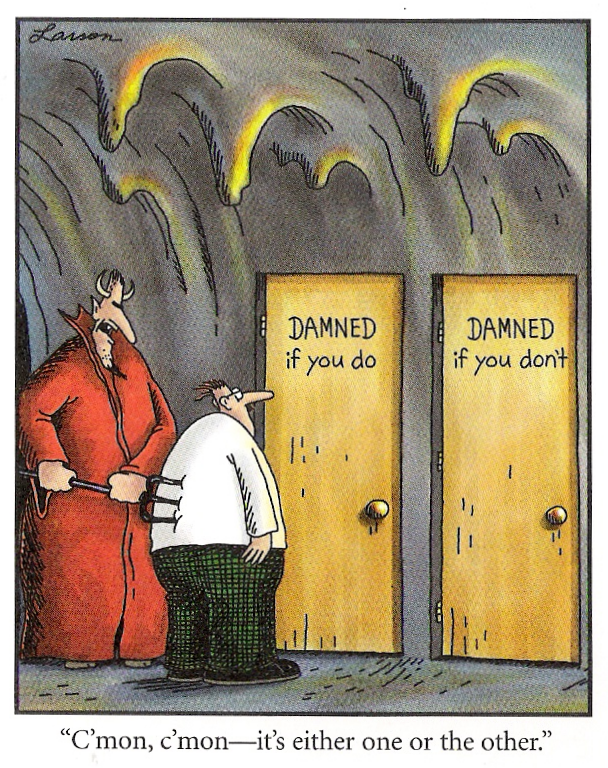
C'mon, c'mon--it's either one or the other.

(Self-involved, maudlin, and possibly illogical. You were warned, O hypothetical reader.)


Ben Bernanke, the chairman of the federal reserve is standing up before congress this morning, preparing to receive, I imagine, the economic advice he's coached them to give. Tuesday night NPR's Marketplace painted a story of looming economic stagflation: the twin perils of low economic growth coupled with inflation. The economics witches would have the esteemed chairman sail closer to the beast than the maelstrom, maybe lose a few hands, but not the whole ship. Rate cuts by the Fed would help avert a recession they say, but those same cuts would also enhance inflationary dangers. The Fed, and Marketplace too, seems to think that a recession is worse than inflation. Is it?

As an aside, I suppose the interpretation makes sense. A rate cut will encourage more borrowing to absorb more goods-n-services (and it's not like that's ever bit us in the ass or anything), and the generation of that bank debt as well as the usual money creation from the reserves will cause the inflation. [Yes, I'm being coy with the word "usual." Money creation, I'm reading, is a little more nuanced than I realized--I'd actually thought that the Fed was jiggering with the velocity of money in these rate cuts, but evidently not so much. I always imagine this stuff would be easier if they presented a straightforward mathematical frame. It's no so unworldly to have variables depend on one another, but so much of what I read is like a debate between tastes great and less filling.]

In any case, I'm going to proceed as if Marketplace's analysis is basically correct, and we're facing an ultimatum between interest rates and growth. The consequence of low growth is, as I understand it, fewer jobs, stagnant wages, and decreased demand for stuff. The consequence of inflation is higher prices.

Daniel Gross pooh-poohs decreased demand as a bonus, even when if it holds a hope that housing prices may finally adjust back to income levels, or that any rational person might rejoice at seeing the managerial class (Gross's hope is more and better MBAs) finally getting an overdue swift kick, or that market forces should dare push us to consume something more commensurate with what we produce.

The extent to which I agree with Dan, Ben, and NPR has a lot to do with what I want to believe about wages. Real wages have been stagnant for ten years now, even while profits and overall GDP for that matter have been doing just fine. To the extent that compensation increases to cover inflation, it doesn't work me up too much how the currency is valued. In that same decade, however, home prices have doubled, and energy prices have tripled. Health care costs have bumped up at least 50%. For the last three or four years, my cost of living increases have not covered this enhanced cost of living. I have an okay mortgage, but can't move to the nice neighborhoods the repairmen and nurses fifteen years older than me live in, and it's harder than ever to climb out of the hole of student and other debt. To divert the concept of stagnant wages, some conservative economic analysts like to add benefits (retirement and health care) to it, that is, treat employee costs as wages, but Krugman's closer to my anecdotal experience to be sure: wages flat, and if it costs more for my employers to keep me around, then that's another critical problem, not a feature.

A situation of low growth and low inflation sounds better than the opposite case, provided I keep my job. It's no fun standing still, but growth does me dick-all if I don't get paid more. Borrowing for growth bets that, when the debt is paid off, the growth will have outstripped the funny money, and unless I increase my personal debt against bubbled assets--home equity and a 401k is all I've got, both of which cost money to borrow against--then the way that growth has been working isn't helping me much. When the economy is based on lending, it seems to be a good deal for the lenders. [IOZ nailed this one (again).] But still, until we immigrate or breed ourselves into even less availabe space, my house is still only worth so much "real" value, and there sure as hell won't be oil forever.

Tuesday, January 15, 2008

Five More Thoughts: Growth Stinks! Ed.

Yet another five thoughts, riffing on macroeconomics and Massachusetts, football and the human condition, corruption and politics.

1. "Allowing retailers to make money off of sick people is wrong."
My default assumption about local politics is endemic corruption, which I imagine increases as a function of history, poverty, and the tendency of the available money to be packed into a small population of brahmins. (The last thing may be more an indicator of corruption than a cause.) In Boston's case, my conjectures are further fueled by a combination of Edwin O'Connor's classic caricature, and the real-world clusterfuck of the Big Dig. Even if I've got to pay for it, I'm still glad I don't live there.

A lot of you may not realize that the current mayor of Boston, Massachusetts is a high-functioning retard. Well, that may not actually be true, he's got to be brighter than he appears when he's speaking. Listening to him, Tom "Mumbles" Menino carries himself with all the presence and persuasion of Milton from Office Space. How could someone who can't even use the language possibly market himself to the masses and become, very nearly, the city's longest serving mayor? (Yeah, you're thinking what I'm thinking.) I can't stand him. Even here, well outside of the city, I constantly hear the guy on radio interviews, awkwardly gladhanding his way through some civic event or local news. His political philosophy seems to be the expensive sort of liberal variety (which isn't precisely what annoys me) and the people who Menino really seems to upset are the right-wing and libertarian types, who are righteously pissed about the mayor's gun control platform, and his tendency to dance around the city worker's unions (which is also a point in his favor). No, the problem is the zealots may be more or less right about him.

As a principle, I support federal health insurance, if for no other reason than it's a better deal than our current system of private largess. On the other hand, that doesn' t mean that private care shouldn't be an option, and in those rare cases where pay-per-use health care can fulfill that market ideal of cost reduction via competition, then it's foolish to disallow it. One of the problems with our current insurance model is that routine medical services, whether preventative or basic responses, require full doctor's visits, or, for those without insurance, a ridiculously expensive, demoralizing, and time-wasting trip to the emergency room. If setting a bone or curing an ear infection (or obtaining a referral to a professional)--or you know, reaching poorer sectors in the event of any possible virulent contagions--can be taken care of by a nurse practitioner or physician's assistant for a minor fee, if it can do this and leave the heavy-duty infrastructure open for actual emergencies, then what could be the possible objection? According to Menino, he can't bear the idea of people making money off of the sick. It might also make six of the ten largest employers in the city uncomfortable, I suppose.

Corrupt, stupid, or dogmatic: it can hardly matter.

2. Sign number 1,354,894 of the housing bubble.
I like New England, but I'll be the first to admit (and the first to go on about) how the cities up here are a special breed of ugly. Manufacturing hit here sooner than it did the rest of the country, and left here earlier too. Everywhere you look are the abandoned husks of old industrial mills, many of them from the textile powherhouse days. Not only are the industries old and dead, they've got an endemic shabbiness about them that persists: there aren't factories of glass here, but complexes of stone and brick, great and blocky, dropped over rivers, and towering over the local landscape. The towns they spawned are (excepting the financial and shipping sectors of Boston, Providence, and Hartford) single-story and drab, old rows of identical housing and crumbling storefronts, with buzzing old neon, obsolete television aerials, paper-thin linoleum, and gunk at the corners of the baseboards that's probably a century old. There's a lot of interesting history in all that, an ample supply of immigrant cuisine (well, in some communities) and comfortably dive bars, but it's hardly a pretty place to live.

Housing prices throughout eastern and central Massachusetts are some of the highest nationally, and as evidenced my own experience, the most resistant to the bubble economy. My schadenfreude is hardly limited to the financial plight of the big boys, but when it starts to hit towns like Lawrence, then I start to feel a little bad. If it were limited to the Boston commuters, their aging coifed brows peering fitfully from behind the pillars of their McMansions, it would be one thing, but even in their case, there's a reason they can't afford to live where they work. Lawrence is a sad town, a particularly ugly relic among a landscape that's dotted with ugly relics. I've lived in Willimantic, Connecticut, and had family in Waterbury, and those burgs look positively ritzy by Lawrence standards. It's no surprise that the housing crunch in this state would hit there first, but you know, if a $250,000 condo in Lawrence ever looks like a wise investment, then you just might be living in a bubble economy.

3. Marketing the NFL Network
Of course New England is more than a post-industrial geographical region, it's also a kickass football team. The NFL relented under congressional pressure on the last weekend of the regular season, and allowed its matchup between the New England Patriots and New York Giants to take place on network television. For the game, we were treated (much as we have been treated during the playoffs) to a running advertisement for the NFL network. On December 29th, it was practically extortion. See what you're missing! Talk to your cable provider today!

Let's leave aside the corruption of corporate monopolies (in the case of the NFL), distribution monopolies (the FCC), and content oligopolies (cable--It's CraptasticTM!). The problem with the NFL network is that it made the mistake of previewing its content when it was bundled in with the rest of cable. Best I can tell, in addition to it's three showcase games a year, the programming consists of draft coverage, replayed games (which run about an hour after the commercials and uneventful play are stripped out), and fantasy analysis that makes ESPN announcers look dignified and wise. Even during football season, that stretches out the network schedule to three or four hours of programming a day if everyone talks really slowly. Throw in some cheerleader bios, high school and Canadian league coverage, and then rerun the whole thing again in an eye-gouging loop, and that only leaves about 12 hours a day to fill with...something or other. Maybe they can force some more jocularity out of Jason Sehorn and Eddie George?

The reason no one wants to pay for the NFL network is because it sucks. At the end of the day, you really do have to have a product.

4. Growth Stinks
When I drive around my own depressed--and depressing--New England town, I look around at the old garbage-strewn lots, the construction sites, the homes on the hillsides, and mentally paint original forest onto the landscape, thinking what features may have been important to the aboriginal societies, how it might have felt to walk around under trees. It's not exactly romance--I don't fool myself that the early times were anything but freezing, hungry and filthy--but I hate the celebration of the mediocre achievements of the human condition above all other things.

Reading (on Mike's recommendation) Our Kind has been reinforcing my belief that civilization, organized war, and other innovations of the species are almost exclusively a function of population and resource pressures. For a given rate of energy production (or protein production), and to the extent that human behavior can be viewed in the aggregate, then there's some optimal population which can be sustained without taking the reduction measures of emigration, war, or rationing reproduction. Buried in that equation is increasing productivity--getting more yield per effort--which will raise the population ceiling, but on a global scale we're at some point going to saturate on energy input. Only so much sunlight lands here, and there's only so much oil in the ground. It may in 50 years instead of 10, but too few people are talking seriously about too many people.

Although I piss and moan about this frequently, I'm actually on an economics thought here. The financial health of this nation and others is judged by growth. Everyone's scared out of their pants about a recession this quarter, but the wisdom of growth economies is gradually getting lost on me. In order to enhance the GDP, you need more consumption, more investment, and more exports. More people exchanging stuff faster, in other words. There are a number of ways that this happens, but as much as we hear about how super the productivity growth is, what we're really depending on is the growth of people. Banking our entire economy on a continually expanding population? What could possibly go wrong?

I worry about where it's going. Harris cites abortion, infanticide and growth of patriarchies as two ways societies can self-regulate population growth to avoid starvation and disease (the latter allows for a perpetual and disposable warrior caste and distributes women carefully), but it's reassuring that affluent societies tend to self-limit their populations too. Europe's modern population, famously enough, is declining in most places, and in the U.S., most of the increase is due to immigration, with the established families sprouting less kids. (The political marriage of anti-immigration sentiments, anti-abortion, family values, and economic is dysfunctional by nature.) Are we headed to population control through increased opportunity for all citizens, disaster, or a growing military patriarchy? Tough call.

5. Welcome to the Bozo Bin.
Of course, any political candidate to come out screaming for zero population growth will be written off as a nutter with no respect for the culture of life, the good ol' days, or the unbridled growth of the gross domestic product. As a voter, it's important to analyze political candidates' stances on various issues, as well as evaluate, with very nearly zero relevant information, their ability to promote those issues. The body politic, especially at the nationally level, is a monster of inertia, a body at rest that would prefer to stay that way, even when the status quo is destructive. The laboratories of foreign economies have demonstrated pretty well that the existing health care approach is less than optimal, for example, but of you question the dominance of private insurance, the actions of the military-industrial complex, dare to undervalue the warrior caste, advocate more equitable economic rules (not even talking redistrubition), or unmolested personal freedoms, then you're too fucking crazy dangerous to play with the big kids. So we have McCain, Romney, Clinton and Obama all saying more or less the same thing on economic and foreign policy. Yes, the differences are important, especially if you have opinions on abortion, but they're not as deep as they'd have you believe.

This makes me warmer to those alternative loony candidates. I'm going to have to hurry up, because I've just come to realize that Massachusetts is going to allow independents to vote in party primaries this year. But just because they're written off by the professional Americans, doesn't mean they're not actually nuts. Ron Paul really is a xenophobic whackjob. I'm looking closer at Kucinich--who'll probably receive my vote, actually--but at my current glance, his government really does look big and intrusive, and he peppers it all with obnoxious hippie aphorisms. Too bad the Dodd is out.

Writing off people is a necessary tool in life. Some of them will hurt you if given the chance, and it's risky to take the time to judge everyone you first meet as thoroughly as they deserve, and even when you know them, it's very difficult to evaluate them one interaction at a time. Fitting people to a personality model ends up being a necessary, if inadequate, approximation. Morally, I think it's important to use fair criteria--less how someone looks, for example, and more what they do and how they justify it. Is there a political person who doesn't come up wanting? Any person at all?

Saturday, January 05, 2008

Review of The Metamorphosis by Franz Kafka

That's right, "books for buds" is on an eponymous kick, and if I know a guy who insists on calling himself Gregor Samsa, then he'd have to be pretty damn forgettable to avoid this list. Gregor, as it happens, is not. He's interesting enough to get away with being a contrarian prick, a deadpan provocateur, and when misjudged, he can toy with his verbal opponents as if they were insects. The depth of his irony can be hard to judge at a glance, and you wade casually into his posts at your peril. His style is what makes him go though, a reasonable argumentative voice, and he uses that voice to be funny, wry, or, you know, seriously argumentative, or sometimes all those things at once. Almost like that Kafka guy.

#

The Metamorphosis is so canonical, it's hard to offer an honest (or an interesting) review. A story like this one especially, which is loaded with bizarre props in an otherwise realistic story, drives academic types to hunt hard for symbolism. The endnotes to the story contain the most tedious sorts of observations, whether offering strong hints that it's an allegorical story (the business with the father throwing apples at Gregor), or the cultural symbolism of open or closed doors and windows, or dreary notes on technique (the three boarders are indistinguishable, which cleverly adds to the spookiness of the story--sorry, if I saw it used in Bugs Bunny, then I refuse to be awestruck). It may all be true even, but although Kafka is careful about the mood he builds, the purpose of the story isn't quite that mind-boggling. Importantly, the story holds up just fine as a story. It's more an odd exhibit to be appreciated than it is a puzzle to be solved, and Kafka manages to evoke emotions and convey scenery with economy and skill, and on the basic level, here's one that doesn't shy from being read and enjoyed.

I'm sure that any pointy-headed academic would be the first to tell you that the sturdy storytelling is part of what makes this story so damn beguiling (and here I start off on my own wacky overanalyses). The style holds up against, and cleverly contrasts, the giant absurdity of the premise. Kafka avoids in his own language, as does Gregor himself, the predictable hysteria that would surround the appearance of a gigantic insect in Gregor's bed one morning. His bugginess is by no means ignored, but there is, in places you'd otherwise expect it, a big, beetle-shaped hole in the exposition. (It's a shame sometimes what breaks through into the vernacular. Wouldn't a cockroach upstairs be more evocative than proverbial family-room pachyderms?) It's a different sort of balancing act than Robbins was into, one that gets the very structure of the narrative up onto the tightrope with everything else.

And as much as I hate to dig into the comparative meaning of every-goddamn-thing here, Kafka does choose his language with precision. The opening, "as Gregor Samsa awoke from unsettling dreams" sets up his contrasting views splendidly. It's not just an opposition between the concrete prose and absurd circumstances, there's a deep division at work here between the intellectual (or realist) and emotional planes. Gregor is the thinker of the story, approaching his new body with (quite obtuse) rationalism. How will he open the door, he thinks, how will he explain to his boss that he's late? He's the character that is shown trying (and failing) to express himself with reason instead of the predictable alarm. But Gregor's every action is verminous, and without his point of view, would only be seen as mindless: he exudes filth and craves garbage, scuttles about the ceiling and stuffs himself into dark places. To his family, he hisses uncontrollably in anger, and creeps around stealthily surprising their conversations. The people in the story act, by contrast, emotional and un-intellectual when confronted with the monstrous Gregor. Their actions are all expected and natural, but Kafka robs them of their reason in the face of horror. Kafka pulls all sorts of switcheroos with these dichotomies, playing with Gregor's empathy (much stronger than his family's, though his sister shows glimmers of it), with physical strength (Gregor's and his father's waxes and wans), and morality.

The last contrast was perhaps Kafka's most dearly expressed. It's not hard to imagine how a young man working for an unappreciative, exploitive family (but one which is loyal in its fashion), could come to view himself as an unloved pest, with the story proceeding from there as a literal interpretation of that sentiment. He goes on to invert it however: Gregor's efforts to keep his family afloat had been enabling them to be lazy and useless, and through the young man's transformation and eventual death, they (especially the sister) grow, and become transformed themselves, in a positive, and conventional, human way. I think it lacked universality, frankly. Yes, it took some novelistic chutzpah to turn that blame the misfortunes on Gregor himself, and enable their growth only with his misfortune, but it read as more personal, more of a projection, than the rest of the story did. Kafka evidently hated the ending, and perhaps it was because the family's transformation wasn't as compelling as Gregor's.

Friday, January 04, 2008

The Paul / Brady Axis

Not a big fan of Ron Paul.

He's a politician, and even if he's got a looser tongue than what either party orthodoxy is usually willing to allow, he's still at some point had to sell any alleged soul to the campaign process, had to whore himself out to selfishly interested contributors and the idiot convictions of the masses. (Or worse, maybe he believes them). I'll stand by the "pick two" axiom in which politicians are incapable of simultaneously being, smart, effective, and honest. Paul's particular combination of stupidity, idleness, and/or corruption remains to be seen, at least by me. Maybe he'll mean well, but any bureaucracy has a habit of discouraging the ascension of leaders savvy or noble enough to oppose it, and if you think your boss is an idiot, imagine the what the army of office-chair surfers in Washington can winnow out.

I'm leaning toward honest but stupid. Paul's convictions seem genuine, but he speaks about them as a person who believes that under the right political conditions, people will become frictionless and spherical, and start acting like the rational self-interested creatures that Adam Smith in his most addled dreams approximated them. He adopts basic libertarian economic viewpoints on faith, at face value, including the "endowed by our creator" part, conveniently ignoring countervailing evidence, and just like anybody who uncritically shoves off dogma--even principled dogma--as thought, he's not to be trusted with power. He's got the special libertarian disease of arguing anecdotally and hypothetically to the best-case scenario, even when history has demonstrated it doesn't work like that. The resource-hungry free market has done dick-all for preserving the environment, for one example. It took legislative action to enforce responsibility on polluting private companies, which market forces had thus far managed to avoid. Perhaps Paul is also cognizant the tightly knit historical relationship with the government regarding the development of open land, from frontier policy to the highway system, and possibly he believes that laws that "allow" litigation of filthy corporations to be implicit, but he doesn't read like like he gets the irony. Paul's strong feelings toward respecting privacy and against foreign intervention end with immigrants, and he'd secure the borders and patrol the populace in order to police them, to protect us from terrorists and Latin Americans. Even giving him the benefit of the doubt with respect to racism (in which case his awareness of the last 150 years of immigration demonstrates mere ignorance), he evidently doesn't realize what sort of apparatus that level of security would take.

I suppose we do need to thank Paul for opening up a debate on surveillance, on state power in general. It's certainly taking a measure of glib out the libertarian arguments these days, even if there's no shortage of the stupid and earnest (see those comments) on that frontier either. And the catch is that while I have negligible faith that Ron Paul will competently pursue any of the things that he professes to believe, I feel pretty much assured that Hillary Clinton will not competently extend universal medical coverage, Mitt Romney won't stop the Mexican menace, and Barack Obama will certainly fail to unite the country under his warm benevolent glow. There's even a case to be made that Paul or Kucinich (see Jeff in Texas working 'emhere, for example), while loony on some things, aren't fundamentally loonier than other candidates' positions on other issues: if one must choose between bad foreign policy (in Clinton's case) and bad abortion policy (in Paul's), then at least that's a policy difference beyond the usual dreary popularity contest and impossible predictive evaluations of managerial acumen. I'm not for a second convinced by the legions who'd project saintliness and their own circuitous values onto Ron Paul, and like I said, he leaves a lot to be desired. But so do all of them. Maybe I'll write in Kucinich.

#

My high school didn't have a football team. While I'd have (literally) fallen all over myself to fail to make the hockey team that we also didn't have, football didn't draw me as a kid. What impressions I did have of the game came from movies and television, painting players as over-entitled meatheads, who effortlessly wooed the girls that in my youthful fantasies might have otherwise been interested in a somewhat quiet, somewhat obnoxious, somewhat good-looking nerd. In the universe of high school caricature, as I didn't experience it, the arch-enemy of the Dork is the Quarterback, the handsome white kid who has the world on a string, who gladhands his way through academics and grins his way into the pants of cheerleaders, effortlessly breaking the heart of any sweet but unpopular young thing in the process. This pigskin lothario has a cold, dark heart off the field, drinking and vandalizing and using people, while coming off scot free in the public eye, so long as he throws touchdowns. He's a consummate politician, a cult of one, dirty to the core beneath his charming dimpled grin.

Somewhere between that unlaid secondary school experience and now, I grew out of this childish antipathy. Maybe it was a continued failure to meet anybody that looked like that particular straw man, maybe it was the fact that I got along well enough with the couple football players I did know. Most likely it was because I started to enjoy watching the game on the teevee. It dawned on me over the years, that these guys, even though they're playing a silly game, were far more dedicated to it than I was (am) in any of my serious pursuits, and football, especially the quarterback position, requires a good measure of mental acuity.

I grew to appreciate the way that scrutiny from the media can magnify any stupid comment, and for a group of people who aren't trained for such a thing (except for those useless communications degrees), it's a credit to them that the stupid comments are as infrequent as they are. The better ambassadors quickly learn to get up on camera and make non-controversial assertions after the game about teamwork and effort in response to the reliably insipid questions of the sports press. My wife and I joke about Tom Brady doing this, guessing in advance what he'll say, if he'll ever top his bland quips ("well done is better than well said") borrowed from Ben Franklin and his dad. It's funny, because you see him talking shit to the opponents on the field, mouthing a "fuck" as often as not. I can't imagine Tom Brady cracking a joke in his lifetime, but it's hard to deny the man's passion off-camera, whether it's for the game or for its perks, like good living and supermodel nookie. You gotta love the guy because his raw athletic ability is so much less obvious than his work ethic and his focus--what kind of guy can keep that optimism alive when stuck on the second string behind the franchise guy? You love him because he says the right things when people are watching, and makes public efforts in all the right directions (the boyish good looks don't hurt). He's attended Bush's state of the union address, but his political skills are on more transparent display as he works the sidelines, encourages or congratulates every player on the team ("hell of a long snap, there Lonnie"). Mostly you gotta love him because he's just got winner written all over him. Hell, I'd vote for Tom Brady.

[And maybe this video is new to you. Offered in memory of The Poor Man.]

Genealogical Meanderings

Some unexpected nugget passed through my glassy-eyed torpor last week, goosing an unsuspecting neuron or two. It was my own fault for not having my defenses up: I'd only been walking by when the lame pre-teen TV drama caught me in a weak moment, and I was standing there fazed for who-knows-how-long, hypnotized by the lullaby of its low-effort awfulness. My kids were no doubt likewise getting their noggins numbed, making room for instructions on what to consume.

I shook my own head, trying to regain my senses. My coffee, I realized, had gone cold some time ago. I registered giddy schoolgirls.

"Tom Higginson? How cool!"

Evidently, some distant cousin is a popular musician. (A popular musician! A popular musician!) Surprising to me, because I imagine it as the sort of name that you'd think a famous person would change his name from (but in Tom's case, I can see how no one would really expect "Hey There Delilah" to be such a hit). It's the sort of name that is just rare enough that your ears perk when someone else utters it, but not so unusual that it presents any phonetic challenges. (Or so you'd think. About half the people I meet read it as a Higgins--which is considerably further up in the collective consciousness, but regrettably calls to mind either insufferable English pedants, or insufferable English servants. The other half think there must be any number of Es in it.) But more than being somewhat distinctive, it's a little conspicuous. It bubbles up comically out of the throat with a couple too many syllables for those hard Gs. There's definitely a giggle in it, and there will always be some joker in the group that can't resist offering up a playful version, which usually sticks. My wife still hasn't forgiven me for making her a Higgy.

I know little about our particular line, but the family name already seems to have been decently mongrelized before it ever came to America. My grandfather was Irish (great big pumpkin head and everything), but if it's an Irish name, it evidently means "descended from Vikings" (talk about your lethal injections) with the patronymic then applied in an English fashion. But it's more likely from the big island in the first place, one of a zillion medieval diminutives of Richard. (Maybe they meant descended from the Saxons?) According to certain purveyors of genealogical kitsch, a line of Higginsons showed up in the county Sligo "in the old times," and according to a less dodgy source, they've been haunting northern Ireland since at least in the fifteenth century, imports from everyone's favorite neighbor.

I asked my father when the clan made the trip over the Atlantic, and he answered "during the famine" in a way that made me feel dumb for asking. In order for this to be true, my great-grandparents would need to have been at least 50 years old when my grandfather was conceived in the States. I understand that they had children late, but even if you stretch the math, it wouldn't really jibe with my favorite family story (indeed one of the very few I know), in which my great-granddad met and fell in love with a woman on the other side of the line ("Dad, I don't think there was a line in 1850"), or at least across the sectarian divisions floating around Ulster, got married, and then got the hell out of the country. Quite probably there's a missing generation (or some other error) in there, and it was hard enough to pry that piece from my grandfather, who didn't associate with his relatives. Like many of his generation that lived as children through the Depression, he ended up bitter and eccentric. Of the 150 or so Higginsons that came to Ellis Island in the 19th century, about 40% were from Ireland. I did find one with my great-(great?-)grandfathers name, in the alleged time frame. Maybe it's him.

I probably come out "English" by means of percentage, but those ancestral Brits on both sides are really all old Yankee families, back from when Great Britain was in the habit of exporting the Puritans along with all of their interesting people. (The direct line from minor American revolutionaries involves a runaway's re-emergence in another state, which didn't quite satisfy the imperious DAR hags when a cousin was interested in her status.) It's seasoned here and there with more recent immigrant stock, the aforementioned Irish being the most prominent, but I'm an octoroon Swede too (that one's too recent an addition to be violent), and the same fraction German (the timing of which could actually work). I don't feel a claim to any of it, really.

Google puts the lie to any claims of a scarcity of Higgies. There are a number of prominent ones out there. In addition to cousin Tom ("Can I call you cousin? No? Too bad."), there's an athlete, an actress, an important civil engineer, and a chef, these last two sharing my first name (the former sadly died this June). There's a retailer of industrial products, and (aptly enough) a publisher of genealogical histories. There's even a (perhaps even more aptly) Higginson enema. No shit!

Historically, Higginsons have become British military dinosaurs and royal family suckups (yuck), among the original witch hunters in Salem MA (even worse), and philanthropists (hey, what about family?). I've no idea if any of these people are my relations, but I like to imagine my father's forehead and jaw on Thomas Wentworth, who can safely be called the most famous holder of the surname. He was a minister and writer who came to the radical conclusion in the nineteenth century that there was no moral excuse to offer blacks and women anything less than full equality and opportunity in society. He put these beliefs to test, leading an (otherwise) all-black regiment in the Civil War, and preaching and publishing and corresponding in impressive volume. He's probably most well known for discovering and publishing Emily Dickinson. We're almost certainly unrelated, but if I had a son, I'd have lobbied to call him Tom, and certainly not after the pop star.

There are, I've read, more people alive today than have ever lived. I suppose that means there are more Higgies than ever too. You see them everywhere once you start looking, and that's no doubt the case for anyone who likes to pretend they have an obscure appellation. It's kind of a trip posting under my own name here, and if I worry a little about nutters taking an undue interest in me (which admittedly is a remote possibility in my professional life too), it's also satisfying to have a crack at knocking "Keith Higginson Financial Services" off the top of the Google results page. All of that information at our collective fingertips, and it's as impossible to break out of anonymity as ever. Thank god.

Monday, December 31, 2007

Review of Fierce Invalids Home from Hot Climates, by Tom Robbins


So now I've come across both a Switters and a switters, a character (upper case) and a person(a) (lower case--I'll try not to put him at the beginning of a sentence--you can find him rarely here, and also more regularly on quiblit.com). Fierce Invalids is a "books for buds" selection, and one of the more obvious choices. A student of chemistry may come across the German prefix zwitter at some point, signifying the embodiment of dual and opposing characteristics. Tom Robbins and switters both embrace this concept philosophically (though surely not biologically--that's enough semantics for today, kids), finding a middle ground between light and dark, purity and prurience, id and ego, animal and divine, and at the very center, where Apollo is bitching at that slob Dionysus over the racket of the incessant waves of yin pounding at the eternal shores of yang, they discover a profound silliness. Or is it enlightenment? Are you going to tell me there's a difference?

I don't want to tell you this is anything new. It's got to predate Hegel and Freud by three thousand years, the Manicheans (who doesn't love a heretic?) and those krazy koan kats by at least a couple millennia. We've had midworlds between heavens and hells for as long as people imagined elsewheres for gods, and there's no shortage of writers who like to play in that sandbox.* The humor is a newer angle, and Robbins takes it as what separates the modern from the primitive, what divides the enlightened from the subhuman tools who take shit too seriously. There are plenty of absurdist writers these days too, but Robbins does go a little beyond jokes as a defense mechanism or a social equalizer. (Still, an omnipotent god with a sense of humor is about the only way such a divine existence can be forgivingly supposed and, I think, is the soundbite explanation of the Jewish tradition of comedy.) Robbins' dichotomy as a writer is that he acts like he's discovering all of these things for the first time, but also that he reinvents them so very well.

It helps a lot that I buy into it. This is a great theme, and fun to explore. Along with a more interesting central character, it helped raise my enjoyment level of this one relative to the other Robbins book I read. Fierce Invalids allows the sequence between them to be more linear, which gives it a more coherent feel, which is another plus in this author's case. Robbins can paint a picture, and it's lot of fun how he gets you to think, but he doesn't really excel at big plot mechanics, and if Switters is a memorable character, it's a damn good thing we have all the opportunities we do to look into his head. His joie de vivre is infectious and all, but there's a fine line between the rejection of false moralities (quite well and good) and on creepy amorality. A couple of times Robbins has to work hard to reveal his characters to be not quite over this divide.

This book (and Jitterbug Perfume too) is broken down into a multitude of sections not more than a couple pages long. Each of these is like a miniature essay or vignette or story, varying slightly in tone from one to another, and it allows the author to chuck in more than the usual variety of philosophical speculations, character sketches, drama elements, and jokes and keep it looking natural. There's another balance that Robbins must hold with his humor, keeping it enlightening but not distracting, the playfulness looking genuine and not forced, and usually he steps right. The highly subdivided structure makes it easy to reject the couple of stinkers as outlying data points. I think it's great that this works for him. I imagine him coming to the keyboard for a few hours a day and cranking one or a couple of these inspired little pieces out (it really makes for a lot of gems), inching his whole story along that way. Keeping the prose flowing over a long stretch is very difficult, and breaking it frequently is one of those things that the pros can do, but you can't.

The ending of this one was a little abrupt, and left many conflicts unresolved. I hope there is more Switters out there--and more switters--to get at the truth that lies in the humor that lies in all the inherent contradictions. Some people get it.


* Sparked by a couple shared props in The Anubis Gates, I found myself frequently comparing Robbins to the delightful Tim Powers, who occupies similar balances of metaphysics, language, erudition, and humor. I think I give the edge to Powers, who holds back a little on the disruptively goofy elements, and who also celebrates himself a little less.

Wednesday, December 26, 2007

Christmas at St. Christopher's: Wolfman's Story


[The frame story was written by Kevin Fournier]

The snow fell crooked on Christmas Eve, blowing this way and that into every available gap, every orifice and cranny, swirling about and refusing to settle. Every time the doors to the emergency ward slid open to let someone in, a cat’s worth of snow would leap into the entranceway and dance in the air a while, as though animated not by the wind, but some impish inner will.

The doors never slid open to let someone out. One man had tried to escape that way, earlier in the day, deciding after seven hours waiting that maybe it wasn’t really that infected. But when he got to within three feet of those doors, he slipped on a puddle of melted snow and came down hard, twisting his ankle as he did a frantic dance to stay upright, and bruising his tailbone as he hit the floor.

The doors slid open after he fell – not to let anyone in, except some wind and snow, but almost as if to mock him. He was a middle-aged, business-looking man in an expensive suit; even as he fell, he hadn’t let go of his briefcase. His name was Martin, he said, and he sounded something between wistful and resigned as he thanked the young man. Henry wondered, as he helped drag the man off to the side, what a money-looking guy like that was doing, coming to a hospital like this. Maybe – like Henry himself – he was new to the city, and hadn’t known better. Or maybe the only money he really had was in his suit, his haircut and his briefcase.

The businessman was obviously embarassed. When he’d announced his departure – the only words he’d spoken since his arrival – he had, in a fit of bravado, given away his little ticket. His eyes briefly met the eyes of the woman he’d given it to, and then slid hurriedly away again, his face turning almost as red as his infected thumb. Massively fat and vaguely moustached, the woman sat around a pile of Christmas shopping like a silent brood-hen, and glared down anyone who even thought of sitting near her with those bulbous, wide and yellow eyes.

“I’ll go grab you a new one,” said Henry, patting the businessman gently on the shoulder and smiling. He was just glad to have something to do, and help him stay awake. The taxi driver had told him, as he’d dropped him off at the entrance, “Whatever you do, don’t fall asleep.” And Henry could swear he’d heard laughter as the man had pulled away – that had worried him more than the warning itself.

He threaded his way down the crowded hallway, up to the nurses’ station, almost tripping over a chubby, pasty little boy on a leash. The other end of the leash was tied to the leg of a gurney where an old man lay moaning periodically; but whether the boy actually belonged to the old man, or had just been left leashed there for convenience, Henry couldn’t tell. The boy, who looked about four, was trying unsuccessfully to untie the knot; the old man was using the flaps of his hospital gown to fan his left testicle, which was swollen to about the size of a butternut squash. Overhead, the fluorescent lights flickered and popped, adding no warmth to the cold winter corridors.

As Henry pulled a new ticket from the red plastic dispenser – B-23, it said – the frosted glass window of the nurses’ station slid angrily open, and a nurse with a ferrety, suspicious face looked out. “I know you,” she said. “You already took a ticket, hours ago.”

“It’s not for me,” said Henry, looking past her. Inside the room, he could see gold and silver tinsel, several open cartons of eggnog, and – just before the nurse slid the window hurriedly closed – what looked suspiciously like a nurse perched on the lap of a man in a Santa suit, fake beard dangling half-off, and either whispering in his ear or giving him a hickey.

“A-92,” came the woman’s voice, distorted over the intercom: “Now serving A-92.” The digital display above the frosted window, which had previously sat at “B-11,” flipped over accordingly. Henry wondered again, as he checked his crumpled stub, if they were pulling numbers at random or working some arcane system of triage.

Down the corridor to his right, over by the washrooms, there was an excited commotion and a round of applause as a man stood up, yelling, “Me! That’s me!” and waving his ticket in the air. He was a small, cherubic looking East-Indian man with a pair of oversized tortoiseshell glasses on his face and his big toe in a ziploc baggy, and he beamed happily as he limped carefully past everyone in that stretch of corridor, accepting people’s congratulations with a gracious, “Thank you! Thank you! Merry Christmas. Yes, you too – than you very much.” He even grabbed Henry’s hand and squeezed it happily as he passed him, causing Henry to wince in excruciating pain – the man had grabbed the hand with the pieces of glass still stuck in it. Luckily the little man was too caught up in his excitement to notice, Henry would’ve hated to spoil his moment.

The reinforced metal doors swung open just enough to let the one man through. He turned around in the entranceway, pumped his fist victoriously in the air, and started to yell, “Merry Chris—” when the burly hand of an orderly reached out through the doorway, clapped down on his shoulder, and yanked him through. The door closed and the lock turned with a click.

Wolfman's Story:

Henry looked at the source of the noise. It was a man, another patient, hunched down in a leather jacket, showing not much more than a mass of brown hair and denim knees. He massaged a deck of cards in his hands, Henry saw, caressing it back and forth over itself. One, two and then three cuts, he drew the top half from the bottom in a gentle pulling motion, a temporary string of cards trailing before they snapped neatly back into his right hand. Three times he flicked it under the left-hand stack, and after the cuts he fanned out half the deck in each hand, spread out for a moment like a bow of faded red bicycles, and then threw them into one another to shuffle. He did this repeatedly, unthinking. It wasn't until Henry got closer that he saw how impressive this feat actually was. The third finger of the man's left hand ended at the first knuckle in a bandage, crusty and brown where it was taped badly to his hand. The edges of the cards, he saw, had similar stains, and some fresher crimson ones as well.

"Jesus, what happened to you?"

"Divorce," he said.

"Usually they just take your money."

The man chuckled once in a quick burst, and not as bitterly as Henry might have expected. One corner of the shaggy fellow's mouth curled into a smirk, and he lifted his head an inch.

"Henry," Henry said, and held out his right hand for a moment, before remembering the painful squeeze of just a few minutes before. He put it down and jerked out his left even as he noted his new friend's similar incapacity. He put both his arms down awkwardly.

The other patient only began cutting and shuffling again. "You can call me Wolfman, I guess. Everyone else does." He cocked his chin to think for a moment, fingers and palms on automatic. "You lucky in love, Henry?"

"Well."

"You want to find out?" He looked around. "We're going to be here awhile. I can tell you."

"I guess I--"

"Excellent!" Wolfman finally looked at him, right in the eyes, and grinned. Henry could see how he earned the nickname. His hair was pulled back, not very effectively, from his face in a fuzzy brown knot, and the rest of it trailed haphazardly down his wide back. Smiling, his face assumed a triangular shape, with a broad, tanned forehead and a narrow jaw that was filled with fierce white teeth. He was strikingly handsome, and a loose, unpredictable charm seemed to hang around him like a scent. Henry was glad he was smiling. His long-fingered hands sped up with their motions. "Say when."

"Um, okay. When."

Abruptly, he stopped, and flipped the top card off of the left pile with his first two fingers. He pointed his face up at the fluorescents like they were the moon, shoulders heaving. "Oh man." He whimpered a little.

"Hey! What card is it?"

Wolfman handed it to him. The jack of hearts.

"So I'm lucky in love? Hearts are love, right?"

Wolfman wiped the corner of his eye. "Shit man, let's think about this. You've got the eleven card, let's start there. Odd number, and prime. The kings and queens, they're special in their obvious way. And yeah, the jacks are the lovable assholes of the gang, and they get some tail for sure, but that's not what we're saying here, we've got that one little guy, all alone. The prick." He looked at Henry knowingly. "The jack."

Henry sat down next to Wolfman in the next vinyl chair. "Long, lonely night, I take it." Henry thought of the nurses' party, and imagined he could hear the giggling all the way from here. He held up his own bleeding appendage. "And I'm not even left-handed."

Wolfman patted his shoulder. "Could be worse."

Some of the other patients were murmuring on the other side of the room. Henry saw that Walter had joined the group past him, and all of them were following their conversation from afar.

Henry blushed, but Wolfman grew expansive. He reached with his good hand into the inside pocket of his leather jacket, and pulled out a bottle of schnapps. He held both arms wide, as if expecting a hug. "Gonna be a long lonely night for all of us, looks like. You all want to hear about 'lucky in love?'" He shook the bottle. It was full.
Henry reached for it. "I'll have a pull, um, so to speak. What the hell." Behind him, the other patients shuffled tentatively closer. The man with the swollen balls moaned somewhere behind, but Henry didn't look at him. He didn't want to think about where a lonely night would end up.
#

Wolfman was not, strictly speaking, playing with a full deck. He was no more insane than your typical carnie, mind you, no more poorly grounded than your everyday roadie, occupations which would dot his lengthy resume if he'd bother to write one. No, his psychological profile didn't contain anything more defective than a mild obsession and compulsion, which in Wolfman's case, added to his overall rough mystique. He had a habit (you couldn't really call it a nervous habit, but it fit that sort of role) of manipulating, shuffling and working a pack that he always kept unbound in one of his jacket pockets. He'd learned all the hand motions during a brief career as a con artist (quit because he found his spirit was too generous for fleecing rubes), and had evolved it into a sort of lifelong tarot cult. Some people prayed to the gods--Jesus and Santa, because hey, it was the season--for meaning and guidance, but Wolfman's patron spirits occupied the deck. In the hijinks between the kings and knaves, lucky sevens and trusting fours, passionate hearts and cold diamonds, he could learn a little about himself and the people he touched. Lithographed nudes rode velocipedes on their red backs, and their powers grew stronger as the deck was broken in. When they revealed themselves in a significant way, Wolfman would retire them, which was why he didn't usually have all fifty-two. Once they had their say they were done, at least for that round. (The bloodstained deck he was currently working through, had taken him through this story, and it had turned out to be particularly powerful.) Not a full deck at all.

The carnival had been a brief affair, as all the jobs were, embarked because he impressed the cast with his dexterity. He'd done some card tricks for a show on that gig, and sometimes, on the side, would read people with them. He had strict rules for his personal deck. Red bicycle cards for one, and he'd only read for the people who interested him, whose lives would in some way affect his own. (Henry beamed a little at this part.) This was somewhat annoying for the carnival management, but to Wolfman this was no con: he believed completely in his powers of discernment, and thought it was only through his own semi-divine patrons he could get a glimpse of others' lives. Usually he'd offer a few a night for a fee, and with the modest percentage the owners pried out of it, they didn't make too much complaint.

The difficulty in the situation was with the fortune-teller already in the carnival's employ. The woman was a complete fraud, as much Gypsy as the Pope, as much crone as a pop diva, with latex warts and a plastic crystal ball. But she had been something of a scholar of the cards, and for this reason he interested her. Did Wolfman know, she'd go on, that there were originally a great deal more trumps? Did he know their significance? How coins and cups turned to diamonds and hearts? How they reflected the Zodiac, the thousand formal rules for how they talked to each other? Wolfman knew precisely zero of this esoteric nonsense, and moreover, he thought it was the was the most abject bullshit. He was too honest to not share this opinion, and he had to admit, he got a rise from knocking her off her perch. Unlike the crusty trumps in that moldy box, Wolfman had gotten to know the souls of his own suits, the numina of his numbers. What did formal rules matter when you had that connection? He'd worked out his own system, using common knowledge, a rudimentary numerology, and gut instinct, but unlike hers, it worked. What did an education have on that?

Their discussions got more heated and more frequent, and, perhaps inevitably, the rows gave way to violent passions. It should probably be noted that the fortune teller was married to the owner's brother. Lucky in love. Wolfman's career in the carnival business lasted about six months. On the day he ran, she tried to read him a fraudulent fortune. "Stay," she pleaded, practically moaning at him. That evening he turned over two cards of his own: the three of spades--a violent plot was starting to gel (spades as violence, as swords, he'd gotten on his own, and he took three to signify conspiracy)--and the ten of clubs--the card he'd come to associate with his own identity (great symmetry, easily underestimated, and he liked the black shamrocks for his brand of backhanded luck). It was time to go, and he did.

(But what happened to the finger, someone asked. What about those bloody Christmas cards? Pass that bottle.)

You could call this one a Christmas story. Start dates are as arbitrary as anything else in the constant rhythm of reshuffling and captured tricks and bad hands that life deals and deals again. There's a sort of universality to Christmas though, even to unbelievers, as the season descends down in late November. Probably it had something to do with the weather in these parts, the cold chasing the last wisps of an urban autumn away about then, but more likely it was because it's the only time of year that was really celebrated in the public square. Lights invade every staid storefront, garlands hang from lamp posts, seedy men dolefully ring bells on street corners, one bender away from being the very drunken bum that your nickel purports to save.

Christmas wasn't the beginning of his tale, but that's when it all started to wrap up. He'd been shacked up with Gwendolyn for the better part of a year by then, and was feeling pressure to find a way out. That she had him gift-shopping showed a particular disregard for his character, and he looked at every intersection as a freeway elsewhere, even if a Canadian winter was a less than ideal setting for flight, and too, there were certain attachments.

He'd come to associate this lover with the queen of spades. It wasn't any ethnic slur, but that character was cold, judgemental, and imperious, the card as much as the person. The deck's royal families had their part to play in explaining the world of course, but few people captured regality as a personal signature. (Few people, Wolfman noted, really channeled the spirits of any of the cards for very long, borrowing them, at best, in context and for a time. It might be a long, lonely night, he told Henry, but he'd yet to meet anybody who had Jack riding his back for a lifetime.) She was tall and cold and lovely, with dark lidded eyes as languid and as dangerous as a jungle cat's, a rounded forehead of unblemished chocolate, a luscious plum-colored mouth, and nostrils that would flare or contract those rare times when emotion gripped her (or those less rare times when passion did). She favored heels, red, black and white clothing, and furs, looking like some alternate-universe Cruella De Vil. She dressed precisely, and unlike many people, she wore her attire, mastered it. The clothes succumbed to her will as much as people did. Even naked, she wore her skin exactly as she wanted. She regularly gave Wolfman cash, but he didn't quite understand what she did for a living. Even after he'd moved in, seen all the trappings of professionalism, and uncovered some hints (a bit late, as it turned out), she tried to keep him apart from any aspect of her daytime self.

Back when she was beginning to show some real interest in him (he was, after all, lucky in love), he let himself turn over an ace of diamonds and an eight of clubs. The ace signified subsistence, not altogether a bad thing, but the eight was interesting. An eight is an infinity turned ninety degrees--he'd be eating for a while, it looked like, which at the time was exactly what he wanted--but more than that the twisty eight of clubs meant complication, depth, structure and the aforementioned prickly luck. The eight of clubs signified a story, which was by its very nature irresistable. (He winked at the patients in the corridor.) He would see where this one would take him.

There was a third hand in play here as well, a sad but mostly unpredictable little third, loyal as beaten cub, and, paradoxically, as independent as a panther. She had a great deal to do with why Wolfman did anything as undignified as braving the domesticated holiday shopping crowd, and why, despite the growing dissatisfaction with his current 'employment,' he had yet to walk. Lupe spent most of her time boarded away in the States, toiling in a miserable succession of private schools for the gifted, for the truant, for the difficult, for the criminal. Gwendolyn would surely have kept the child away from her pet if she could have helped it, but she'd shown up one afternoon early in the relationship, and unlike Gwendolyn's hypothetical coworkers, business associates, or clients, her niece Lupe had the household dialed in as home base.

It was early in the relationship, and Wolfman was still forbidden from visiting when the queen was not at home. He preferred, however, to mark his own boundaries, and Gwendolyn had left a second-floor window unlocked, which was practically an invitation. He'd be sure not piss in the corners. At any rate, he was rummaging around the delicate knicknacks, pricey art, and immaculate fixtures, rattling door handles for search of a pantry. He heard some bottles clinking behind him, and turned, shoulders up and lips peeled back over his teeth.

A taunting voice came out of nowhere. 'Hungry?' it said.

Hell yes he was hungry.

'You don't look much like Aunt Gwen's usual sort of pet. Not tame enough. She must be getting bored."

Wolfman was shocked. 'Aunt Gwen?' It fit the mind about as well as Aunt Grendel or Uncle Vader. Empress Gwendolyn did not lend herself well to domestic informality.

'You don't look like you're robbing the place anyway.'

'I'm not. Well, not much. Where are you?'

Bottles again clicked behind him. He wheeled around to see a scruffy girl of about ten or eleven, decked out in sweats and pigtails. Her hair was as fuzzy by nature as his was by neglect, skin as dark by genetics as his was by the sun. She leaned a hip on the door frame, half predator and half prey, a beer in each hand.

'You're a little young for those,' he said. 'Much too young. I better take at least one.' He took both. 'Where's the fridge again? This place is huge.'

'Let me see your hand first,' she said. 'Other one.'

Wolfman held it out, the left. She grabbed it and twisted it about, looking the silver ring he was wearing, admiring it for some time. Finally she said, 'Cards and dogs, hey? She gave this to you. Pet.'

'Wolves,' he said. 'People call me Wolfman.'

'Yeah, and I'm Frankenstein.'

'Glad to meet you, Frankenstein.'

'Usually her pets are tamer.'

'You should stop calling me that.' He cracked the top on one of the bottles, looked around, and put the cap in his pocket.

Can I have a smoke?' She motioned to rectangular bulge in the pocket where he'd put the cap.

'Not even if these were cigarettes.' He pulled out the pack of Bicycles, and whipped them into a fluorish before returning them to their home. 'Cards,' he added unnecessarily.

'That explains the ring,' Lupe said, doing her best to sound unimpressed. Her voice got quieter, and less snappish. 'No cards on mine,' she held out her hand. A puppy fled a boot around her brown finger, bills and coins trailing from its guilty mouth. 'We're both pets.'

Wolfman asked if she was hungry, and together they ventured to the palace kitchen, a mass of stainless steel, gas, and gadgetry. Wolfman was impressed with the first two, although he found an egg cooker about as useless as a sandwich maker, and couldn't have told you which was which if he didn't read the labels. Wolfmen, he explained to Lupe, end up in food prep a lot more often than they end up as pets. He'd worked in the filthiest diners imaginable and in the finest restaurants, frying up pretty much the same slop, but one with wild boar instead of hamburger, one with truffle oil instead of ketchup. He yanked on the handle of Sub-Zero to reveal an arctic wasteland of empty shelves, the sterile and icy expanses dotted with a few lonely food debris. He pulled out some eggs and held them to the tip of his nose to inquisitively sniff them (Lupe laughed at this), and fished around for some onions (sprouting), some potatoes (likewise), rejected the fuzzy cold cuts, but explained to the girl how since cheese was moldy milk anyway, you could always cut off the green and eat it fine. Ever have a frittatta?

'Do you know how to play crazy eights?' she asked him as they waited for the eggs to set.

Wolfman laughed, 'I'd say I'm learning pretty fast.'

Gwendolyn found them perched around the kitchen counter about an hour later, giggling and flipping cards at each other (a borrowed deck, thank you very much, and perfectly safe), shouting to go fish and munching eggs. Her nostrils flared, in and out, for a good thirty seconds before she spoke. 'Back from school early, I see. Again. And answering the door. Please go to your room, I will call the adminstrators tomorrow.' Lupe gulped, and obeyed.

'She didn't answer--' Wolfman started, but Gwendolyn stilled him with an indrawn breath.

'As it happens, I am glad you are here. The shower is upstairs on the right. I will meet you there. Go.'

And so Wolfman added babysitter to his lengthy resume. Lupe came home every six to ten weeks for a week or so at a time, either for holiday or as some disciplinary action (she explained to Wolfman that she had a habit of telling her teachers exactly what she thought), and over the course of the year she had made a habit of sneaking away on weekends too, typically long ones, typically carefully engineered around whatever clues could be gleaned in advance about Gwendolyn's mysterious high-powered schedule. Lupe's school transactions were always done in cash, and the girl always managed to squirrel some for bus trips home.

Lupe's primary defense against authority was to outwit it, whether in a battle of trivia, or, more her style, in a showdown of sophistry. Wolfman was neither educated nor stupid (nor particularly authoritative), and he met Lupe's precocious banter with either sincere interest in the first case, or with a certain constitutional imperviousness in the second. He wasn't in the habit of elaborate thought, but, as has been mentioned, had a knack for calling bullshit, and in Lupe's case, although he enjoyed the hot-air balloon of quips, comebacks, and rationalizations that she could hoist, he had little difficulty deflating it when she got out of hand. On the other hand, he had a genuine curiousity about her endless supply of facts, and he liked a story as much as anyone, chuckling in appreciation at her tales of getting the best of her instructors. His interest in her intellectual world was so honest and childlike that Lupe found herself not unwilling to bamboozle him to the extent that she did her teachers and her aunt. Moreover, he would check the things that most piqued him, and took some enjoyment himself of making other people explain things, even when, especially when, he judged them to be dishonest. He did research for their conversations. Unlike line cook, online kook was a very rare occupation for Wolfmen, but he found himself digging into libraries (of all places!), and on Gwendolyn's home computer (without permission of course) for information from previous conversations, which would then start future ones. 'Did you know those Roman dudes didn't use stirrups on their horses?' 'How does carbon dioxide make the atmosphere warm?' 'What's insider trading, and what's the big deal about it?' When the school called Gwendolyn's household for the usual disciplinary reasons, Lupe always tried to arrange it when only Wolfman was in the house.

Gwendolyn at first resisted his guardian role, preferring to keep both her ward and her lover tightly compartmentalized, but given Lupe's unfortunate spontaneity, she soon found the convenience an unobtrusive, undocumented nanny irresistable. Just the same, the two usually conspired their weekends in advance, when Gwendolyn made it known with a few fifties that a paramour's services would not be required. (Usually he'd just grab a meal and stash the rest.) Lupe's eleventh birthday passed this way, evidently beneath the notice of the queen. Wolfman improvised (having no friends and having never had a birthday celebration himself). He pulled together some amusing trivia about the number eleven (he winked at Henry here), took her on a daylong romp among the autumn leaves in the park, and, at the end, they snuck back into the palace to deliver the elaborate cake he baked himself.

'Read me a fortune, Wolfman,' she said.

He shook his head. 'Fortune-telling's not where it's at. It only works like those stock market scams we were reading about, it only works because you already know a secret. So I don't tell fortunes.'

'Then what about--'

'Now, the cards are a little different. Not cheating at all, just a little thinking, and a lot of listening. Hell, life doesn't ever offer a lot of fortunes.' He looked around at the high ceilings, the art, the pristine floors and dust-free furniture. 'Not to most of us.'

'Who cares about money? What do the cards say about me?'

He looked so pained that Lupe thought he might whimper. 'I don't want to ask. This is nice.'

'It's my birthday.' She did her best puppy-dog impression, big brown eyes like needy oilslicks.

With a sigh, he pulled out the deck. 'Do you want to say when, Frankenstein?'

'When Frankenstein.'

'But I still haven't--'

'I said when.'

'I'll give you three then, one for each second you could contain yourself.' He flicked a trio of suits onto the table. He looked at them. Scratched vigorously at the side of his head.

'What?'

'Hard to say. We got two fours, I think the pair means me and you are attached, but fours are so, well, square. They're all innocent and strong, especially when they're together--it could mean my good influence,' they both laughed, 'or it could mean the cops or something. Fours aren't always bad, but I never trust them.' He scratched his scalp again, shaking out some flakes. 'And that five of diamonds is spiky and explosive, like claws. Man, it's a time bomb.'

'Time bomb,' she said. 'That's just what I asked for for Christmas!'

(About damn time you worked that in, one of the patients grumbled. Shut up, said another, something's gonna happen. The man with the elephantine nuts moaned again.)

Wolfman wasn't shopping for a bomb, but he could feel the ticking all day. Strange enough that she sent him out at all, as his lover wasn't the festive type, and she had, just a month ago, forgotten the little girl's birthday. If she felt guilty, or even knew that she'd forgotten, she gave no sign. But the task to buy the a gift had come directly from Queen Gwendolyn herself, and his first-ever foray into mainstream consumer life had left him feeling small and confused. From the view of the street, he had always associated the holiday with quiet dignity, lonely lights reflecting off of frozen squares, churches at midnight, that sort of thing, but seeing it from within was a nightmare of avarice and conformity, a swirl of snarling, empty-headed housewives with their screaming snot-nosed broods, of paunchy citizens, tame men in badly fitting clothing. He'd never been so close to so many of these people. He wanted to bolt.

Her Highness had meanwhile found a way to grow colder in that last month. She had nearly inhaled him that morning for answering the telephone (he'd been expecting the girl), but he kept in the character (Que bueno. El telefono ya trabaja, senora.), ingrained with a distrust of authority all his own. Investigatory panel of the CSA? It was his plan to look that up with Lupe as soon as the lioness was gone, although, as it turned out, he didn't get the chance.

He quit the gift quest early. The closest he got was to nearly take the advice to steal a book (said so right there on the cover) which contained all of the sorts of subversion that Lupe loved, but he figured it was more valuable for the girl to discover on her own, and there was, in his hairy bowels, some glimmer of culpability in the thought. He couldn't bring himself to go the opposite moral route, certainly no books that might contain lessons, and jewelry and clothing and toys all seemed too ridiculously irrelevant for him to comprehend. He'd try to get the queen to let him keep the money, he thought, even if he couldn't think of anything to buy with it. What Lupe might actually enjoy was getting online with him and maybe the two of them could figure out what this CSA thing was and how it worked, if she didn't know already. So he didn't respect Gwendolyn's wishes to be back late. When she gave him money, it usually meant she was traveling anyway, and he habitually disregarded such suggestions. Which is one reason he didn't see the gun.

He made a line for the computer, and was surprised to see Gwendolyn already there. She was quiet, sitting like a sculpture of road ice, and he could hear the street sounds beyond her slow, deliberate, breathing. 'I have been looking at my files here, Wolfman' (danger! she never used his nickname), 'and they have all been accessed, going back months in some cases. My browser history shows searches for very damaging, very illegal, things. Have you been in looking here, or was it the girl?'

'Hey, it was both of us, but it's coo--'

'I wish you didn't.'

The background sounds were not random, Wolfman realized, they were sirens, dopplering themselves closer, getting louder. His stomach went cold as he pieced some very obvious things together. He pointed behind him, and started to speak. 'Hey, I didn't have anything to do with--'

Gwendolyn put her hand on the pistol and raised it. 'You two shouldn't have been in my computer,' she said. 'Nobody can know about this. I'm very sorry.'

Wolfman growled, affronted, and suddenly alarmed at another obvious connection. 'Where's Lupe, you bitch?' He raised his hands and dove at her. A shot cracked, and he felt a gobbet of blood splatter his forehead before he went out.

#

Wolfman was standing on the chair, making pistols with his fingers when the intercom interrupted with the announcement of C-24. He looked down hopefully at his tab. "Hey, I'll be damned, that's me!"

"Wait," said one of the patients. "You can't stop now. What happened next? Where's Lupe?"

"Lupe? She's fine. She's admitted," said Wolfman. "She dragged me out of there actually. I came to, and we were in a parked cab. The dude taped up my hand, but he would only drive us straight here. Wouldn't even take any money." He held up the lucky four-fingered paw. "She musta hit the ring."

He looked back at the door, and then continued, muttering. "Couldn't get out of town tonight anyway. They yanked Lupe through those doors--she barely had a scratch--and wouldn't let me follow. I tried to push right through after them, but they locked 'em somehow."

"Wait a minute, were you talking about Gwendolyn Pryce?" said a pale, middle-aged woman. "From the news?"

"She was in the news?"

Walter coughed. "Gwendolyn Pryce was busted laundering money for the mob this afternoon, pumping it through investment vehicles somehow. Big showdown. She's likely going away for a long time."

"How 'bout that?"

"What about the police?" said someone else. "Won't they question you?"

"Nah, you think I gave 'em our real names? Doctors are almost as bad as cops. Worse maybe, you saw those nurses. Creepy. Anyway," he added, fluorishing his deck a last time, "we're going to be fine, Lupe and me." He flipped a card out into the room, where it landed face down. "I never had a daughter of my own, not that I know of, but I've always been lucky in love."