Showing posts with label Five More Thoughts. Show all posts

Sunday, January 09, 2011

Obligatory thoughts on the Arizona shooting

Obviously nobody's pestering me for my thoughts here, but I've seen so damn much CNN in the last two days, that it's hard to avoid forming an opinion or two. I'd like to get it off my chest before I go and try to be entertaining.

1. A nine-year-old girl as well as half a dozen grownups were killed. This kind of thing just ties me up in knots, and I wish I could stop thinking about it. I mean, if you're losing your positive outlook on the human race, then the best thing you can do is to get to know a well-balanced nine-year-old girl. Taking that away is the stuff of enduring heartbreak and terrifying nightmares. When little girls start to fall under your vision of acceptable collateral damage, then maybe it's time it's time to give a serious second thought to what you imagine it is you're trying to accomplish.

Of course, this draws up the usual unsettling disconnect. How many little girls are getting shot, orphaned, abused, and starved thanks to accepted violence? It happens far too commonly outside of society's purview or its capability to control, and that's awful enough, but we're out there killing them too, on purpose, or as an accepted consequence, through intentional policy, domestic and foreign. Political violence is common and condoned, while violence against politics has been pretty rare here by comparison in the last hundred years, and roundly condemned. Increasingly, I find I am sick with both. If you want to remember what the middle east wars cost, then try to imagine the thousands of nine-year-old kids, if you can take it.

2. I tend to agree that inflammatory rhetoric and the more-belligerent pose of the right wing is partly to blame here. I think that actual concentration and expression of economic power is also part of the problem. Powerlessness and ignorance seem to be common themes of many a confused American revolutionary poser, if you want to call in the Truthers and Birthers and the rest, not to mention the Tea Party. I don't think that's an entirely wrong perception: the political representation in our system is not engineered to make the system fair even according to the points of its own narrative, or to give these folks much of a voice. I mean, people have obviously been incited from time to time in history, and oppression and (limited) freedom are the fuel and oxygen of certain kinds of political conflagration. Are we there yet? I don't know. I think it's early to spot a general trend from this (not that it matters what I think), and occasional violent outbursts seem to be part of human behavior, no matter what causes the stress.

Of course, glibly supporting violence and throwing around martial rhetoric beforehand sure does make you look like an asshole when it finally does occur.

3. I liked the sherriff dude abetter on an extended interview this morning (I actually plugged into the sound!), but still, "consequences" sounds like a menacing addendum to free speech. It's worrying what people choose to believe, but if we're talking susceptibility to propaganda, then I find that our media is similarly infuriating. I think I'd still care, but if it weren't for twenty-four hours of concerned opinion, then I don't think I'd be this fucking irritated. Every time I calm down, I go a round on the hamster wheel and read one of the zillions of blog posts on the subject and I get annoyed again. We have several familiar themes emerging in the professional press, including that the dude was nuts, that you shouldn't challenge authority, that he was incoherently political, that both sides have troublemakers, that the political climate is just too nasty and it must unite for healing. Maybe he's nuts, and probably he's a poor thinker, and sure, people should calm the fuck down, but I'm not learning anything here about what people get angry about. I'm annoyed that this lone whackjob is a standard script for someone who does not speak with an accent. I think reporting like this is why people question authority.

I worry about cracking down, as false syllogisms continue to emerge with respect to violence and dissent. All terrorists disagree with the system, but not all complainers are violent, right? A high fraction of people against the establishment are selfish and too stupid to breathe, but that's true of people for it too. If our governing outlook does change as a response, it will probably be at the expense of the lower economic orders, who usually bear it. I suspect that amendments 1 and 4-10 are at more danger of being compromised than the second one. More than that, I'm worried about what we get for this affirmation of bipartisanship, if no one dares protest a crazy idea from the establishment. The last few times they came together as a concerned whole, we got bailouts, and a war, and a Patriot act.

4. This kind of false syllogism thing writes itself: Obviously these damn white dudes are nothing but trouble, and the only rational response is to crack down on them. I don't think we should randomly pull them over or anything, but airports? In schools? The bleeding hearts call it "profiling" but if they are the ones who commit these terrorist acts, then that's only a matter of using the information we have. Maybe there are good white guys out there (maybe!) but until they get together and keep their nutjobs in line, then they obviously don't deserve to be treated like real citizens. If they want respect, they have to earn it. They say it's a culture of peace, but really, who we kidding here?

5. What to make of the reading list? The nooze cites Animal Farm, The Communist Manifesto, and Mein Kampf, and although you can sense a theme there, that's a pretty contradictory set of inspirations. The liberal blogs add that an Ayn Rand doorstop or two was in the mix, perhaps omitted in the media since that's too close to our own governing madness. Now, I've read Animal Farm a couple of times, and the first time I did it was assigned. I haven't read Marx's manifesto but I've heard that it is powerful as a critique (and not so controversial as advertised), even if it turned out to be a terrible prescription when it got into certain hands. You couldn't fucking pay me enough to read Mein Kampf, but I think that there's an argument that it should be read, to help understand where a fascist monster came from. I don't see the reading list as sufficient evidence of lunacy, in other words, but it's been hauled up a lot.

Based on reports from people who read his screeds, the guy really does look unhinged, but I still think it was an early call by the media. Like "radicalized," it's a facile judgement that dismisses all disagreement with the dominant narrative as bonkers. Meanwhile, the same simple view can be applied to policy and our dominant ideologies when we look at what those things actually do--they're nuts too!

Well, maybe they all are. Maybe the sane people are the ones who don't waste their lives thinking about this crap. Right up to the point when they have to live with it.

Friday, November 05, 2010

Five More Thoughts: Air Travel, Yet Again

1. End of the line, pal.
Flying is, as I've mentioned in some other mostly-forgotten post, it's own little universe, an ariport culture that exists outside of normal cultures, with its own bizarre and superstitious rituals, from the security screening to the demo of the oxygen masks (in the sixty-odd years of passenger jets, has anyone ever used these things?), and all the aggressively imported Americana only makes the experience more like a high-stress, undignified, and well-liquored Disneyland. I realize that we can look to the history of air travel for this, but for whatever the origin, it remains a special niche. People are less unwilling to admit they fear flying than other things. I think the usual aviophobia, at least mine, is not so much a fear as it is an anxiety. I don't worry that the thing's going to crash—the odds are with me there; I don't honestly think that it will—but rather it's that exclusion from the normal world, floating in such an otherwise unsurvivable place with so little control over the situation, that makes want to claw at the walls. It's the helplessness which the whole flying experience amplifies. We're herded through velvet ropes and crammed into narrow seats, paraded, penned, and locked in. It reduces humans to farm animals, and under the circumstances, it's no wonder the caged-sheep anxieties tend to leak out. You could forgive Juan Williams, if you could believe that he actually felt bad about it.

That special slow panic of flight is common enough that it's a well-used target for fear. Not just for terrorists, although they sure judged Americans right on that one, but also for those Americans for whom it's convenient to ramp up insecurity of the masses from time to time. And on that note, I want to place a special shoutout to whoever the fuck "leaked" the reveal of a cargo bomb plot, shipped from the country in whose affairs our leaders desperately need some fig-leaf of justification, not to mention something to ratchet up worries on election day. Plot foiled! Security works, but stay scared! USA! Fuck you.

Captive and herded, we go along, and no one is shy to push on those sensitive spots. And so here's one thing I don't understand...why don’t they advertise at us more?

2. Flying creative class
Speaking of which, I sat next to a woman on one leg of the trip (they'd nicely moved me away from the 400-ish-pound fellow who was originally next to me, which was awkward socially, but conceded to be in both our interests) who had ripped out a few pages of a recent Advertising Age. It's an industry rag best I can tell, and as I peeked (I'm not a good conversationalist when I'm flying, or otherwise, glazed looks being more my specialty), was carefully underlining names and important-looking trend statements. Maybe it was a job interview or something. I'm not a fan of being subjected so constantly to marketing, or of the way it influences our society, but I can understand why people consider it to be a valuable service. I consider the role of advertising people to be somewhat overvalued (not surprising considering that folks who are good at promotion will also advertise themselves), but it's not in financial captain territory, and they do still have to work.

Anyway, what amused me was that every headline on those pages was like an assurance of their specialness. "Creativity corner." "Whither the creatives?" Don't they sell stuff that other people create? It's like they're overcompensating for those nagging doubts.

In my industry, the word "innovative" is tossed around with similar abandon. Although not usually as a noun.

3. How I book a flight.
Some of my caged-animal instincts are to resort to borderline OCD behaviors, repeating a script that kept the misery in check last time (even though it didn't). When I get on a plane, one of those nonsense rules requires me to buy some new reading material at the airport. This is wise when you're planning a for a full day of plane travel anyway, adn the trick is to get something far removed from the situation, nothing that's going to angry up the blood too much. This meant that I didn't take Mr. Lewis out of my bag to finish reading about an American-style fascist takeover, but I managed to let the written word ruin my election week just the same.

It's bad enough that half the airports I find myself in offer a forced reintroduction to CNN. Maybe it was only because the great game was afoot, but as I bellied up to the bar for lunch, I found the channel about as aggressively stupid as FOX News was ten years ago. (I concede that it's possible that my allergies have become more acute. I snarl at NPR these days too.) But on Thursday I picked up a presumably anodyne New York Times, not really expecting the Gray Lady to play up the election day gloat as much as everyone else. I mean, you'd think the revolutionary conservative takeover of our politics might have come with some context (or consequence!) of this story comprising about the past 30 years of boilerplate, but somehow the Tea Party has made it all wide-eyed and new.

Reading the convenient summary section that the Times provided yesterday, I see they've already predicted that any government activity of which I might approve --or at least may have been naively hopeful about--is already consigned gleefully to the block. John Boehner is already getting juiced about reviving Bush's tax cuts and balancing the budget (and it's as laughable as it sounds, but to point out the poorly-camouflaged obvious, "balancing the budget" is cover for abolishing Medicare and Social Security, which they are reluctant to admit to their base, but are happy to balance on behalf of my generation), giddy about crippling NOAA and other science and technology programs that produce unwanted facts (it is not clear yet whether they will outlaw evolution), and is sharpening his sword to eviscerate the two or three good things that came out of Obama's insurance booster program (in America, the average health picture may be among the lowest in the first world, but at least it's twice the cost!) The Times informed me that Wall Street (wherein bonuses grow apace) and other carefully protected "free traders" are pleased with the Republicans ascendance, not evidently much concerned about their candidates' complaints about the financial bailout, which, by the way, was also getting to be getting a little more sugar from the Fed. That business-Republicans item may well be the usual lazy journalist stereotyping, since after all, the Democrats didn't exactly give the lenders a hard time.

Look, I don't retain much faith in the integrity of the system, but given that I am stuck here, I do have to say that I find it precious that our oligarchs feel so uninhibited about taking that extra step from selfishness into assholery. I mean, we may lose hope in the ability to change the world, but couldn't we at least deign to work with evidence-based outcomes? (he asked rhetorically). In the rest of the civilized world, at least they get fucking health insurance to go with their institutional graft. I suppose I shouldn't be this upset by the Republican takeover, and I suppose it comes down only to a matter of style. We've lost one set of leaders that hems and hedges our way into the abyss, and replaced it with the one that marches triumphantly in. I'm not a big fan of parades.

4. Anti-anxiety.
My brother concurs with taking a Xanax on the plane, but this violates other OCD scripts of mine. He also has a system of smuggled nippers that he suggested I take, bagging them carefully within the legal fright-limit as if they were deadly toothpastes, and I refused these too. I never used to buy booze on the plane because I never had cash, and I don't at this point because it became something I don't do. If that makes sense. In the airports, however, I don't usually waste the opportunity to load up if the boss isn't around. Why yes, please, I'll have that second pint with my mayonnaise-smothered grease-fries. A third? I might just have time.

Obviously you don't want to risk getting airsick, but on a long flight, a good buzz makes perfect sense. Not just for the point of relaxing you. The three or four times you get up to pee is a good opportunity to stretch your legs, and it gives you something to do. That much stasis, and feeling yourself slowly growing sober (controlling your boozy odors, beginning to taste that godawful lunch again, slowly regaining focus) is almost interesting. Sobering up becomes an activity.

5. There ought to be a law!
Or let's just say it'd be a small and inarguable step in world decency if airlines would agree to generous standards for carrying musical instruments on board. The Senate was debating as recently as August on the FAA reauthorization bill, and there was a petition to include such language in it (here, if you are given to signing such things), asking that regs be standardized so that people carrying instruments could at least more easily plan.

I didn't have any chance for a conversation with the guy, but I did spot one mandolin case in the airport. These aren't difficult to fit in the overhead bin, but one argument with a flight attendant a couple years ago discouraged me from taking mine with me again. Guitar players have it worse, but there is no reason not to allow those things up on top at the expense of one or two of J. Random Traveler's obscenely large carry-on bags. Obviously other instruments are less negotiable, but how can you not encourage erring on the side of preservation? You don't really want 'em bouncing around in the baggage hold if you can help it.

Tuesday, September 07, 2010

Five More Thoughts: Whine Tasting Ed.

You folks don't know how lucky you are. A lengthy post months (garnering months in the procrastination) has been averted yet again due to some recent reminders about both being boring and the overestimation of sincerity. So maybe just this once, I'm going to limit my woeful indictment of society and shadowy conspiracy theories to more obviously deserving microcosms (the NFL and the French wine mafia), and then crank up the goth records and complain bitterly to the dog. Meantime, let's keep it light, 'kay K?

1. Back East – What's up with that?
When I was on the left coast last month, I kept telling people I was from back east, in Massachusetts. Now, this made sense considering the relative geography, but I worry that "back" is a universal modifier in this country for "east." Do people who grew up on the west coast also say "back east?" I am pretty sure I have never heard anyone come from back west, instead they are from "out west." At least the latitude is more sensible. When one is from "down south," you might go and visit "up north," perhaps reluctantly if you are sensitive about your redneck cred. People who are already up north only have the option of visiting "upstate," even if they live in a different state.

2. Maybe ...mesquite?
Little did I suspect that I am incapable of a week straight of wine tasting. In the course of a day, your palate gets so swamped with tannins (mostly Bordeaux styles in Napa and Sonoma) that you can taste little else after a while. Even worse, I have somehow inherited the stamina of a 37-year-old, and day after day of drinking just wore me the hell out. By the third day, I was actually using the spit cups. The indignity, I tell ya.

A lot of your wine's flavor (naturally enough) comes from the fermentation conditions, and I heard some interesting discussions about the grades and sources for the oak barrels that are often used. I'll concede that toasted oak does possess many similar flavor notes as the grapes do, but my smoking experiments verified earlier impressions that oak, and especially burnt oak, is about the most chemically intense, acrid tree you'll find among the common hardwoods.

The tradition of aging wine in oak barrels is, I believe a French invention, and at least seems consistent with their culinary heritage of twisting out the most variety and subtle perfection out of a limited set of ingredients. I mean, just look what they did with eggs and dairy. (Is French oak considered superior to American oak? Do American oaks produce garrulous obnoxious wines? Naturellement! Or at least some of them are, where it occurred to them somewhat earlier to be careful about cutting them all down. Older trees (and different species also may) have tighter grains, which gets you less surface area and more subtlety of flavor.) So oak because it's been known for centuries, but man, it's just so inherently nasty, and there other fine woods out there—when will the innovation in wine-making finally hit us?

As just one example, Twif mentioned the awesomeness of smoking meat with bourbon-soaked maple. Something like this has real possibilities. People love the flavors you get out of maple, and think of all the pleasing nuances it could impart to wine, ramp up the vanillas and cooking spices maybe, with less of the peppery or astringent. Or let's defy Europe and take a purely American wood, age a wine in hickory, maybe, see what we get. How about cherry wood to age a nice cab or anything else with a big dark fruit character? Walnut is pretty heavy with tannins, and probably is to be avoided unless you're an oak nut (an acorn?), but maybe age a brandy in it. A port made with walnut brandy? Now we're talking.

When I mentioned this question to a guy on one of the wine tours, he said that one reason was a shortage of coopers these days. He told me that some of the early California vintners worked with barrels made from the local redwoods. You must get some really shitty flavor notes from conifers. Mmmm, turpentine...

I'm also convinced that while it takes a well-trained palate to appreciate wine, any half-drunk oaf can make it. (Not grow the grapes or make a predictable batch, but rather make something that tastes like wine that you can explain after.) Some people were fermenting with wild yeast out there. The high sugar content in the grapes ensures that once the yeast gets chomping, their populations will soar and exclude any other bugs. The high alcohol content keeps them from growing afterwards. Your off flavors come from the grapes (and all that went in growing them) and your barrels, and in wine, let's face it: off flavors are a feature.* Grain, on the other hand, takes major coaxing to ferment, and there's something that can go wrong at pretty much every one of the 3,204 stages, including brushing your hand on some piece of equipment and infecting the whole batch with your disgusting finger-print bacteria. This guy at the winery was manhandling a siphon, that he dipped right into the storage barrel. Right into the barrel! If you did this to beer, you'd be growing macaroni noodles** in it.

*I'm exaggerating, if only a little. It's interesting that these flavor notes all correspond to known chemicals, and, since they have to remain soluble, there's a good concentration of fairly simple chemical species that add flavor. Some of these are common in an industrial chemical lab. Ethyl acetate is easy as hell to spot, and some reds develop simple thiols. I react very negatively to these flavors. Will avoid the Semillon grape in the former case, and catching the latter in the occasional red made for the very rare times I called something undrinkable. (I had to really choke it down.)

**True story.

3. What happened to Engineering?
Back when I was more impressed with myself (the 90s, roughly), I thought engineering was the shit. I liked what Scott Adams said (back then) about other fields appending "engineer" to lend themselves significance. We engineering students mocked the sciences as people who couldn't do honest math. By grad school, of course I'd learn that this was wrong for any discipline that had the "physic" strung anywhere in its title sequence, or any discipline given to modeling complex systems, but (especially when it comes to the Chem/ChemE chasm) here are engineers more invested in questions that anyone cares about or can ever make work. (Chemists were the sorts of hopeless buffoons that'd spend four years synthesizing just barely enough of a chemical they could hope to prove existed.) In the internet age, I've been horrified to see a diminution of the engineer. Somehow, we've gone back to automatons who can't handle the deeper understanding and the thirst for fundamental knowledge that is the provenance of big-S Science. People see that engineering badge I once wore proudly as something like a junior technician of the sciences. Possibly it's because I approximately joined the sciences, and this is just their prejudice surfacing.

In the research areas, they blur anyway, and on a good day, I can't tell you where I fall on the spectrum (applied scientist? that's probably closest), and what the hell, it's not like I'm a sterling example of either anyway. I guess the trouble is more conversational. I've always imagined "engineer" to carry a certain freight, and I've been derailed by short comments or funny looks. Different times, or different circumstances, and most importantly, how come everyone doesn't think exactly like me?

4. A Good Doodle, Spoiled.
Recently quipped (and deleted): Writing is a lot like golf. Early on, you hit a few good ones and think, "yeah, this could be a really satisfying activity for me." Keep going, and you find that not only is it difficult to relive those positive performances of your style, you somehow get worse trying to repeat or improve them. Even longer, and there's the grudging realization that at best you can achieve terminal mediocrity, unable to stop, and unable to prevent yourself from doing the same dumb things over and over again.

And look, I know it's not true of everyone. Some people can swing the club or dash a sentence with a natural talent, or can actually improve to amazing levels. And it's no less true of any other field or activity you'd ever want to take up. Why compare it to golf, and not, say, music, or science? Well, I have been wise enough to not take up golf.

5. At Least They Still Have To Share It.
I'm finally starting to understand why people have hated the Patriots for the past ten years. I always blamed it on the fact that they were awesome and their team wasn't, or on Bill Belichick's lifelong dyspeptic troll impression, or on Tom Brady's clean-cut good looks and junior partner attitude. Or maybe the conservative NFL was supporting the 2001-vintage jingoism by shedding a little love for the Revolutionary-themed team. But I'm finally starting to see that there was something specially annoying about getting the national media soft-pedal for ten years, and it's taken a shift in affection to the hated rivals to really make me understand it.

The Jets have brought in a few named, although not young, players, and Darelle Revis finally signed, and yeah, part of it is the loud blathering of their coach Rex "strong men also cry" Ryan. And there's the HBO special, which seems to have gained some traction, but it's hard for me to tell because (a) I don't watch it, and (b) I never sprang for the service before this year. But there's something even more: the perennially disappointing Jets seem to have a whiff of media magic about them this year. As a full disclosure, I don't hate the Jets as much as a good New Englander should. Got me some close friends who are big fans, and the only NFL games I've ever attended were home games at the Old Meadowlands, and there's something cute about their colorful, loudmouth, drunken, asshole fans you meet there. But I am conditioned to not really respect them either, and I remain enough of a local to wrinkle my nose at the attention they're getting.

You can't watch a televised Pats game without one of the flaks telling you how amazing the stadium is. This is because three years ago, the Krafts teamed with CBS to develop some silly mall complex around the stadium, which combined the business genius of bringing in the crowds to absorb more sports-themed crap at gametime and getting big plugs in every CBS broadcast. I'm a fan of the team, but it's a little hard to listen to them lionize the civic goodness of the pie-faced old nepotist who dandled Hartford and Providence on his knee in a successful effort to leverage $70 million in state infrastructure, subornation of existing zoning codes, etc. from Massachusetts just in time for me to move here and help pay for.

One thing I didn't realize was that Kraft secured a hefty loan for the stadium from the NFL itself. I assume that this is not uncommon, and I picture the owners' meetings as proceeding according to rules of shadow organizations you find in Bond films, with lots of hairless cats. As stadiums go, Gilette was not so expensive as the more recent builds, but he seems to have been pretty shrewd in investing the broadcast media into local fame as well winning some conspiratorial league support, as mentioned above. I remember some enhanced positive chatter about Indy when they built their stadium, although they were actually winning games in '08 and the constant-circumference head of Peyton Manning was already achieving Orwellian ubiquity, and the Cowboys (who deserve an eternity of ignominy for being a Texas product ever labeled "America's team") also got the HBO deal coincidentally with their then-record stadium build. A new bowl rehabilitated Arizona's record, but I'd be committing the fallacy of small numbers to get too impressed about that one, and anyway they did land them some talent. Maybe anyone in Chicago can tell me if Soldier Field, the sequel, did anything for the team.

I don't know what soul-selling it took to get the New Meadowlands stadium built. I know that the fucker was expensive ($1.6B) enough to price workaday lawyers and marketing pukes out of season tickets, and one assumes the blue collars in green jerseys will be watching on teevee a sea of greige suits ogling the Flight Crew from the stands. Go corporatism! Man, I expect nothing less from the NFL. Just so long as they don't start winning.

Monday, July 12, 2010

Five More Thoughts, Ahoy-ahoy Ed.

ahoy, ahoy
I drafted an outline of this post, and I found myself wondering: what the hell is it with me and telephones? I hate talking on them--for the usual reasons (hi bright) and more--and maybe that's what chafes my inner Andy Rooney. Dwelling three generations behind the technology curve--I am just starting to enjoy the web access feature of my corporate Blackberry--makes all this moaning about the voice features rather quaint, but I tell myself some of the issues are universal, even if they're befuddled among cliches that were boring back when they were confined to my grandfather's latest theory on the remote control. I'm not complaining about the tangled wires, but man, I'm getting down there. Oh wait, I am whining about the wires. I mean, I'm supposed to be a technologist of some kind. I can only conclude that fogeyhood is finally setting in.

1. First, let's address the getting old part.
This summer marks my tenth wedding anniversary, and I've been looking at some of the old photos. They're animated with a youthful sheen that depresses me to realize I've lost. I've been living in the same place for over 80% of that decade, and still somehow employed at the same hated job. The milestones just crept up on me, and like many an incipient geezer, I'm scratching my gray-kissed head as to how it happened so quickly. This last span of years was a vastly different experience from all the ones before. It used to be that the life markers flew by at a yearly pace, if not faster (grades, birthdays I was excited about, a new place to live every single goddamn year for a decade), with a reliable quadrennial shift to a completely new setting. It's a little disappointing to think how much all that was scripted for me, but even when I was allegedly allowed off the treadmill, the piped-in scenery kept rolling along into grad school, then kids, postdoc, job. Lately, however, the video's been on a loop (or maybe they just ran out of billboards?). Without going through any conveniently-placed "phases of my life" wickets, I discover that life has passed by just the same. I meet the new kids here, and it's weird to realize that I don't have anything in common with them, even though we're both in our First Real Job.

Of course I'd prefer to remain young, or at least stay youthful. Impermanence may be a part of early life, even though the idea has been abused by the relentless marketing of a standard package of experience, but I think society exploits our fear of settling down to a similar and maybe more detrimental degree. I have mixed feelings about the value of our connection with place and community, but there is certainly a quiet beauty in permanence, and even if we prefer to wander, there is a wisdom to be found in remembering our fundamental connection to the solid earth. You shouldn't have to grow roots, even if it can be good for you, but it shouldn't be excluded from the narrative of our culture, and this endless succession of expensive hydroponic strip-mall communities isn't really the answer to a question that matters. Eight years is a good stretch. Few jobs are so stable these days, and I'm especially surprised that mine has been. In my more radical moments, I suspect that normalizing our sense of impermanence and insecurity serves our elite class well, relaxing the oblige of our various nobles. Someone get out the folk guitar, I need a new ringtone.

2. Make-work pay?
Confusing issues generally arise on Saturdays. Although the mail still comes, every other official agency or call center is as reliably closed on the weekend as a Puritan state liquor store or a local bank. Last Saturday, I got a government check in the mail, which would have been more warmly received if I knew why the hell I was getting it. There was no explanatory letter that came along too. After having to scrounge up a $2000 payment, nickel and diming for every nonexistent deduction, I'm not really convinced at the moment on the mathematical precision of the bureaucratic process. It would have been nice to just exempt the sum at the beginning.

When Monday came, I called the IRS. There was a time when you could defeat a phone tree by pressing zero, but these information systems only get more byzantine as customers learn them. (For questions about your refund, press seven, to get your full tax history, press C, to repeat this message, press π, for other questions please digitize your ZIP code, and calculate the first root to the spherical Bessel function of that order, followed by the pound sign.) It's like those rebate programs where the seller wants to give the illusion of a discount without actually offering the savings, and so you mail in highly specific proofs of purchase, under highly complicated rules, and in the off chance you manage to get everything right, they will just forget to send the damn thing anyway. The provider of the phone tree answer system would similarly like to appear helpful without the difficulty of actually supplying you with useful specific information. Like a troubleshooting guide for the latest gizmo, it is designed to toss out the laughably obvious questions, and prevent any other ones from being answered at all. As the customer gets wiser, the tree gets more complicated, with more dead ends and tempting signs to see the fabulous egress. I like the bit where I call it an arms race, but of course that's stolen from the Hitchhiker's Guide.

It took three climbs up the phone tree, and then 45 minutes hold time to get my question answered (they were helpful when finally cornered), wherein I discovered that it was from president Obama's Making Work Pay program (part of ARRA). On the paper filing form, it's listed on line 63 as: "Making work pay and government retiree credits. Attach Schedule M." I see why I missed it--I'd say it was another rebate scam, buried under language like that, but they fixed it for me. They want to get 'em out.

Belatedly, I'm remembering the marketing campaign. It was to reduce witholding and free up the cash over time. (Since my witholding is predictably fucked up year to year as the nature of our second income constantly changes--my wife hasn't been so stranded by stasis as me--I was thinking uh-oh.) And this is what prompts Obama's refrain for cutting taxes on family incomes under $250,000 from every campaign stop. I take it as the same bullshit vote-grabbing buyoff that Bush used a couple of times, that ought to highlight how much the usually considered adjustments in tax rates don't affect people's standard of living (especially if you withhold it), that is, not people working and making less than $250k a year, but somehow never actually imparts that lesson. The Bush PR team was better in promoting the thing though, or the press was more behind it. Whatever.

3. But it says "universal" right there in the name
When various computer manufacturers came together to create a standard for periferal devices, it made consumer life a little better. I have to admit, a discussion of data transfer protocols makes my eyes glaze faster than a discussion of taxes, and when it comes down to the finer details, I care about as much as I do about the workings under the hood of my car. I want to know how to fix some basic problems, confident that I can perform proper maintenance should it come to that, and I'm still turned on by the general principles, but what I really want is for the thing to work. (This isn't the case with all technical things, but when I'm so far from the realm of discovery to talk the benefits of competing industry standards, I can't really pretend to get too worked up anymore. Computer electronics, like cars, also make the mistake of marketing such distinctions, which aren't deeply meaningful to anyone who is not designing around the things, reducing systems to technobabble. Does a 30 mH degaussing magnet affect demultiplex rates faster than a 50 kBd sampling chirper? Who the fuck knows?)

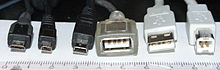
So look, it's a universal connector, with a device standard that is remarkably convenient. So why do they make my life so annoying for the connection on the other end? The cell phone has a different plug than the camera than the mp3 player than the portable drive. In the tangle in the box (see, I do get this pathetic) the cords all look the same, and since they all have a different small end, I take turns nearsightedly jamming the that side into my sensitive electronic device like a particularly slow child figuring out one of those shape puzzles. And if I lose the wrong one, there will be no pictures to share with my friends and family. Also, what's up with these remote controls? If I aim it at the tv, then nothing happens, but when...

4. Why I need to plug that in.
When the battery on my Blackberry gets low, it politely tells me that there is not enough power for radio use. I feel that this is essentially taunting me, as it has enough power to show the picture of me kissing my beautiful wife on our wedding day, to play the worst version of Breakout ever, or, you know, to inform me that the battery is too low for a call, but not enough to actually make the call. This is merely insulting, and therefore an enormous step from the outright hurtful technologies employed by the primitive cell phones that the rest of my family still uses.

One of the most irritating ideas ever is the beep warning for a low cell phone battery. It has the unpleaBEEP!t property of disBEEP!rging high-decible tonesBEEP!n your ear when you're speaking, which only pales in annoyance to the battery's tendency to fail at night. It's like an alarm clock going off in aBEEP!er room. You start drifting back to sleep, anBEEP!ere it is again. It's not yours (or you hope it's not), and you knoBEEP!hat everyone else in the house is waiting for someone else to get upBEEP!d either plug the thing in or pitch it off the nearest cliff. Now which one is the riBEEP! wire? Shut up alreadBEEP!

5. A sufficiently backwards magic is indistinguishable from CGI
M. Night Shyamalan has been dead to me for at least three movies now, two of which I didn't bother to watch. The Sixth Sense was clever, but if there was any gilt left on his lily, this last flick has got to be enough to shake it off, and then light it on fire and stamp it into paste.

It would be a stretch to say I watch the cartoon, but it's on a lot, and for kids' programming I admit I've seen worse. Its best success is in working kung fu along with elemental magic, going so far as to imagine forms, styles, and (unevenly) mysticism that blend in well with the different magical families. They sketch in some nice backgrounds, and have attractively drawn people with recognizable individuality and a good sense of kinesthetics. A whole cartoon series leaves room for a ton of pointless crap, and the entire arc appears to have been truncated and revised as it went along, but just the same, it's passable, the people and world are not so uninteresting that you couldn't glean a worthwhile quantity of metal from the inevitable heap of dirty ore. (Point of reference: when I was a college-age layabout, I programmed my own VCR--some jokes are too low even for me--to record Gargoyles and The Tick every week. The former was, similarly, a lot better than it had to be, and the latter I still think is entertaining. Adults write it all of course, and I'm sure there's got to be some artistic urge here and there, even when they're prostituting themselves for a buck.) It doesn't hurt my feelings that the cartoon was Americanized anime, and even though it was strange that the one white family among a group of vaguely Inuit people ended up the heroes in the live action version, by and large he didn't eschew the vaguely non-Caucasian hues that the cartoon mostly preferred. These things weren't the problem.

It's not in M. Night's favor that we have a whole string of beloved fantasy fare turned into films since he first came on the scene as an auteur director. Lord of the Rings had its flaws with respect to fidelity, but it caught enough of the spirit of the books to make a body comfortable to nitpick a handful of the details. No one really complained about the Harry Potter flicks. [edit: so far as I knew!] The two Narnia movies caught every bit of the vision and the beauty of the children's stories, while toning down those aspects that would bore the crap out of an adult audience. And I admit the kids these days are spoiled with semi-serious filmmaking. I remember that Krull came out when I was ten, and I thought it was amazing. But compare the filmed Telmarines from Prince Caspian (I believe rundeep quoted "straight out of Velasquez," which was spot on) with M. Night's Fire Nation troops, which started out as fairly compelling animation. The principle difference wasn't the source material, it was direction with a sense of pacing and drama, and (much as I love Aasif Mandvi and all) acting that could be coaxed to, you know, sell the essentially goofball stuff going on on the green screens behind them. Instead, the lines were read with the heft of a late George Lucas script. Hold me like you did by the lake on Naboo. Shyamalan copied the pivotal scenes from the cartoon almost exactly, but still managed to somehow strip the whole thing of dramatic power. It needed a cleaner exposition, some banter, some reason to care about the characters in any of the events that followed, and a better connection between those events. I really wanted to like it, but even my nine-year-old had complaints.

[Okay, partial credit: the kid who played Aang actually turned in a good performance, and the couple of scenes meant to evoke his innocence produced the movie's only charm. The shipboard settings looked cool, the Tai Chi moves were decent, and some of the scenic shots, borrowed note for note from the original animation, captured the beauty or majesty they were aiming for.]

Well, at least we were able to leave with fart jokes. Air- water- and earth-bending all correspond neatly to amusing bodily functions. We're still working on fire-bending. Spicy food? We'll think of something.

Friday, May 14, 2010

Five More Thoughts: Important Questions Ed.

1. Does this ever happen naturally?
In the first place, it impresses me that such a gigantic quantity of hydrocarbons has been infusing the crust all these millennia. Crazy that it's even there; crazier still that it's so well seized up in the rocks for so long. Organic crud is lighter than stones are, and lighter than water too for that matter, and you'd think that it'd've bubbled up eons ago, farted out into the air by seismic activity, tracked across the verdure by the dinosaurs' gooey talons. The earth's geological cycles, evidently (or at least by successful analogy) swirl around similarly to other convecting systems, they just do it really slowly. Impossibly slowly. The forests and pond scum of yesteryear get drowned, buried, subducted, chemically reduced. The suite of un-oxygenated organic materials ranging from from methane to graphite gets caught up in the cracks and pores, frozen bubbles waiting out the interminable centuries till the crust gets turned over and the pressure's released.

The oil leak in the Gulf is horrific, really, shaping up to be a generational national disaster, maybe an epochal one. What fucking hubris--nothing can go wrong? you really thought that?--and yet I keep thinking that with all these pressure bombs lurking under the surface, don't any of them go off from time to time without human influence? Are there no recorded gushers due to earthquakes? Along faults? This is not meant to be an exercise in douchey climatological contrarianism, just something that got me curious. There is (or was) a lot of oil under there, and are we the only reason it ever gets out? Sounds anthropocentric.

acoustic image of a methane plumeNo Googling turned up any inadvertent natural blowouts, although the crust certainly outgasses regularly. Some of the more famous modes are gas seeps from the sea floor, along which methane-eating microbes flourish. Near active geological regions and fault lines, these trapped organics, as well as water, can also get hot and get released. Mud volcanoes are one way that hydrocarbons get released from the earth, causing trouble, or just looking cool when observed in the depths. (Hee hee, mud "diapir"!)

Other reading has suggested that an oil slick emerged from Haiti's recent earthquake, maybe from new faults that released the subterranean material. Oil formations might underlie one of the Caribbean's more tragically impoverished communities. Would energy development save the island? (Resources have had ambiguous benefits in the past.)

underwater mud volcanoSome hydrocarbons on the ocean floor are present in clathrates, crystals composed of methane and water, resembling ice (more generally, clathrates have cage-like molecular structures in which various compounds can be incorporated). Methane clathrates burn, which is just awesome--I want some in my freezer to impress my friends. These are evidently sedimentary minerals, formed by the reduction of carbon dioxide by methanogens or some similar bugs, and fallen to the anoxic depths. It's been hypothesized that enough atmospheric warming and ocean acidification could release all this otherwise stable methane (a greenhouse gas), raising global temperature in a runaway fashion. This may have even caused the big Permian extinction. Scary, but according to the Wikipedian sages, most of it is deep enough that it's not expected to play the major part in our own lurking doom--I'm thinking of these clathrates as the shallower turns of the carbon cycle, an epicycle jiggling along the even slower elemental circuit. Methane lives a relatively short time in an oxidative environment, and if you go back far enough, free methane must have been more significant in the reducing Achaean proto-atmosphere. Where did the carbon originally come from? Condensed with the rest of the planet probably, buoying itself along the surface regions with record ebullience, as far as geological terms go.

And so we have mud volcanoes, but tar pits are famous too. They're still here, having leaked the heavier crude fractions along fault lines for ages, sustaining permanent lakes of sludge. We've found a lot of cool stuff preserved in there, and my suggestion is that we deliver time capsules into the deep waters of the Gulf of Mexico, sunken offerings for far-future paleontologists to discover, for whatever they may make of all of this.

2. Seriously, if the problem was that we neglected to clean the bathtub for a whole month, what makes us think that the solution is to get one of those spray bottles that you have to use *every single day*?
Update: it's still sitting there.

3. Did coal cause the Renaissance?
A lot of things changed at the end of the middle ages, which to us moderns, appear to have happened very fast (we like to forget the generations that passed in obscurity, as always, and celebrate the pockets of leisurely thinkers that woke up here and there). Anyway, suddenly we imagine a Renaissance, an explosion of art, science, economics, population, international instability, schism, and war. I've been asking myself, off and on, over the years of this blog, how the hell did it happen? Did prosperity cause democritization of power? Or maybe it was the other way around. Did the establishment of systems of learning and patronage (universities, monasteries, pet intellectuals) spur secularism in Europe (or Protestantism, the next-best thing at the time), or was it the reverse? To pick any one observation as the cause of the others is to taint yourself with ideology, and I try to avoid that. Well, usually I do.

Even if an inferiority complex about the grandeur that was Rome pervaded the West for centuries, progress didn't exactly grind to a halt. The accelerated close of the late middle ages may well have been a consequence of the enthusiastic recovery from the famines, plagues, and climate disaster of the the regrettable 14th century. Urbanization was happening apace, and it was running on wood: by the 1500s deforestation was already major problem. Northern Italy was pretty well wiped clean of trees when the Medicis aspired to employ the likes of DaVinci and Machiavelli. Later, Elizabethan England would be built on, and run on, imported timber.

Coal was well known enough by the time of the Renaissance, but it was not preferred thanks to its general stinkiness. But as the economy took off, there was little else to go on. Surely there was an interdependence in all these changes: innovations required fuel, and even if, say, ship-building couldn't help but be wood-intensive, the means of manufacture of everything else still had to be accounted for. It might be too much to say that new fuels caused the new thinking, but they certainly sustained it. Coal came just in time, and if it came to soot up the streets of London with obscene quantities of filth, it kept the imagineers of the age employed too. In our own times, the industrial revolution couldn't have proceeded without an immense supply of oil either.

Without energy availability, you can't do anything. What scares the shit out of me is that (regardless of the rest of the ecology) if sixteenth century people couldn't be sustained by wood, the current population sure as hell can't come close. If we're low on hydrocarbons, what the hell are we going to revert to as fossil fuels get scarce? The next amazing fuel? We might be a little behind. I deeply fear the limits to Cornucopianism.

4. Daddy, can we watch Spider Man tonight?
I am surprised to regard myself as an authoritarian. "What's allowed" is what they ask. Apparently, these royal indulgences are sufficiently rare that they're scooped up with budding entitlement. Uh, rated PG? I guess. (I don't give much of a shit about the language, but I tell the kids they can't watch violence until they understand irony, and as far as sex goes, I'd rather they learn to be in charge of it--I know far too well how much you should trust boys, and, well, we can have a discussion of what happens if you don't treat fucking very seriously--which the media seems a bit sketchy on, and I'm less comfortable sharing this than I thought I'd be when I first joined the club.)

Anyway, what's curious is that if a movie is watched once together, it becomes part of the family canon. Spider Man, now that he's been admitted into the club, is one of the handful of flicks that my little darling troll for obsessively on the on-demand (not to mention the sequels). Cartoons that I've happened to mention hating less are the preferred viewing when I'm around. It's like the cargo cult of parental affection, television selections in place of non-functioning airstrips. "See Daddy, we reproduce the stuff that was on when you loved us," or maybe it's a just their stretch for common ground. Am I so stingy in my interaction? In my affection? What a terrible thought! My god, turn it off, let's do something real!

5. Will this change the price of beer?
Yes!

I take back whatever I might have ever said about John Kerry over the years. The senator is proposing to reduce the taxes on brewers that make less than two million barrels of beer yearly (about the Sam Adams threshold). He's clearly targeting the microbrew industry, which is still strong in New England, despite the decline in the small-brew fad over the last ten years or so. For the tax discount, we're talking three bucks a barrel for the little guys, an excise tax, which I guess means on production, which according to my calculations, might save me as much as six cents on a ten dollar six-pack if it all of the windfall is reaped by the consumer. But you know, it's the priciple of the thing, and if it's an edge to keep local brewers alive, then I'm all for it.

(I hope they have similar relaxations for local agriculture. As it is, the regulations often favor the big boys...)

Friday, February 26, 2010

Five More Thoughts: Tweet-Worthy Ed.

They didn't quite rise to the level of thoughts, but I kept the label. All I need to do is figure out how to drop about 10,000 characters, and these would be perfect for a Twitter account.

1. Hey, you're Tony Randall!
It didn't happen in my adult lifetime, and our nation has a fine history of masquerading propaganda as fact in the available publication vehicles, but within the living memory of a lot of us, there reside the stolid anchors of yesteryear, the talking haunts of a then-new visual medium, reporting world events and worldly understanding based on their honest best guesses of what was important, as a trail of cigarette smoke rose up beside them in beautiful black and white. The early teevee news is remembered fondly; it didn't cater to the average schlub sensibility as transparently as the news does now, and it'd take the advertising model a few years yet to turn audiences into products instead of consumers. It was certainly smarter and more serious than today, or so they say.

But eyes to the screen was the growing need, and most people blame the corresponding advertising psychology (speed! visuals! drama! only we can fulfill your inadequacy and need!) for the inevitable dumbing-down of the news medium. Not me, I blame the wise-cracking kid of the News family, the weather reporter. Okay, the pre-broadcast meteorological tease and the goofy handwaving and scienticousness that ends up consuming about 25% percent of the show was covered in How to Watch TV News, and it remains annoying. My problem--the one I link to the whole decline of the news industry--is that these little bastards are utterly unaccountable for their weather reports. I mean, it's the weather, and we all understand that prediction remains an inexact science even with impressive modern data and models. And we also understand there's a marketing incentive to hype every drop of precipitation that ever threatens the broadcast area. But since you failed to predict the generational New England blizzard again, and as usual, the roads got plowed and people eventually got to work, you'd think some humility might be in order. You're the same guy who brags when you predict the temperature within five degrees, and today, you're acting like have the Delphic wisdom of friggin Apollo himself, when you just blew it yesterday.

When Johnny Forecaster is caviling around like Mr. Short Term Memory every day, how can we expect the other newscasters to recall important details of last year? Well, we don't anymore. And it's his fault.

2. So I'm sure they'll summarize the last 50 years accurately
Tom Brokaw reports: Boomer$. All I've got to say is finally that age group will get some attention.

3. More nostalgia
Warm, dry escapes from drenching weather always make for pleasant memories. I don't love driving, but driving in the rain can be a kind of solace. The traffic noises die out behind the roar, and you're in a private island of warmth and color in a gray, cold world. I remember driving along with my Dad on a few occasions, watching big, fat raindrops splatter on the windshield of his '72 Blazer, flattening out to viscous wet rings, like liquid spaghettios spread along the glass. Whump go the wipers, plocka-plocka-plocka repeats the rain, making circles on the glass. The heat's on, and there's some urgency that I'll have to get out in this stuff again when we get wherever it is we're hurrying to. I've been watching rain fall on windshields ever since, watching the rings form.

And here's something: it doesn't wet the glass like it used to. It could be my faulty memory, but in the thirty-mumble years since that ride, the essential rain/windshield interaction has changed. I'm puttering home through yesterday's downpour, and huge drops splat and spread, but instantly bounce back to a drop, roll away. These are not the raindrops of my youth.

Obviously the difference has to be the windshield. Mine is more hydrophobic than the one on Dad's Blazer was, reluctant to let the water spread. I think I need a better history of car care products to really address the depth of this, but nowadays, silane-based surface treatments are pretty common, and I don't think they were in the 70s. If I never got around to doing it myself, it's a safe bet that my car was Rain-Xed on the dealer lot at some point. When I was a little kid, automotive wax products were certainly around, which would have similarly repelled water, but I don't know if any were appropriate for the windshield, and the fact that Dad's windows were hydrophilic suggests that he didn't use it there. A year of road filth would lower the surface energy of factory-fresh glass too, and Dad bothered to wash every now and then (as well as hand wax the rest of the car), and maybe that's all it is.

Regardless, progress is disconcerting this way. It erases the intimate moments of the past, sets them in no other medium than our fragile memory. This isn't always bad, but there are also times, when we're stranded warm and dry, that I want to look at the window and say to my daughter, "see the way the rain makes circles on the windshield like that? I remember driving with my father at your age..."

4. Conditioning
Massachusetts is currently trying to pass a texting-while-driving law. It's ridiculously specific set of behaviors to target, but on the other hand, I'd hate to leave a law against general motor assholery to the snap decision-making capacities of the cops.

Anyway, everytime the local NPR affiliate spurts out this legislative drivel, my instinct is always to reach for my Blackberry.

5. Boo-eee-EEEEP!
Any of you still have a landline? Here's what bugs me most about this service: if the technology is sufficiently advanced to inform me, following that 130-dB screech in my ear, that I failed to dial "1" before the number, then why is it incapable of going ahead and placing the goddamn call already? The cell phones have figured a way around this issue, and it's the same provider. So what if I can't push the buttons that well! Stop rubbing it in!

Tuesday, November 24, 2009

Five More Thoughts - Even MORE Shtick Ed.

I always figured it a German sort of creole, but the spell-checker brings up "shtick" without the "c," and so who am I to argue? Eh spell-chequer wood knot lye two Mie. Whatever, the point is that the routine's still pretty much the same (wah wah wah wah, me me me me), and the alleged thoughts are too (perils of sarcasm, music inability, resentful foodie-ism, family follies, commuting--hating myself for doing it doesn't excuse constantly writing the same post). I'm going for more frivolity than last time, as I continue to avoid serious work, and to procrastinate a book review that requires an ounce or two of actual thinking. I don't even care what day of the week it is.

1. Not!
In age-old posts, I liked to speculate about language and culture. If Russian, say, is fabulously suited for sarcasm, Italian (by definition) for heated romance, then Yiddish is a great dialect for self-deprecating irony, or at least that is something years of consuming American humor has taught me. (I am not comfortable with this sort of generalization, but I needed a segue, you understand.) Even though life has any number of cruel built-in jokes, it's still not easy to go through it being only half-serious. Well, it does allow you to cut yourself a lot of slack when you make assertions, which is always handy in those cases when those assertions happen to be wrong, but unfortunately you can't ace living when all you ever go for is partial credit. But even if you must hedge constantly, it's better than being dead-ass wrong on everything without ever showing your work, right? I equivocate a lot, too. It drives me crazy, except when it doesn't.

The problem is that circumstances develop which require more confidence. When you sarcastically load every utterance with its own counterargument, savor every double entendre, then where does that leave you when you want to say something sincere, to someone you like or respect? I've been catching myself quipping all sorts of things that, if one were to fail to pick up the meaning I intend, then they'd be left with the exact opposite. "I like the dress, Sweetie. No, it's my honest opinion. No, really!" I don't always make good first impressions.

The fact that some people seem to understand what I mean, at the level I intend it, is a little unsettling. Either I'm a better communicator than I think I am, or one with fewer shades. Or else you're just as nuts as me.

2. I'm not dead yet.
When I was a kid, the Lego brand symbolized the quality sort of toy building bricks. Unlike the competitors that had been around forever--patriotically-themed frontier beams, the awful hub-and-spoke networks with the derogatory Romany name, or the metal screw-together bars that were vaguely Communist in their ugly, ill-fitting universality--the newfangled little snap-together plastic cuboids, with the bizarre product literature translated from the original Danish (and quickly-discarded pictorial instructions that were smart enough to avoid translation altogether), were awesome. The bricks were small enough, and fit together snugly enough that you could make anything out of them and have it stay together.

There were a small number of specialty pieces that could add angles, hinges, wheels, and a few other useful odds and ends--wings, 90o headlights, cones, cylinders, windshields, and little dudes that achieved a sort of happy minimalist humanity--that could let a kid really innovate. I came to the age-appropriate scene when they were working at bifurcating their product lines to sucker in the completists. How I begged my mom and dad for the space-themed Legos (rockets, antennas, clear yellow blocks). My brother was big on the castle set (had some wall blocks, lances, Lego trees). It didn't take long before they all ended up in the big box. [I got a kick out of the "expert builder" Legos too, which ended up in a different box.]

The pre-made horses for the Lego knights were probably a bad sign, and over 25 years, the trend seems to have grown entirely out of hand. Best I can tell, each set is now comprised of approximately three highly specific, complex pieces that only nominally interact with pieces from other sets. I thought I saw a Bionicle thingie that didn't have any of the Lego buds on it at all. Might as well buy action figures.

In grad school, I bought Lego Racers (the video game), which, while having nothing to do with snap-together proto-engineering, somehow caught that spark of honest fun that some artist once caught on a smiling plastic yellow face. And virtual Lego has only been improving, by the looks of it. Lego Rock Band looks like tons of fun, somehow a little more pure than the block-less version of the game. Legos are dead, but the idea of Lego lives triumphantly on.

3. I'm dancing! I'm happeeee!
I've gone on about Rock Band, which is like a whole-family karaoke-full of fun. I like that we can do it together while I wait for the kids to warm up to the idea of participating in the jug band, and it's fun to pretend to drum, but of all the hobbies...

In my non-musical musical family, we're singers least of all. To be fair, my father (who is also the only one of us alive that can keep time) can produce credible, ear-pleasing, Garfunkular harmonies, but the rest of us possess voices that have been known to send dogs whimpering inside during the full moon. The local minister canceled Christmas in 1979 to keep my grandfather away from the hymnal. Yoko Ono once threw an egg at my mom. My poor daughters both adore singing, and enjoy chorus greatly, emote the notes innocently and without shame. My darling little girl (who I'd love to see get a shot at acting) has had a hard time landing prominent roles in the school productions because they're musicals. And yet I'm all for it--what can make you happier than singing, after all?

So getting a compliment for my voice was something entirely unexpected (and I'm sure my wife regrets it deeply). Granted, it was in comparison to two pre-pubescent girls trying to sing male parts, but I'm taking it. Evidently, I'm at least occasionally capable of hitting the same two notes that John Fogerty, Steve Perry, and Pete Townshend sing most of the time. Sweet.

(As I write this, Stephen Colbert is singing along with Elvis Costello, and faking it pretty well. Fucking talented people.)

4. Peer Pressure.
Colbert completely justifies anything else Comedy Central might ever do. I still haven't figured out what I like about Food Network (as I've often complained). Okay, I like to ogle the food, which they sometimes highlight between the personality parade. I also get a kick out of how they dub Japanese-accented English over Masaharu Morimoto's broken English. (Lou Ferrigno is somewhere flexing his muscles in sympathy.) I might enjoy Alton Brown's Mr. Wizard schtick if he weren't so damned smarmy about it.

And what's the alternative? Both times I've watched America's Test Kitchen, I've wanted to strangle that bespectacled know-it-all who tells me that everything I know about cooking is wrong. The presence of some interesting facts and explanations in there is that much more annoying, somehow. Maybe it's the presentation, like I'm being addressed as a ten-year-old. Any good material scientist knows the importance of morphology; any chemical engineer who's been around the block knows how touchy biochemical processes are to shepherd. I don't feel I need the level of condescension they offer.

Yesterday, I got schooled in the use of a potato ricer, which all the TV chefs have been playing with lately, and which I deeply suspect is a useless trendy gadget. Glasses-guy accented his shopping guide with an after-school vintage cartoon telling me the viscoelastic spuds I grew up with just. aren't. cool. Now, I always thought "creamy" was the goal, and my trick, such as it is, has always been to put plenty of fat and milk in there, as I whip the living crap out of them, mm-mmmm. I admit they're a little gluey. But why not? I associate "fluffy" with the under-processed (and slightly under-seasoned) taters that frequented my grandmother's table, and were preferred in eastern European households (data set of one). I admit they weren't my favorite. My mom also had a ricer at one time, long ago, that she used to turn leftovers into baby food. So I'm thinking, you're shitting me, right?

Of course I bought one. I'll report back.

5. I hate driving, have I ever mentioned that?
First we tried the local cooking shops, but the ricer required a trip to the nearest big megamall (helping to confirm the suspicion that it's a high-class, food-porn sort of gizmo), which, I'm sorry to say, isn't really that near. I hate everything about these places. I hate the crowd, the parking, the forced festivity, the canned indoor air, the designed inefficiency of moving around, the frenetic sense of holiday consumer pressures, the time crunch that prevents me from looking around at the rare item that's interesting (such as anything in the bookstore).

It's not even officially Hell Month yet, but there was no parking spots at the mall today. I'm happy to walk, but don't care to be stared down by looming blinkering fatasses on even the parking outskirts. Nor do I appreciate the dangerous pedestrians who scoot in front of my car to cross the street. When I stupidly jump out in front of moving traffic, I'm sure to make eye contact (what driver doesn't appreciate a thank-you wave for being forced to yield?) at least enough to avoid getting run over. It's a simple question of weight ratios, after all.

There's a special place in hell for the drivers of little cars that park deep in the slots, making them look empty, or better, let's damn the drivers of the street behemoths who block the view. The whole American consumer culture is overdue for a reimagining (which may not be voluntary when and if it comes), but I've got to tell you, in a lot of ways I'm more motivated by personal, and largely irrational annoyances.

[I need to go to bed. I'll clean up the English tomorrow, if so motivated.]

Friday, November 13, 2009

Five More Thoughts - More Shtick! Ed.

I've heard that we need more shtick around here, and I figure I can share this thing where I ramble along five times longer about exactly as much nothing, kind of like if Seinfeld was verbose, unfunny, and had no audience. Since I don't really go in for topical news, I limit myself to extremes of scope, blathering about poorly-illustrated big-picture stuff, or else going after the trivial and banal (mostly about myself). Is there any doubt about which is more satisfying?

Also, I'm not genealogically qualified to use this many Yiddish-isms. Oy, the chutzpah. It's probably because I learned to read from a stack of old MADs.

1. "Seduced, shaggy Samson snored..."
I never really intended to become a shrill, embittered liberal, especially considering that my political views haven't really changed at all. We can trace this development to any number of things--studying too much how ideologies relate to practice, reading too many other cynical types, or suffering the continued indignity of working for a living--but the real answer is more insidiously obvious, staring right me. I grew a ponytail.

It took about a year and a half, and I still couldn't tell you why I did it at this age. It wasn't really laziness, and certainly not vanity. Maybe it was just cheaper than a Corvette.

A dreadful, ratty tangle of a thing. Let down, it looked like a Troy Polamalu style forehead-and-curls, although my wife thought "pro wrestler" was a better description of the wet, stringy strands (minus, of course, either sort of beefcake). My daughter thought I looked just like Slash, from Guns-n-Roses, which is actually why I kept it as long as Halloween. (I'm going to let y'all use your own imaginations as to my actual appearance.) Pulling it back allowed me to go to work.

If you're a professional nerd, then slacking on your appearance can actually be a keen career strategy, way to generate the illusion of competence. Who would you trust to think up an innovative techie solution on your behalf: the impeccable smug little douchebag in an immaculate suit, or the slovenly ponytailed grad-student-looking guy with the pens in his stained shirt pocket and old sneakers on his feet? I mean, really! As my hair proceeded through its Einstein and its Newton phases, lucrative contracts came forth like manna on my heretofore parched horizon. Speaking confidence grew, and the reports and marketing pitches grew more successful. There was even a result or two, if you can believe that.

I cut it yesterday, not as short as it's been all my life, but I think enough to save the shower plumbing. I declined to go all-in, for fear of losing my powers. I can stretch it into a tight nub if my career flounders again, or if I discover I'm insufficiently shrill.

I wonder what would have happened if I grew a Lenin goatee.

2. News you can use.
Hey, speaking of pecs, and what children can be led to believe, probably the funniest thing I ever taught my daughter was about chest anatomy. "Hi Grandma!" "Hi M--" "You have boobs!" "Um…" "Girls have boobs and boys have pectoral muscles!"

I was so proud. Only two or three years old, and she'd really game the reaction of adults with that line, always knew how to deliver it for a laugh. Ten years later, her personality is pretty much the same, witty and sincere and off-the-wall. She's awesome.

3. They Live!
So I've been watching the remake of V, less because it's good, and more out of some remembered appreciation of a halfway decent miniseries (not to mention a young boy's crush on a badass hottie alien commander, which hasn't warped me at all, no sir). The new version seems to have taken for granted the menace and conflicting sympathies that the old version took time to build up, but that's not the real problem. You could tell that the series was fucked as soon as they introduced the nerds.

There are very attractive, well-adjusted science fiction nerds, don't get me wrong, but I've got to tell you--even if he has the correspondingly unlikely hot FBI agent for a mom--there's no way that kid has spent any time reading books and watching Star Trek. He's got that smirky disarming grin honed to such an art form that it's impossible to imagine he's ever had to escape into his imagination or to waste time doing things like "thinking." The lucky bastard smiles like he's had the world on a string since he was ten. I could see him trying to score with the alien for the novelty, but I'm not just buying the sincere infatuation.

See, the Visitors have good reasons to look attractive, given that they have a desire to seduce the human population into subservience, with their smooth talk and gentle expressions. We can see how boys who've grown up jerking off to Milla Jovovich might gravitate needily to sexy ETs. And presuming those are well-integrated Terminator-style skin suits, complete with human-like nerves and veins and a limited set of plumbing, we can see how the aliens could sustain certain needs and desires with respect to the other species. It's also not inconceivable that they're just total interstellar pervs. But standards of attraction are pretty arbitrary, and I don't see why the aliens would be drawn to the same late-aughts American-style good looks that they're forced to inhabit for the purposes of conquest.
I'm not saying they'd prefer prettyboy's dorky fat friend (who is the show's only slightly convincing normal) but rather, they're lizards under there, and it stands to reason that they'd go in for humanity's more reptilian specimens (pictured). Failing that, I could see them being intrigued by our more scaly, well-preserved members. Lizard aliens chasing around wizened old grannies? Breaking the hearts of lonely psoriatics all over again? Now that would be great television.

4. "Packed like lemmings into shiny metal boxes…"
If V teaches anything, it's that you should be suspicious of authority, especially when they have something to gain from your complacency. Where is this better illustrated than highway police?

There's some actual service they provide, deterring reckless behavior and directing traffic around an accident, but these things are occasional. The real purpose of the highway patrol is revenue generation, to write enough tickets to keep these punitive fuckers in jackboots and donuts. Did you ever wonder why the streets get so thick with cops at the end of every quarter? When I was in D.C., they had just made a big deal about installing red light cameras (cutting out the middleman, a perfect cash spigot). If no human being is around to see you roll through a red light, then what exactly is wrong with rolling through a red light?

The traffic police could keep their emergency response function without being such colossal assholes. Yeah, we all know what it's like to be pulled over, but even the nature of their presence is dickish. Drivers naturally cower before police cruisers. They'll shrink as far as they can into the shoulder and freeze, even when the cop is going the other way, as they wait respectfully for Johnny Law to mosey on by. And no motorist alive will pass a cop on the highway. In fact, when a statie is spotted by drivers, the usual response is to slow down to 40 or so, and try to act nonchalant, as if the police are that dumb. (I feel it's respectful to drive past them at normal legal speeds.) Police presence can confuse drivers enough to make them less safe. Last week, I had one of these assholes parked on the median across from the entrance ramp, doing not a goddamn thing but causing misery. Drivers coming up the freeway were jamming on their brakes to feign innocence, and the ramp was stalled well up onto the connecting highway. I'm surprised it didn't cause an accident right there, and I'm sure that the subtle effects of road rage trickled on down the line. That police officer caused drivers to shout at each other, yell at their kids, have an extra drink when they got home. Preserving public order, my ass.

5. Insecurity Suite.
I pay six dollars a month for security software for my provider. What I need to keep secure are, I suppose, my ten or so yearly credit card purchases, and my blogger and email passwords. I'd like to keep the photo archives and checkbook register free from mischief too, but we back those up every once in a while. I think if my parents or the four other people in our address book got an email from us asking their checking account number, they'd probably call us about it. I don't know if the security service is keeping those things safe, really. Like most users, I'm taking my chances under half-informed faith.

I will say this, however. The primary service that the security suite provides is gumming up the hamster wheel in there. Inevitably, the program that freezes my computer when it starts up is the one called "Security Communication Facilitator." If it is doing such an obviously abysmal job of facilitating communications, I don't really expect much from its security services!

Of course, Microsoft is the undisputed king of useless services. I'm typing this out in Word right now, and I've already been gifted with automatic ellipses (no matter how many times I change the settings in autotype…), automatic whole-document formatting on the italicized headings (who could possibly want that?), and that fucking autosave that sits idle for the long minutes I think, but suddenly sparks to life the second I touch a goddamn key. And for god's sake, do not paste formatted text!. I copied it from another program, you assholes, but I intend it to look like this document I'm putting together. There's a special category in hell for the simp who dreamed up the PowerPoint bulleted auto-presentation, and for the innumerate retard who set the defaults on Excel's charts, with their signature awfulness for any kind of data presentation.

One thing I've learned as a blogger, is that it's a lot of work to keep things going at any kind of volume. It's why this form works best for people attuned to current events, or with a fine ear for minutiae and clever or funny gimmicks. It occurs to me that there is more than enough material in the annoying quirks and features that one accommodates in the day-to-day operation of human-designed electronics that a cranky person could obsess over, one bug at a time.

Just throwing it out there, if anyone wants readers, but doesn't want to go through the trouble of thinking up things to write about. You could get rich quick. Or alternatively, if such a blog exists, I think I'd like to read and champion it.

Monday, June 15, 2009

Five More Thoughts: Relativism Ed.

rel•a•tiv•ism (rěl'ə-tĭ-vĭz'əm)
n. Philosophy
A theory, especially in ethics or aesthetics, that conceptions of truth and moral values are not absolute but are relative to the persons or groups holding them.
It's as good a starting place as any. In my usual halfbaked way, and egged on a little by two of my favorite readers (which, relatively speaking, is quite a high fraction of them), I was intrigued to write a little point/counterpoint from the scary edges of moral relativism. My divinity, like the man said, is caught between the colors of a butterfly.* The second two thoughts are add-ons, uninspired observations about the tedious and narrow relativism that one needs to employ in order to take American politics seriously. And even the number five can be relative, of course.

A relatively weak theme, to be sure, but hey, what else is new?

1. And it doesn't mean a goddamn thing
It's hard to deny that despite our efforts to describe the experience of being, our thoughts and actions are merely products of the underlying physics, be they deterministic or probabilistic. Consciousness, whatever it feels like, whether or not it can be predicted, and, paradoxically, whether or not the basic phenomena are knowable enough for us to use them to sufficiently describe ourselves, nonetheless has to be the result of these processes. Thinking meat is weird stuff to be sure, but those choices and rationalizations it makes are manifestations of fundamental physical processes, the elaborate details of some long-term and ridiculously complicated path the universe takes down another cosmic entropy sink.

Not that anyone wants to fall down that rabbit hole. My goal here is more empathy, and the point is, no matter how satisfying it can be to undercut a moral argument, you can always go down one further, and really, what fun is that?

So we wretched Adams make our indispensible approximations, practice moral relativism on some scale or other. From my point of view, philosophy, in its broadest sense, is the art of exploring the consistency of ideas in light of some common assumptions necessary to keep ourselves sane: math works, free will exists, that sort of thing.

But at the bottom line, those assumptions are just good guesses. If we're into ethics, then they're practically arbitrary. Even considering that moral development is based on optimizing things like individual and group happiness, food supply, and genetic propagation, at heart our moral stance is whatever we choose to believe it is. It's like faith that way: true because we choose it to be true. And it leaves a lot of room for elective ethical frameworks. We can believe that our urge for compassion and that the organization of nature is a divine order, and it may as well be. Or else we like to believe that equality is a righteous humanist impulse, and so it is.

The practicing political ethos makes a lot more sense when you think about it that way. Why not go ahead and build your ethical system on the party platform? Why not acknowledge exceptionalism as the primary motivator of the populace, as most other societies have, in fact, admitted, right along with the corollary that other groups are naturally inferior. Why not lust for the glory of battle, get a little warrior worship going, accept violent death as the preferred end to inevitable suffering? I'd tell you that I don't accept that morality, and I really don't. I'd tell you that one of the offensive things about the American way of doing things is that we pretend one moral pose and practice another. I'd tell you that a good philosophical framework is consistent with observation and doesn't contradict itself. But calling inconsistency a vice is arbitrary too.

2. And if pigs can fly, then surely so can I
[And I type the first draft of this here on the plane. Is there any vehicle to which the human element is so obviously secondary? It's like sitting in a torpedo which has ludicrously lobbed itself into the air, using 90% of its mass to temporarily and futilely defy gravity. Inside the tube, people are lined up and watered like cattle in a barn, lonely together for the miles of thin, dark air that separates this slim silver dart from any other object. The earth itself is invisible under clouds we can't look down to see. There is solidarity here, unspoken and ignored, but should anything happen, in the exceedingly unlikely event it would be given an opportunity to play out, it's understood that we make up some core of a human civilization, with thoughts, prejudices, relationships all nascent and unexplored. Somehow it's understood that everything human can be represented in or developed from this small population, or in any of the other small isolated populations that are currently racing through the sky. Some passengers will share pieces of themselves to pass the time. We bump elbows and knees and look uncomfortably at our neighbors, reduced to the sweaty, tired, undisguised essence of our human selves. There is a thump, the nose of the plane tips forward. Was it supposed to do that? The lights flicker. Je--]

3. Like a bullet, as a friend
It's often said that there's no difference between the American parties, and it's not that they don't they stand for slightly different things, but there is surely a political society that has never evolved far from its expansionist, patrician roots, and it takes in most of the government.

I seem to have inherited an annoying habit of overusing words like "the state" and "the system" when I make political arguments, but there is some sort of continuous bureaucratic entity that appears to operate with its own arbitrarily defined, but predictable, ethical framework, reflected even in the few operatives who were sincere in their stated desire to change it. Maybe the better word for that thing is "the company," which makes our leaders quintissential company men and women.

The description seems to fit. In the company, the customer is always right, but the goal is really to make a buck off him, and the marketing to that effect is intense. Everybody works hard, and if they succeed or not, whether or not they agree with the corporate aims, the employees, owners, and bondholders are deeply invested in its persistence.

Perhaps Obama really did crave sunshine in government when he campaigned, but on issues like state spying, executive authority, and government-sponsored torture, he's been drawing the blinds as hurriedly as the last guy (and certainly as quickly as well-documented douchebags like Sens. Lieberman and Graham). The idea that this will inflame our enemies and threaten our soldiers is the starkest bullshit, of course. It's really just maintaining company policy.

No corporation fears ennobling the competition. The competition already resents your market position, and will resort to whatever means to take it that it is willing to risk executing. And we get that there's a marketing campaign for our competitors lurking in the bad press, but surely, they are already daring enough. What we've actually done to them, they already know with deadly certainty. The real fear here is that the torture photos would lose America customers. It's us that Obama doesn't want viewing the things. For the good of the company.

4. Add it up, extract a lesson
And see, that's why I find political writing so damn tiresome most of the time. Whether you side with the stockholders or bondholders, it's still, if you want to talk about your relativism, rah-rah for the company.

We read it because we're angry, and because we care, but political writing is a marketing entity all to itself. If you want to call that sort of analysis a literary genre, and you can, then partisan opinion writing is fucking fanfic. But still, a good writer can transcend his fiction aisle (the bar may, in fact, be higher for talented genre authors), and on the political blogging scene, there are precious few that can get away with hard partisanship. As always, it helps to write well, be aware of larger dynamics than some silly Republican/Democrat debate, and I'll tell you, well-delivered humor never, ever hurts. (Since the Republican party has had thirty years to write its own straight lines, it's no surprise that the list over there is a more than a little left-leaning.)

Anyway, the gang at The Poor Man Institute is one of the few who get away with using words like "wingnut," challenging the genre establishment a little bit. Good humorists, good general understanding, and an occasional engineer's sensibility that takes pleasure in mocking the likes of Gregg Easterbrook. I like them. So maybe you can understand why I found this a little disappointing:
Half the time Obama considers himself kind of lucky to be following George W. Bush’s opening act: it was such a profoundly colossal disaster of an administration on so many levels that all Obama has to do is not wreck the economy, start a catastrophic war of choice on false pretenses, let a treasured American city drown AND try to gut social security all at once and he should coast to re-election by landslide.
I mean curv3ball's point is fairly cynical in that sure, anyone would look peachy following that act. But even there, we're talking, what? Two out of four? And that's before the start of hurricane season.

5. Can that be all there is?
Well, it's all for today.


*here (and borrowing liberally throughout)

Tuesday, March 31, 2009

Five More Thoughts: Let Them Eat Cake Ed.

Don't we all wish I could shut up about this stuff? If you're tired of sarcastic half-baked economic thoughts, skip to #4. If more suspicious foodie-ism isn't your bag, just go to the last one. If the antics of clueless fathers and husbands bore you too, then I guess I'll review another book eventually. Does anyone remember when these things used to be frivolous?

1. Warmed Over Red Meat
Like most Americans, I've developed a growing animosity toward the financial management of our country. In my case it's tempered by a certain long-term, big-view fatalism, but still, I look at the criminal Madoffs and whining DeSantises compared to my negligible prospects of ever getting out from the immobilizing weight of debt--never mind the prospects of ever getting rich--that a prescribed life of education, family and salary stick you with, and I can understand revolutionary fervor. Then I think about the sickening possibility of actual mob violence, and how the mob, when it has managed to win, has tended to produce mammoth injustices of its own, and I downgrade my smoldering class resentment into patriotic-feeling thoughts about the threat of the mob when the aristocracy gets out of hand, and, short of violence, how great it would be to put these motherfuckers in a position where they have to work to get by like the rest of us.

So I settle on the happier counterfactual where R&D is remunerative and finance is an exhausting niche for overspecialized geeks. Because that would be different, oh yes, the believers in reason would rule the world at last! Unfortunately, and speaking of working for a living, this leads to speculation about what exactly it is I'm producing, and then to the conclusion that I've spent nearly a decade leveraging my limited technical skills to a similar (over-)extent as the banks have with their finite capital reserves and debt obligations, selling the idea that someone down the chain will come through with the intellectual goods, or that my own skills will catch up in time to perform the increasingly unlikely stuff I propose. I suppose financially lucrative R&D would also attract a different kind of scientist, and companies like mine would be filled to the rafters with confident young men with more attitude than talent, and the halls would be thick with power ties and greasy smiles and stress. Even more marketing, in other words, to the eventual exclusion of any product at all. Then I sigh and go back to surfing the net.

2. Manna
One positive thing this finanical mess shows us however is that a gigantic shadow economy based on very little tangible value, can, in fact, exist, at least for awhile. The basic iniquity of this situation isn't that we have a high standard of living based on nothing much, it's that the standard of living is highly unequal within the same system. It doesn't have to be that way, or rather, it wouldn't have to be that way if humans weren't collectively such a bunch of assholes. If it could somehow enter our species' consciousness to do so, we could base an economy on nothing more than telling each other jokes, swapping files, gambling, and blogging. If "productivity" can just grow forever, then that's a logical enough conclusion.

Now, naysayers might argue that someone under that imaginary system would still have to grow the food, maintain the transmission lines, clean up, produce the pictures, and so forth, but the truth is that we have more potential workers than there are jobs needed to generate all the crap that makes us happy. This is true in the United States certainly, where for decades, we have been able to increasingly count on automation, an endless supply of willing menial labor overseas, and plentiful oil energy to make our society go at the pace we enjoy. At some point, we could get out of the "production" mindset entirely, and finally abandon the annoying pretense of distributing wealth by "working for a living," and instead share the sort of effortless ride that the fat cats have been on for generations, without even their ulcers and burgeoning self-importance.

You know, at least for a while.

3.Soylent Green
And hey, we've already solved the challenging half the problem. One thing our--cough-cough--free market economy does pretty well now is distribute the cost of the pesky externalities. Sure there are political ramifications to oil and electronics being produced in regions that live more poorly than us consumers of them. The cost of that delicate diplomacy or that ballsy belligerence (as the case may be) doesn't come out just in the prices, but is also spread out among all of the consumers that benefit from it by other means. (Profits, of course, are another matter.) Similarly, it would be alarming if all the costs of controlling the waste streams were included in the prices of all our favorite products. (Hey, the selenium all leaches downstream, and you can't prove anything.) Can you imagine if the price of invading Iraq went into our gas tank? If the entire cost of cleaning up the shit lagoons went into our hamburger (if, in fact, we thought so far ahead as cleaning up the shit lagoons)? If the entire cost of maintaining the banking sector came only from our retirement savings? If the entire cost of our consumption came from the value of the stuff we produced?

When we hit that fantastic Star Trek apogee of labor-free production worldwide (hey, we'll still have automation), then management of natural and political resources will be the only things left to worry about, and fortunately, that social machinery is already in place. Maybe by then we'll have it pointed the right way.

4. Cake
I had a fourth short rant puttering along when I realize I'd already written it six months ago, right down to citing Doghouse Riley (who you should read in general). While I disagreed with his main point this time around, his complaints about foodie magazine pretensiousness came through loud and clear. We subscribe to a handful of these recipe magazines in Chateau Keifus, which vary in articles from endless filler variations on mashed potatoes to boutique faux-cultural items presented for your envy (I'm convinced that the "busy mom" articles are engineered to be crappier than the "summertime memories of Montalcino" spreads), profiles of unaffordable or unavailable key ingredients, the celebration of a local food culture that never leaves California, or disappears from upstate New York from October to May, to the column on how J. Random Celebrity eats better than you.

And it's reasonable to assume that the pretty people do eat more fashionably than I do: they have more cash, wider travel, and more opportunities to get tired of fine dining. There's a lot going for the skill in preparation, but I suppose you'll never get Mom's meatloaf either. Or something. The foodie-tainment industry has to strike some sort of balance there, but I don't like it when they rub in how hopelessly provincial I am.

5. Spicy Meatballs
While we're on the subject of celebrity food...

"Hey, Keifus, do you know who you look like with your hair pulled back like that?"

"Uh, no."

"Mario Batali!"

"Are you shitting me, dear? The dude is half my height, and at least twice as big around. He wears clogs. Mario Batali? You wound me."

"Well, he does have a beard. And with your hair pulled back..."

"He looks like a giant friggin' pumpkin."

"I don't know what your problem is. I'm giving you a compliment. He cooks great food."

And to be fair, doing something as well as Mario the Red appears to do is sexy. Maybe someday I'll afford to take my wife to one of his restaurants. It'll be payback for years of general relationship cluelessness.

The story might end here, but in the pretend genealogy of housecats I find myself unwillingly Marioed again, and since the children must be the parents of our cats, that leaves me, chillingly, as the grandfather, or "Grandpa Mario," as it works out, thanks to some passing resemblance to the curly proprietor of a famous Japanese-Italian plumbing and pest control firm.

"Mario? Are you kidding me? He dresses like Mickey Mouse."

God, I'm shallow.