Saturday, April 19, 2014

Review: The Goldfinch, by Donna Tartt

Well, I suppose I should finally get around to reviewing this novel, now that Donna Tartt has gone and let Pulitzer get all over the thing. It's taking up a lot of room in the pile anyway.  I'm embarrassed to find myself riding the critical bandwagon for those these sweet, sweet Google hits (dozens of them!), but I want you all to know that I read it and formed opinions of my own a good month or so before it was Literary.

The goldfinch in the novel isn't a bird, but rather The Goldfinch, the famous painting by Carel Fabritius, reproduced way down below.  In the alternate timeline* of the novel, it goes missing in a terrorist attack on the New York gallery that it's touring. (The attack is an undisguised parallel--and really, all the big metaphors in the novel are out there in the open and enjoyably discussed--to the artist's life, which reached an early end when the gunpowder factory next door to his studio blew up, taking the poor man out, and most of his work too. Tragically so: Fabritius was the most respected pupil of Rembrandt, and to read Tartt describe him, he was innovative almost to the point of anachronism, a rockstar back in his day.) In the mayhem around the museum explosion, the small painting falls into the hands of 13-year-old Theo Decker, and even the actions that lead the boy to keep it are innocent enough at the beginning--he couldn't be more traumatized--but as the novel unfolds, the piece persists through his young life, hidden under beds and in secret lockers, a token of undeniable significance that he feels lends similar significance to his own life struggles.

The Goldfinch is a long one, but it flies right by, even while including its share of heavy thoughts. I find a lot to admire in Tartt's writing style. It's as though every scene washes in and washes out in a heady wave of intelligent free-associative goodness, but it never lingers too long, never bogs down in the details. And if the plot, at times, appears to be tacking back and forth a bit, it doesn't stop moving, and doesn't lose its momentum. It's as if the author has found some interesting new middle area between tightly-mapped literary convention and what the sloppy course of a life is actually like. The dialogue reads like this, too. It's full of the inhibiting awkward pauses and stutter-starts that infuse real conversations, but it doesn't lack the usual storytelling impact that dialogue gives. It just makes it feels a little more natural.

[And since it came up at one point, does Tartt have any tells as a female author? Well, about 40% of the novel discusses Theo's relationship to his mother, and for a bildungsroman, it doesn't focus much on the usual checklist of boys' "firsts."  And as in the last novel, the role of Manic Pixie Dreamgirl is now occupied by a full, complicated female character who could have had a story of her own.]

Or maybe what's telling is more an old-school sort of character development. The book reminded me a great deal of Great Expectations (and if there's a character named Pip in there, then probably this can be taken as intentional), which I admit I haven't read since high school. I find that to be a bizarre connection in some ways, because Tartt really doesn't share anything I could spot of Dickens' voice, and certainly isn't infected very deeply with his morality. Nor is there anything in any of the settings that I would remotely describe as "Dickensian." But on the other hand, our protagonist does, like the original Pip, skirt among the gray spaces between upper-crust society and underworld criminality though he doesn't really belong in either sphere.  It's a schism struck by a random event, and the book takes us readers on a tour through both worlds. He's given a benefactor, given a love interest by dint of authorial placement (damaged, magnetic Pippa), of similar non-chemistry as Pip and Estelle ever had, but with a conscious statement to make about all of that. And if our new cast members fit perfectly modern molds, the characters have that same kind of fullness and extravagance as Dickens', here pulled up short of caricature (at least most of the time**).

As he develops, Theo comes to incorporate both poles, class and corruption, into his character.  After the startling loss of his free-spirited nurturer of a mother, we turn to sad, grand outskirts of Las Vegas and his alcoholic gambler of a father, possessed of a kind of blowsy self-centered charm and lurking viciousness.  (He probably doesn't deserve his fate either.)  Theo develops into a bright underachiever with a self-destructive streak (ha--unlike Pip), and gravitates into the world of antiques and fine art, which is the commercial side of that same morally vague intersection. I don't actually think I like Theo all that much Nicholas Hoult as Theo[and I need to mention this somewhere: my mental images of characters are almost never cast as real-world actors, but in this case, he's clearly played in the movie version by this kid], but I do like how he looks at the world. He has a good eye for the flaws in beauty--like the natures mortes style that his mother describes--the chain on the golden bird--but he values the beauty for its own sake too, which is richer and somehow sturdier for the vulnerability it can't escape. 

Life, of course, is infected by death, treachery, decay. And we, artists and observers, look to uncover the universals that make it beautiful. Does the painting make Theo's life significant? I think we, as per the novel's themes, have to concede that in his life, this is a conceit, but we also are left to recognize that if Theo's life can turn over one of those artistic truths, then that is a worthy thing to have done. Theo's infatuation with Pippa is unfounded, and even he knows that it's not real love, but then, blobs of paint (that, as composed, draw attention to themselves as paint) aren't a living bird either.  Nor, of course, is a gigantic stack of words a real life--Theo and Pippa don't exist any more than the bird does.  But on one very important level, it doesn't matter. There is power, truth, (and irony), and permanence in what these fleeting things can make us feel.


Regarding the painting: several prints of it can be found online, but the lighting was apparently different when some of them were photographed.  There is a set that is a weak sea of browns--the print that's supplied on the page of the book is like this too--while others quite nearly glow. I tried to catch one of the latter, which is more how the book describes it.

* It doesn't fit into the flow of the review, but there is something just a little hinky about that timeline, and though it's a small complaint in what I found to be a great read, I can't quite let it go. I read the first 50 pages of the book thinking the whole thing took place 60 years ago, and it wasn't until  people whipped out cell phones and laptops around the museum that it became clear to me that it's a relatively modern setting, though the precise when is even then not quite pinned down.  (I was looking for reference points by then--I believe Theo says he was alive on 9/11, so we have a range.)  Late on, when Theo's 27, the date is revealed as 2012, which puts the bombing in 1998--would people have had ubiquitous cell phone video cameras then?  (She evidently wrote the book over approximately this span.  Did she write it out linearly?)  Tartt lets the characters watch well-loved old campy movies, but she is mostly vague about current ones.  And for some reason, the kids devote time to video games that I am pretty sure don't exist.  I got the feeling that some art doesn't make her radar.

** Okay the other faint damn amid the praise.  I loved Theo's puckish bad seed of a friend, Boris, but that accent did cross the line.

Saturday, April 05, 2014

Review: Gilead, by Marilynne Robinson

In order for me to get to what I found interesting about Marilynne Robinson's short novel Gilead, I think I need to first describe the basic shape of it, the turns it took, and as such, this review is chock full of spoilers. So you know.

The book is framed as a long, open letter from Congregationalist minister John Ames to his son. Ames is in his seventies, a man who has married (for a second time) late in life to a much younger woman after many years alone. Now he has been diagnosed with heart disease, and he writes in part to fill his time as the living winds down, and more overtly to offer an account, as well as what wisdom he possesses, to the boy whom he realizes will grow up without him. It's a lovely tone in these beginning parts--sweet, slow-paced, and contentedly lonely. Ames is a thoughtful and humble man, and a deeply loving one, who sees fatherhood and family as an expression of Christian grace, and his philosophies feel like wise ones, informed by his theology.* He's an inquisitive soul--well read--but he's also an accepting one, declining the excursions from the obsolete old abolitionist settlement that others in his life had taken. He's at peace in Gilead.

And so it's going to be that kind of book then, just like the cover blurbs would have you believe. Except that it's not.

Returning to town in these days is one Jack Boughton, that is to say John Ames Boughton, the son of his best friend, who was named after the old pastor. Jack's a charming man and an uneasy soul--your better sort of scoundrel--and one who, despite the name connection (or more likely because of it), old John has never felt comfortable around. There is a dynamic between them as if the younger man had always insouciantly challenged the older to solve and save him, but the older one never figured out an access point. Ames' narrative starts concentrating unduly on his godson, who grows from a snag in his thoughts to a full-on obsession. (And it's not even just Jack: Ames' old firebrand grandfather is clearly not as put to rest as he'd hoped either.) The pastor understands and respects reasoned debate, but it comes out that he has an insurmountable difficulty with people who don't accept existence at face value, who are restless and uneasy in it.

It's flat-out unpleasant to read the old man's narrative veering off from his peaceful adages, but it's also fascinating, and I truly didn't anticipate the story going that way. Though he still keeps his unbreakable decency and his calm religious persepectives, the reader can see that these tools are now failing him. Jack is a man of many sins, but his mortal one was to father a child (when he was college age) with a broken-homed, criminally young girl, and then more or less ignore her. His revealed secret at the time of Ames' writing, which comes late in the novel, is that he's returned less to care for his elderly father and more in hopes of finding a home for his new and already troubled mixed-race family, which in the early 1950s might not be an easy fit, even in a town founded for the cause of abolition.

It took the featured biblical story of Hagar, about halfway through this novel, to clue me in that there's some subtext going on as well, that doesn't quite penetrate the consciousness of the kindly old man. He pictures himself in the sermon as dutiful old Abraham, trusting the godly advice that his difficult actions are indeed for the best. But let's not forget that this is also one of the more perverse Old Testament stories (and sure, hello The Handmaid's Tale), which in novelistic terms, must present some kind of meaning. Old man, young slave, creepy inappropriate sex, reluctant but obligatory shunning. The map isn't perfect, but I still jumped from here to the conclusion that Jack and Mrs. Ames surely had some kind of history with one another, and this is in fact confirmed before long. And although it is not made explicit, it didn't take me much longer to suspect that this young woman (thirty years younger than John and ten younger than Jack), this quietly-spoken woman of mean upbringing who chose to walk into a more socially well-adjusted world, is the very same feral girl that Jack knocked up years before and thereby nailed shut the coffin of his own ruin. Is there a better reason that she would be drawn to curiousity about the first John Ames? If it's not the same person, then it's her deliberate analog.

There is some weird goings-on too, I want to add, about names. The young wife is named only once (for all her presence, she's usually "your mother"), and not by the reverend. She's an interesting character, and I wish we could have had her presented her more as herself. The boy (also deeply present as "you") is not named at all, nor is Jack's Folly (if she is someone different from Mrs. Ames), and her tragic child with Jack, it's noted, is further impoverished by never receiving one in the first place, despite living to three years old or so. Meanwhile, John and Jack are connected by name. "John Ames" is the source of their bond, and of their difficulties as such radically different people.

And okay, I guess I'll make a nod after all to the German-style dialectic as I see it here. John breaks out of his unsettling focus on Jack by opening up about the passion he felt for his wife, in a way he had elided before. It's an innocent sort of passion to be sure, but he was still an old man who fell improbably in love with someone, and he had all the usual symptoms. He truly and genuinely doesn't give a calm fuck about his wife's past, whatever it is, and he loves her for precisely who she is. Which is really a pretty awesome thing. And it's over this understanding where he at long last finds a bond with his living antithesis. Old Ames is as decent a man he believes himself to be, but the wisdom of his days delivered him a late-burning fire in his belly that his rootin' tootin' forebears would have understood. His accepting worldview doesn't leave him, but he's now leaving the world as a whole person. It's brilliantly done, the whole thing.


* If there's conflict evident in this stage, it's a philosophical discussion with the likes of Ludwig Feuerbach, the pet philosopher that his late brother had once taken home. And even that ends up as a gentle chide, respecting the atheist's joy of life, but finding it incomplete without the axiomatic divinity that informs his own spiritual views. (Feuerbach evidently took spirituality as a kind of anthropological epiphenomenon. On those grounds, I'd probably like him quite a bit.) Unfortunately, I'm not a good one to tell you how deeply this philosophical argument underpins the novel, but based on Ames' limited name-dropping, there very might well be a sort of dialectical structure to sniff out here.

Wednesday, March 26, 2014

Notable Corporate Actions Following the Hobby Lobby v. Sebelius Decision Going To The Plaintiff in the Summer of 2014

August 6, 2014: Bain Capital cancels the complimentary employee expense account with CoffeeStop Cafe at the ground floor of the home office building, saying consumption of caffiene conflicts with Mr. Romney's Mormon principles.

December 18, 2014: The staff of Google, Inc. is surprised to find that their expected Christmas bonuses have been canceled because they do not comport with the founders secular humanist beliefs. (This creates a minor lawsuit, but Google lawyers hold the day by pointing out that a "private company" doesn't necessarily mean a privately-held one, just a company that is owned by shareholders and not the government.)

January 23, 2015: Earthlink (which apparently still exists) strikes all prescription coverage from their company health plan. According to founder Sky Dayton, just too many medical drugs interfere with the mental and spiritual wellbeing of thetans, and he and the current owners have a religious objection to providing them.

April 1, 2015: The managers of The Christian Science Monitor completely remove medical benefits for the entire company, because, duh, Christian Science. Prayer consultation, however, is offered at a discounted rate.

June 20, 2015: The Boston Manufacturing Company requests that female employees remain on campus the entire day, all week, locked in with low light, so that their good Christian morals remain uncorrupted by the external world. Oh wait--sorry--that happened in 1815.

February 12, 2016: Citing their devotion to Mammon, Goldman Sachs announces that they will completely suspend the pay for all janitorial staff, then the office assistants, and finally all positions up to low-level brokers by the end of the year, even though everyone will still be expected to work. In press interviews, senior management embrace former CEO (and now Treasury Secretary) Lloyd Blankfein's 2009 claim that 'god's work' gets done at Goldman.

January 10: 2042: M. Cletus Sitwell, current CEO of Massey Energy, requires that employees supply all of their own safety apparatus, although it is discouraged entirely around the flaming pits, especially on bring-your-kid-to-work day. "Don't forget," said Sitwell, "the M. stands 'Molech,' and when I am in charge, every year is a bull year for Massey!"

[Edit: Um, that is, "Hobby Lobby v. Sebelius." Who's suing whom, Keifus?]

Wednesday, February 12, 2014

You Suck at Romance, and Here's Why

In honor of Valentine's day, I present to you a couple of quick links to stories that have somehow penetrated my gruff, jaded exterior to find the tender-hearted boy within and wake him up with a mighty slap across the face. (Which of course reminds the little weenie why he built the scabrous shell in the first place, but I guess it's nice to know that he's still breathing in there.) Here are two stories touching enough to get even to me:

When I think of a template for the world's most romantically devoted men--Romeo, Orpheus, McLovin--about the very last person to come to mind would be Carl Sagan. Yes, I am talking about the popular astronomer, the man who drawled Cosmos on tv when I was an impressionable kid, the professional skeptic and rationalist who, on his deathbed, refused to accept any faith at all. That guy. I could imagine an academic sort of passion from a person like that, a bookish devotion to knowledge, but to another human being? It seems so unlikely, and yet there it is.

Sagan worked on the famous Voyager message, the gold record that was sent along with the craft. During that time, he was close, as friends, to his collaborator on the project, Ann Druyan. While exchanging phone messages about one of the musical entries, they discovered something more compelling than their work and stronger than their friendship. With the clichéd suddenness of Cupid's archery, they both realized they were deeply, impulsively, and irrevocably in love. [It worked out so sweetly for Carl and Ann, but what his wife at the time came to think of all this is not part of the story.] There is certainly a rare power in discovering chemistry with someone, but that is not even the part of the story that makes my inner romantic get misty-eyed. What Sagan and Druyan proceeded to do was to put an audio translation of her brain patterns onto the record, and the human biological noises that were added were also hers. The idea of pitching a doomed probe eternally into the void is sad and sweet and hopeless enough all by itself. In the infinitesimal chance it's discovered by alien civilizations, if they manage to decode it (if they even even get so far as to put together that we odd beings perceived the universe with gestalt images of narrow-band scattered light and linear mechanical vibrations), then it will happen millions of years after our species has guttered out and gulped its last. And if these hypothetical intelligences do get the LP turning properly, then what they will hear is the heartbeat of a woman who is newly and crazily in love.

[I first heard this on an NPR story a year or two ago, and it made me cry while driving into work.]

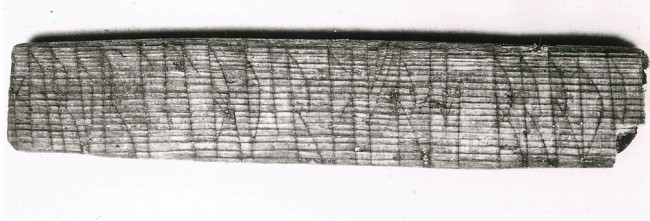
We humans lack the span of billions and billions, but hidden messages seep forward even from our meager past. Some 900 years ago, people in Norse cultures (when they weren't sailing away to massacre my ancestors) would write messages to each other, and remnants of carved notes on wood or bone are found occasionally in archaeological digs. Although Norse writing is known and can be translated today, these small totems can be hard to decipher, sometimes because they were copies of messages chiseled in by illiterates, but the carvers would also tend to get playful with the writing, using phonetic codes or decoratively bastardized script, which were pretty accessible then, but can be hard to pull from context when you don't happen to live in medieval Scandinavia. When one of these "Norse rune codes" was cracked last week (link via), it was a big deal.

What does the message say? What was important enough to painstakingly gouge out of a plank and pass on? 

"Kiss me."

Awww. Now go get my insulin.

Monday, February 10, 2014

Review: Replay, by Ken Grimwood

Replay is a book that is well-regarded among science fiction circles, one of those perfect-length novels that doesn't say anything more than it needs to say, that takes a simple speculative concept and spins it out into a meaningful comment about life. You can almost pull the story synopsis right out of the title. On an otherwise uneventful morning in an otherwise dull mid-life, Jeff Winston suffers a massive heart attack. In his own experience, he dies, but then immediately comes to in his 18-year-old body, the whole of history reset to exactly where it was 25 years before, with the exception of Jeff's intact memories. For inexplicable reasons, he's been given his life to start over again. And, as it painfully turns out, again and again and again.

Does the novel deserve the praise it gets? On page one, I thought I was in for something very special indeed. It opens with this guy dropping dead in the middle of a sad, dull, and strangely sweet conversation, and I thought that Grimwood captured something brilliant there, showing us the banality of life and death at once. As the story goes forward, however, the effect becomes rapidly less impressive--the unelaborate evocation is just Grimwood's writing style--but while I think the story succeeds overall in a related way, and is a rewarding read, it didn't blow me away with its genius. Each time Jeff goes back, he tries things a little differently, and the author walks us through his attempts (which we slowly learn are shortening). Jeff is successful in that he sets up his replayed lives with more in less time, and, as almost anyone would, he puts some effort in to change the broad course of things, and to seek out the deep meaning of life, and the point of his unusual experience of it. But it takes him as much work as ever to get better at living, and all he ever really manages to figure out is what's valuable to him, over which he has limited ultimate control. There are no answers, and the only lesson in the end is the one that is offered to any of us.

[A short novel? With a simple, elegant concept? That doesn't rely much on the depth of prose? It would probably make a great movie, and it's too bad that Groundhog Day went and happened in between.]

It's fun to imagine what you'd do if you got your own clock turned back like that. Speaking for myself, I am sure I'd handle Round One differently than Jeff Winston did. Twenty-five years ago today would put me as a junior in high school, which would be awful, but just around the corner was a college experience that I loved. I am not sure I remember world events (and certainly not sporting events) with enough precision to fund me in 1989, but it's nice to imagine that I'd enjoy the whole span a great deal more with some useful people experience and self-understanding under my belt. Moving on, I could see myself obsessing on those points where I wish I chose differently, and on a replay, I'd look forward to being sure I'd zig where last time I regrettably zagged. If I were writing this story, my version would have the character going back, determined to set right a couple of those long-brooded-upon wrongs, only to find that on a second try that he's still the same schmuck he always was. Ah fuck it, I tried.

Wondering what else he may have written, I looked up Ken Grimwood on Wikipedia, and learned that he died of a heart attack ten years ago at the age of 59, a bit before his time. There can be no news on whether he went back. I won't hold it against him if he did; he seemed like a decent enough guy.

Friday, January 24, 2014

Review: The Hobbit, by J.R.R. Tolkien

It's telling that I can't remember if I read The Hobbit before or after I discovered the Lord of the Rings novels. (I know that I encountered them in unrelated circumstances. One was pulled from the middle school library based on word of mouth, the other discovered like some alluring treasure in a closet in my grandparents' house, the exotic covers teasing me for awhile before I opened them.) I think I read the epic at the later date, aware that it was a sequel, but I read it for its own reason, not because I was so excited about a followup. The Hobbit is a standalone, and it remains so, a pleasant little story that only hints at bigger things (I did love the maps and illustrations as a kid), as befits the audience. Modern readers can pull up all the rest of his fiction for the level of background that suits them, or if you want to import another kind of depth, read it trying to suss out the adult elements that are working beneath the story, which is more or less how I feel like looking at it now.

And make no mistake, this is definitely a young adult book. Tolkien takes on the aspect of a grandfatherly storyteller, occasionally addressing the reader or referring directly to himself (e.g., "I wish I had time to tell you even a few of the tales..."), which is a fairly annoying affectation, however kindly intended. The story escalates in scope, but starts small, and stays light in tone throughout. We're given danger and threats that a child could understand (violent, unpredictable, or manipulative people; scary dark places), and Bilbo's actual struggles are not ones of mastery, but are rather personal efforts of will. He has to work up courage to face the situations he finds himself in, and, on occasion, to do what is evidently the right thing, a moral bravery that he slowly earns. There ends up being plenty of violent death, but the acts are sanitized (sometimes with humor and song), and are mostly outside the immediate point of view. Bilbo basically cringes and hides when it comes to battle and war, and he is only vaguely aware of the political forces that are driving his quest, but we are given that his own actions are worthwhile, even pivotal. Hell, you've read 'em all too: Tolkien puts a unique value and agency on "steadfast."

Also avoiding some of the usual high-fantasy lard, none of the supporting cast of The Hobbit is particularly noble and capable as all that anyway. They all tend to be thinly drawn (sometimes elegantly so--the quick rendering of Smaug's vanity and greedy indignation is great, and so is Gollum's madness--but others are inadequately sketched out--at least four of the dwarves have no distinguishing characteristics at all), but almost all of the outlines contain a serious deficiency of character. There are silly or vain elves, unheroic dwarves, grim men, aloof eagles, and volatile um, bear-dudes. The most intact archetype is Gandalf the wizard, who is indeed wise and great, but only intermittently helpful, and certainly unable to give the quest his full attention, even though he shows up for all the good meals. Next-best is Thorin Oakenshield, the dwarf leader and hereditary ruler of the mountain kingdom, and can I even tell you how much I love Thorin? Tolkien paints him as self-important and serious, but missing some critical element of leadership. (Peter Jackson allows him a brooding noble bearing in the films, and plays him as a tragically flawed figure, which I've been liking even better.*) He plays up the part, but it was less obvious to a kid that he is just not very good at the whole "king" thing.  He is sort of a high-end fuckup, even given just thirteen subjects and the best advisor in Middle Earth. Yes he's an exile with no experience at actual rule, but it comes more down to problems of temperament, really. He's confrontational when he needs to be reasonable. He quits and mopes when he needs to persevere, and with the unexpected success of the effort, he pretty much implodes under the responsibility of it. He gets a heroic sort of redemption at the end, at full cost, but he has to give up on his regal dreams to do it.

What becomes clear on reading is that there's no way his quest should have ever succeeded. Putting yourself in the minds of the dwarves brings out a dark dimension to the whole endeavor. It's as if their itinerant lives had grown so meaningless and futile that grimly throwing themselves on the rocks of an entombed city, if they could even make it that far, seemed like a good idea. Likely to fail, sure, but if they were to die trying, then at least they would die trying something. (And if Gandalf saw how Bilbo could improve the slim odds, it was still pretty rotten of him to send his small friend along.)  Perhaps, at best, they could have hoped to swipe an ancestral artifact or two, but the defeat of the dragon was never in the cards for them. Until, of course, it was.  When the beast does vanish (killed with a lucky shot by Bard down at Lake Town, which character I think Jackson is also justified to fill out), the company bumbles around cautiously for awhile, and then, as the truth finally comes out, they hole up. Thorin is stuck with a number of practical matters beyond the world of questing: he's got an empty city he can't rule, a mountain of cash he can't spend, one fourteenth of which is allegedly Bilbo's, who can't exactly walk away with the stuff, never mind take it back home through the hostile wilderness. When a faction of the townsfolk arrives to quite reasonably point out they made their own share of painful contributions to the dragon's hoard, but they'd be interested in some sensible arrangements for mutual development of all this reclaimed infrastructure, the dwarves' response is funny at first, but the situation gets pretty hostile pretty quickly.

When I read this book as a child, the Battle of Five Armies seemed like the anchor for everything, the titled event that made it significant in the history of that world.  And in a way it was, even though Tolkien shows only the chanciest sequence of action that brought it together.  As competent leaders emerge to dispute big conflicts, Bilbo and the gang look like the underqualified amateurs they are, but more subtly and sweetly than in the grand-sweeping sequels, it shows that small people doing good things can change the world.  As I said, it's a nice enough story all on its own.

*I could keep a long catalogue of Peter Jackson's cinematic rights and wrongs, but suffice to say that some of the things he added did help to fill out the story, and I think in a good way. Another irritating habit of Tolkien's narration is catching up the reader with "oh by the way, all this other stuff also happened while Bilbo was gone" sorts of deliveries.  Sure, it keeps the story in scope, but it also makes it look more episodic and badly planned than it really is. Hovering behind Bilbo's adventure are a few other plots. For example, after Thorin &co. run through the Great Goblin during their escape from the tunnels, they set loose headless legions of bad guys which finally converge at Erebor. Say what you want to about the development of the "pale orc" (which is mostly Jackson's creation--Azog is briefly mentioned in the beginning of the book, and that's all)--and to some extent I'd say it too--it fits the hidden story pretty well to give the disparate goblin and warg forces some power dynamics of their own, and offer some reason they should all arrive angrily at the battlefield together.

Tuesday, January 14, 2014

This Is Why We Can't Have Nice Things

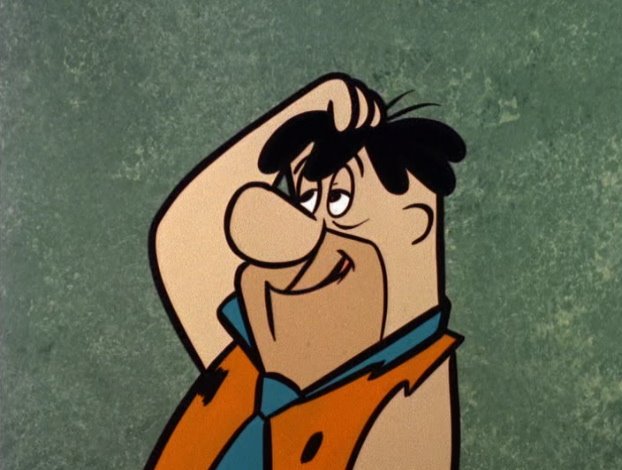
Like many a cartoon American male (actual photo!), I've been drawn (heh), more or less against my will, into watching Downton Abbey. Of course, I don't like to think my initial aversion is so comical as all that: the show basically encourages the viewer to empathize with the idle lives of a bunch of repressed, inbred, aristocratic motherfuckers. Yes, there are real struggles with class and status presented on the show, sometimes with a shred of cleverness and sometimes more as a scrubbed and kind-hearted anachronism, but on the whole, these mostly are just props to steer the characters, highborn and low, toward soap-operatic plots. (God help me, I think Maureen Dowd has just the right take on it, which has got to happen about as often as a hit shows airs on PBS. Downton Abbey as Gone with the Wind? Yowch!) My own opinion of the show is that when the omnipresent reality of ruin is better presented--in the war or in the workhouses, say--then it is more compelling than when it's just a drama of manners of these surprisingly egalitarian-minded overlords. [And sure, I agree the individual characters are well-enough conceived so that I care what happens to them, and that the costume is great, and that most of the (gulp) casting and acting is a whole lot better than the actual writing deserves.] But the ultimate case for Downton Abbey is the one that the show itself makes again and again. It is, well, Downton Abbey itself. The message is that even though change happens, nice things are worth having because they are nice things.

Granted, this is an insufferably English view of nice things (and it's one that I've seen often enough in British novels to pick right up on), but it's a hell of a step up from the "glory and conquest" view of nationalism (er, not to say the self-styled empire lacked that either). The motif of Downton is preservation, and the principle conflict in the show is one of sustainability. It's made of idealized rustic green estates that are topped off with a comfortable grandeur, one which imagines that all of its elaborate gimcracks and mannered conventions--livery, variegated flatware, gravelled walking paths, riding and hunting, all the forelock-tuggings and "m'lords"--hell, the nobility and the smiling peasants themselves--all are explicitly useful, that there's a good reason the chairs are a set distance from the table and you that you should pull up the right claret from the cellars, just like there's a good reason to rotate crops and to pass on the right. Downton Abbey imagines that the land and its customary adornments are things worth holding on to, that they are essential parts in a long-ago optimized machine which needs to produce nothing but itself. Of all the apologia for aristocracy, conservation of nice things is the only one that I have found not to be laughable on its face. The family is allowed to inhabit the manor because the estate is worth having, not because the family is.

Downton Abbey, in other words, is a community that is valued as such. The community needs to be complicit in the concentration of its wealth, to support the estate. It's an enabling fiction of a community, and I don't forgive that. It's built on the backs of those kindly-seeming laborers, on net ancestral plunder, and on a system that allows one entitled and unproductive class to drain its resources from others. The antebellum American south copied the model consciously, and it was a horrorshow. (Meanwhile, the somewhat more communitarian settlement of the colonies to the north set up some of our nation's enduring conflicts.) The recent pretense to democratize American greenspace only got us the suburbs, a boring, shoddy clapboard fiction built on consumption instead of conservation. The people's revolutions of last century--though you have to appreciate the generations of effort it took to get outside the thought box--often earned central parties and widespread repression. It's a real conflict of the human animal, and it sucks that we can't seem to have nice things without massive inequality railing along with it. Authoritarianism, stifling of individual expression, and a devolution to oligarchy seems to be part and parcel with any of them.

One novel I recall very fondly is Gypsies by Robert Charles Wilson. This author uses science fiction constructs to flesh out and deliver some sock-you-in-the-eye humanist themes. In this one, a family of young people possesses the power to step between alternate realities--some are better than others--but only, as the painfully delivered climax reveals, worlds which they are capable to conceive. We are limited, he says, all of society is limited by our collective imaginations. It's Candide with a quantum-mechanical kludge, that only keeps 99% of the cynicism. It's a nice empirical shortcut to allow a writer: some societies do evolve to be more sustainable, beautiful, and happy, and it would be nice if we could somehow sample for them with better tools than history, theory, and propaganda. The problem is that I wouldn't believe anybody who told you that any one of them is as good as it can be, or that this is the way it must be. Anyone who spews that is romanticizing some nonexistent ideal (as they do on DA), or else is using you. I've been a technical guy all my life, and I place a great value on evidence, consistent thinking, and proper weighting, which certainly applies to something as grand and important as culture. As I get older, however, I understand that we need to cultivate imagination every bit as much. If we don't let ourselves dream better, then we also fail.

Wednesday, December 18, 2013

Review: The Dragon Griaule, by Lucius Shepard

I first read The Man Who Painted The Dragon Griaule, oh, ten years ago or so. I've occasionally picked up other stuff by the author, hoping to find anything that grabbed me as much as that story did, only to encounter a maddening mix of potential and disappointment. But the additional Griaule stories contained in this collection* only improve and expand the original one, and they're as great as (or better than) I remember. The milieu was established, by all evidence, by a guy who enjoys storytelling, clearly is talented at it, but who despises the trappings of stock fantasy, as if Shepard was grabbed by the idea of a giant dragon in spite of himself, and the beast wouldn't stop tugging at the fringes of his unconscious. As narrative, this conflicted view of the central object plays out brilliantly. Griaule himself is an imposition, a monster as formidable and ubiquitous as the landscape, and as subtle. He's the shape of everything, unnoticed in the way that, when it's all around you, you stop paying attention the lay of the hills and the flavor of the air.

The dragon is a mile or so long, mostly buried, infested and overgrown, built over and (mostly) around, and nearly completely immobilized. His exposed head is roughly the size of a football stadium with (at the opening of the first story) a shantytown crumbling over his eye. But he's not dead, and in more ways than size, the long millennia of stasis have made him something considerably more than a once-flying reptile. When we open in 1853, Griaule has been reduced to (or maybe grown to) a creature of the mind. He occupies the slow years influencing the people of the valley with his silent, malefic will. It's not the sort of pressure one could prove--although one of the shorts centers on a lawyer who builds an improbable case around the idea--but consists of coincidences, inspirations, obsessions, and a generalized sense of oppression, but it's beyond narrative doubt that this is a force which tempts people to the sorts of drama that serves or idly entertains the beast. Whether it's an intelligent malice is left unclear. The animal aspect of dragons isn't ever lost, and Griaule may well scheme and corrupt as a mere part of his nature, which has happened to become as magnificently overgrown as the rest of him. But he's a force beyond the scope of humans, either way.

The stories all play out as an expression of this insidious orchestration, where characters are pulled cleverly to plotted ends. The first of them is by far my favorite riff. The man who painted the dragon steps up before the local council and claims to be able to murder the creature with toxic pigments, by scaffolding his great head and flank and turning him into a mountain-size mural. There's just something brilliant and romantic and doomed about the idea that one of the great forces of the world can be subdued through art, and there's no way that I wasn't going to be pulled in by it myself. (And if it sounds like a potitical allegory, well, it shifts into an explicit one for some of the other stories.) And it's a scam of course, but the proposal nonetheless grows real as it takes over the artist's life, and the region's destiny, and brings Griaule to the conclusion he always desired, with lots of casualties along the way.

And they almost all go down like this. Generally, Griaule draws out callousness, venality, and lust in the men under his influence. Women get to be a little stronger than this (if they're a protagonist) or they get to be a little more fatale than outright nasty (if they're not), possibly less guileless to start with, but given to bursts of openness when the control falters. (God help me, I felt drawn to them too.) As we move through the other novellas, the arc is such that the dragon's mechanisms of control become a bit more overt. In the second one, a young woman is drawn into the guts and veins of the creature, mostly for purposes of housekeeping, to help out a colony of sensitives who take care of the more mundane tasks. (For her, things work out well in the end.) Other stories have Griaule drawing in a smaller, "normal" dragon to help along his seduction, or pushing some people through an alternate timeline to bring along a more spectacular ending than paint. Other broad trends have the main characters growing less sympathetic story by story (by the time we get to 2012, the last guy is a total asshole), and the writing expands a little more nicely and neatens up over time (the plots remain short enough to stay focused, however), with fewer writerly stunts. As well, the geography becomes a little more concrete, and more similar to the present day's. In the opening story, it's set in "a country to the south," and even though it's got some New World flora (banana trees and so on), the proper names and the style of narration seem comfortably European. Frankly, I'd have put it on the other end of the continent as Florin and Guilder. But Shepard has Central America in mind all along, and for the dragon's swan song, his menace becomes part and parcel of the disastrous, violent, meddled-in governance of the area. We are left with the feeling that Griaule, even dead and dispersed, can encompass all of the political evil of the world. I found him a little more palatable in a generic setting, but it's still an engaging read right to the end. Recommended, if you can find it.


*This publication includes the original short, published in the early 1980s, along with five additional novellas that have been written over the succeeding 30 years. I believe that the final one, released last year, is exclusive to this book. For the Googlers, the titles of the stories are, The Scalehunter's Beautiful Daughter, The Father of Stones, Liar's House, The Taborin Scale, and The Skull. Shepard also includes notes on the various stories, which are interesting (and which comprise most of the evidence about his opinions on fantasy and Griaule).

Saturday, November 30, 2013

Review: The Scar, by China Miéville

Since China Miéville doesn't, I'll give you, potential reader, an outline view of what the world of Bas-Lag (the setting of The Scar and a couple other of Miéville's novels, including the more famous Perdido Street Station) is like.  It's a planet as large as this one, probably, but older, or, if it's not older, then it's suffered the rise, fall, and disappearance of so many more advanced civilizations and dread empires than ours has, that it is at least far denser with such things.  The current state of technological progress is dynamic (we get the feeling it is always such), and it is early machine age in feel (call it "steampunk," but that's too limiting a term here).  The civilized sphere consists of networked societies in a constant flux of discovery and rediscovery, infused with magic only to the extent where the author either needs a suitable kludge to expand technical capability beyond what petroleum and gearworks (or physics) can actually do, or wants to add even more dashes of color to the kaleidoscopic world. It's stuffed with an improbable diversity of intelligent species, man-like things of all sorts, living and undead and modified, along with flora and fauna of similarly mundane or exotic provenance, well beyond what any evolutionary social process could ever shovel into competing ecological niches.  And that's only within the limits of the charted world, which the characters in The Scar attempt to expand. 

But it's weirder than that.  The world of Bas-Lag may be flat too, a disk, where densified water is pulled up from weird extradimensional deeps, and presumably spills over the edges into whatever nebulous ether the whole thing floats in (showering the elephants, maybe), and we are gradually given clues that the whole thing is some kind of low-probability-of-existence place, a giant crap-trap in the drain plumbing of the Multiverse, where it collects peoples and artifacts of various sorts.  (I liked to imagine it in the same universe as Neal Stephenson's Anathem.)  It's a brutal effort for people to carve order out of a place like that, and they try.  Against all that, it's full of folks doing their best to get by in a raucous reality.

I can understand the impulse to just throw the reader right into that seething mix (in which the characters are only marginally better informed), and that's what Miéville does, but I wish that he had coughed up some kind of description resembling the above.  Because it's a better-developed universe than it first looks--interesting as hell once you get the feel for it--but for the first 150 pages, you can't tell that it's not just a big sloppy mess instead.  Nor could I tell for awhile if the writing style's deliberate, or if that too is meant to evoke the setting, which in this particular story is primarily a floating, seafaring city of lashed-together boats.  It's an ugly, clumsily-constructed place, and the language onomatopoeiacally follows: ramshackle, Jabber, rickety, slapdash.  The novel opens with prose so purple you could paint with it, and as things move forward there were a few language or scenery elements that affronted me enough to bookmark them, but if he's going to write in that way, then at least he picked the right world for it. 

(What I found less forgivable, is that in a book that doesn't shy away from dirty words, Miéville wasn't usually able to make his characters curse very well.  How fucking hard is that?)

And so it's a sea adventure, and a fantasy, and it's gladly full of all you need for that.  The plot moves right along, and the central characters, while not entirely loveable, are human enough, and imperiled enough, that they earn your concern.  Along with several other people important to the effort, Bellis Coldwine, a translator, is press-ganged to serve in an academic capacity on the boat city of Armada.  Even as an unwilling outsider, constantly plotting escape, she becomes caught up in the bizarre politics of the place, as they coalesce into a grand plan and a great chase.  Armada is an interesting place, and it makes exotic stops (an island of fearsome mosquito people, more compelling creatures than you'd think; a cosmic sinkhole, where with great chains and engines, they angle the depths for some forgotten behemoth), faces pitched naval battles, and gets as bawdy as you like.

Miéville appears to populate the book with character archetypes of his own design.  The city leaders and its champions wax a little larger than life, and even down at the level of the point-of-view characters, Bellis and her friend/antagonist evolve as pictures of growing luck and competence.  You wonder by what complicated path they'll manage escape (or otherwise steer events), but there's little doubt they will.  And I've got to say that this is where I finally found genius in the book, because (SPOILERS follow) these assumptions are dismantled only a little less quickly than they're built up.  Despite the fantastical elements, Occam's razor is paring away at the characters and plot all the time.  Story developments that you imagine are given to you as reader's privilege are dragged out and made public to the whole city.  People who lurk in the margins of events acquire no real power by the end, and the users concede none.  Were such a thing were possible in real life, a quest to drag an already tenuously functional city to some otherworldly power source is a stupid fucking idea, and it's gradually revealed as suchThe greatest of lovers are not of one mind.  The political agent is only acting toward political ends.  Miéville sneakily surprised me by letting his characters revert to people by the end, the people who in fact he said they were all along, and made it feel like a surprise.  And the book is better for that.

Saturday, August 10, 2013

Review: The Fatal Shore, by Robert Hughes

[Here you are, switters.]

I don't read a lot of American histories, and that's unfortunate right now, because I'd like to say with better authority that Robert Hughes' The Fatal Shore is better than any of them.  There's a good case to be made that Australia and the United States are cultural cousins, the English colonies anyway: each remote enough to grow their own satellite cultures; each stuffed full of the mother country's shipped-off hardcases and political misfits; each kicking off as tenuously claimed footholds that within a generation were tragically collapsing the native people as ever more of the Empire's excess white population arrived and pushed inward and along the coasts; and of course as countries go, they are both still historical toddlers, each directly descended from the immigrant government that settled the place, and each still atoning for those original sins.  The differences may well lie in the nature of those early stains, and I think one of Hughes' strengths as a scholar is to approach his own country's story with something like humility, which was always in much larger supply in the antipodes.

Most people were aware that Australia was founded as a penal colony, but this American never gave it much thought beyond that, imagining it as no worse than a forced settlement, a sort of national oubliette--forgetting place (which is a term I believe that Hughes cleverely used)--where the transportees resumed their relocated life much like immigrants did here.  But it's not so.  If there's one overriding theme in the book, it's that Australia was steeped to bitterness in the politics and awful contemporary understanding of class and morals and especially of punishment.  It was a society built on the bloody lash (with hardly enough rum and buggery to go around), of forced humiliation, broken solidarity, and institutional caprice that in reality took generations to breed away.   Even in the twentieth century, we read, this tarnished national character was a social factor, but at least it made for an excellent historical perspective.

Even a guy like Howard Zinn, who is the best local analog I can think of, couldn't keep a certain Americanness out of all of it, a triumphalist paradigm was something that too ingrained here to be left alone.  America is a place punctuated by gigantic bouts of violence, some of them explicitly sparked to consolidate the power structures that grew on these shores, and even a people's history feels required to answer to this.  What Hughes has in common with Zinn is his representation of the significant past as an interplay of individuals and factions of humans from all walks, how they lived and what they lived for. How they governed themselves, but also what their lives were like, and what their concerns were.  And while Australia has had its share of saints and ogres and characters, it does lack the drama of hard-fought shooting wars, and the language of Great Men and Great Events comes less naturally there.  You might argue instead that the figures of early Australian history emerged almost as folk heroes or villains.   Hughes takes conscientious pleasure in fleshing out the prominent figures of the day, but even in those cases, he doesn't elevate them to anything beyond human.

It helps, I will say, that Hughes is really GOOD at this.  It's actually an impressive feat to look at both noble and the base instincts that drive people and drive groups, and see all of those views with understanding and come out with a synthesis that's something like objective.  The illustrative anecdote is a great descriptive vehicle, and Hughes makes use of hundreds of them.   I get the feeling that he's read every extant piece of correspondence and documentation and absorbed every word.   There is an overriding moral compass there (that, in my opinion, is pointed perfectly true), but he's not preaching anything, and when opinion creeps in, it's almost given as a brilliant throwaway, as a statement of the perfectly logical and obvious.  He makes a few points, for example, during one of the gape-jawed tours of the depredations on prison colony's prison colony on Norfolk Island, how sadists are made and not born.  Early in the book, he takes an impressive broad-strokes description of English notions of criminality, both practical and comparative, that (cough) still bear some relevance to modern ones.  He's not shy about pointing out just how backwards the early settlements were without a skilled (or particularly inspired) workforce. 

There are times when the language sneaks in and gets lovely on you too.  Hughes likes to describe the landscape and the ocean, and he can do it almost heartbreakingly.  God help me, I liked best how he throws in the occasional editorial phrases, sometimes humanizing everything with just an adverb.  (People trumpeting causes are tiring; administrators can be malicious; sufferers suffer.)  Well worth reading, and sorry it took so long (and sorry the review isn't better!  The book could use a much longer one) to report.  Thanks for the recommendation. 

Sunday, August 04, 2013

Perspective III

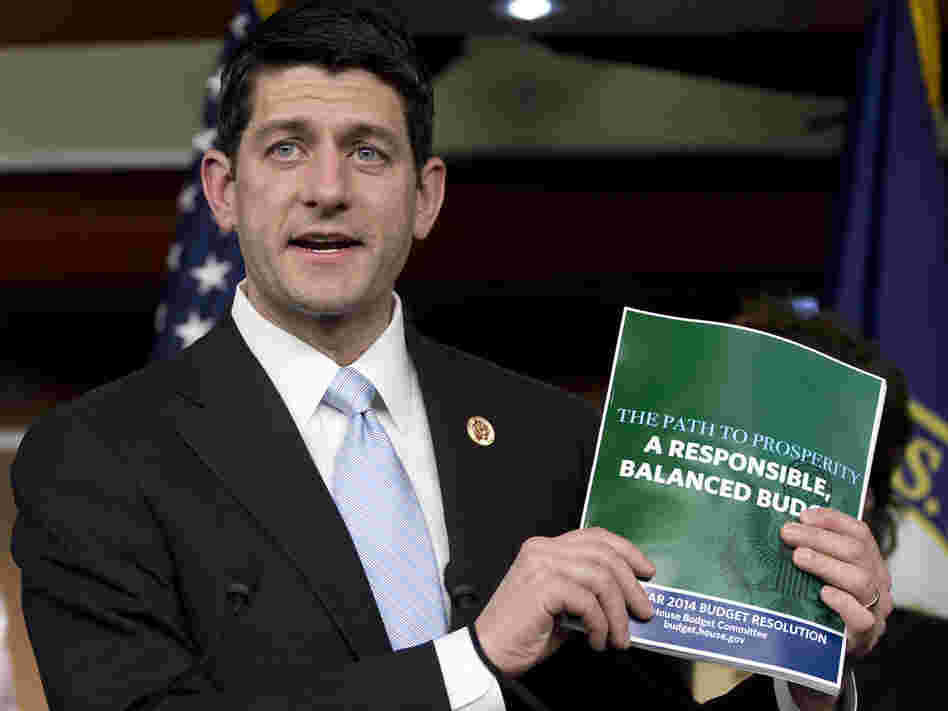
[Edit: Whoa, it's been a while, and I should have a title.  Status of the hiatus?  Who knows, but I'd be pretty happy to get Paul Ryan's mug off the front page one of these days.]

In 2002, Jan Hendrik Schön, a researcher at what was left of Bell Labs, was accused of scientific misconduct by a formal investigative committee. He was caught falsifying data, sometimes drawing curves and pretending they were measured, other times swapping them from other pieces of data, and it was a huge scandal at the time, judged among the worst things you can do in science, or at least in premiere science. He was spotted because other researchers noticed that some of his plots looked exactly the same, even when he was reporting different conditions or phenomena. That is, they did not follow the same predictable shape, as you might hope data will do, but they bounced around their trendline in exactly the same way in both plots. This is what I remember of the scandal back then: one of my coworkers smugly pointing this out to me. See those two graphs, Keith? There's no way they should look exactly the same. (That's not just a fraud, but a lazy one. For the dedicated forger, how hard would it have been to introduce false instrument noise?)

When the Lucent committee looked more closely at his work, they found the bullshitting to be pervasive. No wonder he was able to publish a paper every week! Since this stuff was getting cranked through Science and Nature--relatively groundbreaking results in what was a sexy field at the time--Schön was ridden out of the scientific community on a rail. His awards and even his doctorate were rescinded (but the latter was re-awarded; evidently the guy's been fighting for his degree as recently as three years ago). The journal editorials tend along reputation-preserving retrospectives to the tune of how the hell did this happen, and let's never allow physics to be besmirched this way again.

I'll add that Schön is roughly my age, and even though I was a total academic nobody, there's still only a degree or two of separation between us. We worked in a similar field I am sure I read some of his papers late in my grad school days (which isn't to say I remember them specifically). My advisor had done his post-doc at Bell Labs, and some of his remaining friends there, to whom I'd been introduced, would become Schön's occasional co-authors. In defense of that community, the fact that Schön's data were hard to replicate isn't a total indictment by itself. Studies of organic electronics were notoriously difficult to reproduce in those days (and probably are now too), even for the same people, doing the same experiments.  This was much more a matter of trying to force soft, quasi-pure, and reluctantly ordered systems to behave like near-perfect semiconductor crystals than it was a matter of dishonesty. Electrical behavior that was extremely sensitive to barely-tangible properties of an interface was hardly a rare thing. And in defense of Schön's co-authors, it's actually really easy to get listed as a middle contributor in a bustling, incestuous place like Bell Labs. That place (in that field at least, and in the 1990s) was more liberal than anywhere when it came to spreading names across the mastheads. You might get listed as an author for having prepped one or two samples, for overseeing one of the instruments, or contributing a paragraph of text from one of your publications.  Take that nice piece of resume fluff, and move on, it's not terribly necessary to know what the lead was ever really up to. And more than that, Bell Labs was in its sad death spiral in the late 90s. It's got to be hard to care about what the guy down the hall is doing when you're investing all your free minutes in an effort to get yourself out from under the headsman's axe. Schön was dishonest as fuck-all, but he was in a niche where he could ramp it up a little higher than usual before getting caught.

So.  It's months old now, but the economics world was rocked--no, better to say that it should have been rocked--by two researchers who published a report explaining that national debt levels above 90% of GDP cross a drastic threshold that's correlated with low or negative growth.  Now, this was published in a conference proceedings (they give you big grains of salt at the door to these things, along with the pens and other swag--you publish in proceedings when you don't want to go through all the work of satisfying reviewers), so it's not, I sure hope, premiere economics, except that it became a leading-edge study because it got swiped up as a wand of legitimacy by pro-austerity policymakers and pundits, and we have all had to keep hearing about this crap.  But when Reinhart and Rogoff's analyses were put under any kind of scrutiny at all, it was, well, not good: bizarre weighting procedures and cherry-picked data ranges, along with spreadsheet manipulation (is it really cool with Harvard that its researchers chuck numbers into Excel and call it research?), later claimed as a mistake, that was painfully obviously designed to produce the foregone conclusion.  And even if they've claimed only correlation, causation has been implicit when the work is reported by their supporters. 

(I'll add too, that I don't think national debt is awesome myself.  I see it as a trick that clears itself up so long as there's GDP growth, but there's no good reason to monkey with the accounting like that, well, other than to be obfuscatory about imbalances.  The solution isn't to starve the lower orders; it is support them while showing the books properly.  That debt doesn't correlate with growth, or that it correlates much more weakly than they claimed, is supportive of the "black box" theory.)

Anyway, my argument isn't so much what happened.  You get academic tendentiousness for all sorts of reasons, and even thinking people are still hierarchical herd animals in lots of ways.  Their rise went farther than it should have too.  I've said before that since it's fundamentally based in the logic of agreements, economics is more like law than it is like science, which is to say that it's a matter of both rationality and, to a much higher degree than physics is, advocacy.  Reinhart and Rogoff were probably not as dishonest as Jan Schön was--it was more likely they were just caught being lazy--but on the other hand, it doesn't seem to have hurt their careers, but for a few necessary defensive letters.  Their work appears to remain influential. 

I mean, fucking seriously.  Here's Larry Goddamn Summers defending it, doing the opposite of protecting his own intellectual reputation and that of the field.  They are friends, Summers says, and he openly admits that their work supports his agenda.  Why does this guy, in the face of bad data, and his own awful history of being wrong policy-wise--not to mention occupying the smug embodiment of shitty low-empathy ethics of austerity--retain so much pull?  Why was he a chief economic advisor, and why is that slimy piece of crap on the short list to run the Fed?  I mean we know why, but still. 

Economics is far from useless, but it's also farther from hard science than it pretends.  In more ways than one.


Friday, April 12, 2013

Review: Automated Alice, by Jeff Noon

In the short novel, Automated Alice, we return to follow the famously dreamy young girl for a new and updated adventure.  In this one, Alice travels a hundred years through time (as literally as can be--the portal this time is an old grandfather clock in her aunt's house), where she brings her Victorian-style innocence through a series of abruptly shifted modern settings, puns, anthropormophosed creatures, and cute non-sequiturs.  It starts in a computermite mound, and immediately playing games with bit logic and uncertainty, the sort of effort that I simply must appove.  Noon lays the Lewis Carroll voice on pretty liberally from the outset, all the twee puns and wordplay, but then so of course did Lewis Carroll.  Noon ladels in gallons of late-century cultural references, but that's part and parcel with the original too.  It opens up the reader to the context of the original Alice, and what might pass for a modern equivalent, now with easy access to all the sorts of in-jokes for people who didn't have the fortune to read Through the Looking Glass at the time of its writing, and it's interesting to compare the role of technology, drugs, and violence in the cultural contexts as well.  He includes the author-as-character in there in a couple different ways, which I think was meant to be a sweet homage, and he wraps up with a warmly posed metafictional question of who is the real Alice (the character, the doll copy of her, or the real Ms. Liddell), to mirror the earlier question of who is the real writer (Lewis Carroll or Charles Dodgeson or, for that matter, Jeff Noon).  In all, it's really a fabulous idea.  Unfortunately, I hated this book.  A lot.

I hated it because it's inappropriately creepy.  Alice winds up before long in a murder mystery, and okay, maybe that part slides--is it really worse than winding up in the court of a maniacal dictator who is addicted to capital punishment?--but I don't think Lewis Carroll would have ever shown us all the bodies, even if he was writing in 1997.  I don't think Lewis Carroll would have dropped the girl down the corpse-hole into a festering pit of demonic snakes, or jammed chicken guts into a robot to make it work.  For real.  Nor, for that matter, do I think Carroll would have maryjaned himself egregiously into the middle of the story, for the evident purpose of complaining about critics.  What the fuck would possess the author to indulge in this kind of thing?

I was already familiar with Jeff Noon from his novel Vurt, which I read a few years ago, shortly before I started reviewing books on this site.  That one had a pretty high squick factor too, but there, at least, it fit its context, and for all that, I remember it as an interesting and thoughtful book, which is why I grabbed this one from the discount rack.  Oddly, I am writing this directly off a conversation of what writing does or doesn't reveal about the author.  I don't get the impression that Jeff Noon is a creepy guy, necessarily, but if he can't keep the gore and guts out of Alice, then I won't trust him to keep it out of anything.

Tuesday, March 19, 2013

It Bears Repeating

I've submitted my share of research proposals over the years, and while I took every one of them very seriously, I don't think it criminalizes anyone to acknowledge that despite every effort, the quality was not always the same. Some ended up better developed, or more innovative, or benefitted from a better technical grounding. And some of the basic ideas were just more compelling than others. Nor, I think, does it damn anyone to note that when one of the turkeys tried to pass itself off as a duck, it compensated for a lack of sound reasoning and good science with a whole lot of extra-bouyant marketing-style weaselspeak.  "This innovative concept will revolutionalize the paradigm..."

Sure, talking your concepts up is a necessary evil, but you can also tell that an idea is fundamentally hollow when it reaches a critical level of bullshit self-praise. There's a point where you need to show, not tell, as the writers say. Sales is a lot more natural when you understand and believe in the advantages of your product, as marketing people know. And all I'm saying is that if you have to put on your cover page, in gigantic letters, "A Responsible, Balanced Budget," there couldn't be a bigger tell that it is neither of those things.


And look, it's actually a lot worse when you believe writing it and parading your smirky "professionalism" makes it reality.  That's delusional.  It's cargo-cult territory.  Putting on a suit and jumping around with that dynamic-but-serious clown act doesn't make you business savvy any more than rolling around in your big 5.0 makes you enormously endowed.  Word to your mother, fucktard.

Wednesday, February 27, 2013

Review: Bad Monkeys, by Matt Ruff

Bad Monkeys is, according to a back-cover interview with the author, Matt Ruff's Philip K. Dick book. That's great: I'll be the first to admit that I don't know Dick (ha) all that well, at least not at normal length (hee hee)--an interview and a short story I think is all I've ever read--but there have been enough adaptations and knockoffs of the guy over the years to make this one seem like it lays a credible enough claim to the throne. Bad Monkeys is a trip into the shadowy behind-the-scenes world where They watch you from, and then it's a chase through it. It plays on perceptions and on the deep game of creepy surveillance; it gets you looking over the characters' shoulders at all times. It aims for paranoia, and it hits that mark. It's just easy enough on the premises to be fun, and, as I almost never do, I finished the whole ting in a sitting. The main character, Jane, comes to us as likeable in a novel-esque way, a fast-talking and sassy kid who is nonetheless on the side of good, and Ruff is smart enough to take what are normally humanizing or even ennobling anti-authoritarian tendencies in her and examine them, mess with the expectations of that trope a bit. Jane, by the unfortunate circumstance of losing her (obvious homage of a) little brother Phil as a little kid, comes under the scrutiny of the Agency, which, we learn before long, is dedicated to nip the evil forces of the world (who Ruff gives to us as movie-grade sickos: serial killers, abusive perverts, bomb-throwers) before they get worse, and Jane's bad luck, set up against her quick and independent mind, eventually gets her on the team.

When the backstory ends and her training begins, we learn too of a counter-organization, the CHAOS to the Agency's CONTROL (Jane calls them the Bad Monkeys, based on some of their flyers), which runs cover for the forces of nastiness and discord. Both groups operate through deep and strange surveillance techniques (microscopic cameras that can be printed on any image with eyes), interact with their staff through dreams, duck through unexpected doors, and leave obscure signs as a means of communication (engineering clues in the daily crossword puzzle, seeding live scenes with telling iconagraphy and whatnot). The threatening ubiquity of it all strikes me as Dickish, but the telling of it seems a lot like an epically-tilted Stephen King novel. The juxtaposition of real life against the deep weirdness fits that mode. The goals and methods of these organizations seem much better suited to fantasy and the supernatural than they do to technology and philosophy, and it's where my mind tended to go. You can give magical assignments to a Team Good and a Team Evil that floats just out of humanity's regular sight--angels and demons, Seelie and Unseelie courts, whatever--and even introduce all the moral ambiguities into the characters that inhabit the opposing realms that you want--hell, a quarter of the sidebar is fantasy of this sort--but you it's harder to give absolute alignment to "realistic" human organizations, and it's a flaw in the foundation that the novel simply can't build its way past.

And with that, if you'll excuse me, I'm going to proceed to spoil the living fuck out of this one.

Look, that it's really explicit is the problem. I like the game that Ruff is going with: give us a flawed but sympathetic character and let's see how far he can stretch the reader's empathy, how long it takes for the flaws to win out.  How much evidence does it take for us to conclude that whatever side the protagonist is playing for, she's just a mean piece of work. Unfortunately, this whole exercise culminates with Jane, backed into a corner and confronted with knowledge of where she is and what actually happened to her brother, copping up. "All right, I'm evil!" she screams.  Hell, and maybe she is, but the problem I have is that she accepts the paradigm.  Even as her story breaks up, she seems bright enough to otherwise rationalize, socialized enough to act out shame, or bold enough to be defiant, and instead she confesses to the supernatural premises. But it's not even that, really, more that we readers should accept it.  Jane might have got there in the context of the story. The problem is that there's nowhere any condemnation of the good guys. Without supernatural validation of the absolute good (whether it survives in observance or not), we're left with the reality of the ambiguity of "good."  The agency that's allegedly keeping Evil in check, well, it's obvioiusly motherfucking evil it's own self. They spy, they infiltrate, they conspire, they judge with sparse evidence, and they kill with the certitude of zealots. And Jane fits right in to that. Jane's judged, but her employers are not.  No one watches the watchmen here, and how can you write a Phil Dick novel, or really write anything sincerely in 2007, where no one even wonders about that?

The other major flaw I think Ruff could have avoided with better writing. At the big reveal, the agents tell Jane the point where the story fell apart, the point where she stopped working for them, and became an object of study, where her whole story became staged. It's okay to do that, I think, in a novel with the the rules that Bad Monkeys gives us, and the vehicle for it (where are they really?) is telegraphed early enough. The problem is the supposed tell: there's just no way for the reader to see it, even after the fact. It's written like the classic joke: "We've got messages in the Jumble, agents behind every dialtone, evil clowns, and guns that fire heart attacks." "Oh hey I got one, what about drugs that change time, or a strange twin?" "Yeah right, that shit is just crazy."
The book was a very enjoyable escape, but it also had problems you could play T-ball with. If it was longer, I'd actually be mad.


Monday, February 04, 2013

Some Lesser-Known Presidential Achievements

Although we've had a number of them who veered toward the paternal, professorial, or patrician, Americans under (like most people in the world) powerful male leaders, are not strangers to masculine display from our presidents. Whether it was war-hero Harrison brazenly removing his coat and hat for a chilly inauguration, or the real reason big-shootin' Andrew Jackson was known as "Old Hickory," muddling our way inside a miasma of machismo is hardly anything new, but as contemporary ideals shift and change, and as the science of image management has grown more subtle and refined, the representations of presidential manliness have shifted over the years, and it's interesting to observe and note the progression of styles.  The military mode of expression has always been there, from George (Washington) to George (Bush), and we can argue who earned the uniform more.  Two things that I think changed the game very quickly, however, were (1) the development of quality photography and (2) the rise of popular sports.


Theodore Roosevelt is best rememered as the president who sold himself as an athlete, but there are a few others that most people know well.  Gerald Ford was a star football player, for example, and George W. Bush cheered football, and Ronald Reagan played the role of a football coach once, all of which are pretty much exactly the same thing.  And every last one of them inaugurated after 1950 golfed religiously.  President Obama moves like someone in smooth control of his body, and it's been odd that conservatives have occasionally tried to portray a man who's been known to drain a three-pointer on demand as an effeminate, uncoordinated wimp, but then, they seem to be the ones who put more value on alpha-hood.  Maybe the racists among them don't want to credit a "black" sport like basketball--more likely they just don't want to give him any credit for anything--but either way, it's been funny as hell to watch certain corners squirm at his recent photo release, firing a shotgun and looking good doing it.  It's not that I approve of the technique even a little--what he's doing here is not much different than Bush's flight suit--but on the other hand, I've got to hand it to the president: that's one hell of a good troll.

The fact is, there have been a lot of athletic presidents, and many of them even tried to campaign on it, even though success doing so was rare.  The problem is that it gave their opponents some grist too, and like Obama's hoops, it has had a way of getting subverted, eventually shelved quietly and rarely spoken of again.  Archival photos of our earlier sportsman/presidents are surprisingly hard to find.  I've been researching it carefully though, and I thought I'd share some surprising presidential trivia with y'all, along with vintage photos.  Every entry on this list is 100% historically accurate.

1. William Howard Taft
America, desperate for a diversion after the war, caught baseball fever in the 1860s.  (Baseball fever, though evidently contagious, proved much less deadly than yellow fever, scarlet fever, rheumatic fever, grippe, ague, cholera, smallpox, or consumption.  It bears repeating that the nineteenth century was a septic, tubercular shithole.) The sport became spread out and standardized during the conflict, and afterwards grew rapidly all across the nation, becoming a fully professional enterprise by the turn of the century.  Bookish, portly, and from an aristocratic family, William Howard Taft seems hardly the type to have made a showing in the scrappy small-ball leagues of the late 1800s, but after graduating Yale (where he'd wrestled), he moved back to the midwest and tried to get his weight behind a bat for a couple of seasons. 

He played in four separate clubs between 1880 and 1882, and while a prodigious hitter, he had increasing difficulty making it all the way around the bases by the end, and before long, he took up his role in the legal and political world.  (Designated hitters weren't common until the American League adopted the rule in 1973.)  Shown here is his baseball card from 1880, when he played first base for the Indianapolis Whoppers.


2. Woodrow "Woody" Wilson
Another president remembered for being scholarly, Wilson was a baseball prodigy as well.  Unlike Taft (whom he never played against), he was lithe, quick, and witty, known for chasing down balls and making daring catches.  Both had magnificent moustaches in their day, however, which, even more than a uniform, was a requirement for professional play before 1900, especially in New York.  Historians still debate whether the entire character of the Republic changed on the day Wilson shaved it.

He earned the nickname Woody because even with a big dramatic swing (Joe Dimaggio, it's been said, was inspired by early photos of the president, such as the one below), he wasn't a powerful hitter, but he could almost always make contact with the ball. 


3. Dwight Eisenhower
Ice hockey had not  penetrated very deeply into the U.S. in the 1920s, and it seems like an odd game for a kid from Kansas, and a West Point football player with a busted-up knee, to eventually gravitate, but that's exactly what happened with young Eisenhower.  He was a phenom on the ice for several years, nearly making it onto the first American pro team--the Boston Bruins--when they formed in 1924.  He is best known for making a dramatic overtime goal, but he retired from sport soon after.  It's a wonder, because even flying around like that without a helmet, he clearly enjoyed every second of it.

His early campaign buttons were meant to read "I Like Ice," but no one on his campaign team got the reference.  His friends started calling him Ike soon after, and it stuck.


4. Jimmy Carter
Jimmy Carter was a basketball star in high school, and later played football at the Naval Academy, at the position of quarterback.  For all the modern presidents who were known to play football, it's strange that Carter is so often overlooked.  With arms like iron beams, he could hurl the ball nearly level across the entire length of the field, earning the nickname "Le Sueur" from one of his Minnesotan teammates, who thought it sailed as if across the ice on the frozen lakes of his home city.  It wasn't for another decade and a half that the moniker could have any connection with stimulated emission light devices, but nonetheless, Carter has claimed for years that being called the "laser" is what inspired him to pursue nuclear engineering.

Carter was also notoriously vulgar on the field, even among sailors, constantly dressing down the opposing defense with his impressively foul mouth and large academic vocabulary.  Shortly after this photo was taken, he was quoted as saying "He's building a Disneyland?  Is that some kind of narcissistic mindfuck?  What a mouse-buggeringly stupid excuse for an idea." 

And a color photo in 1947 no less.  The man was a walking anachronism.


5. Ronald Reagan
Ronald Reagan played many hypermasculine roles during his acting career, and, arguably, in his old age, he would sometimes get them confused with his actual life story. But he never portrayed a boxer on film, despite experiences right in underbelly of the sport, and kept it impressively quiet even into old age. Many of his closest friends never knew when he was alive. Always intensely private about his experiences in the ring, it wasn't until the posthumous release of The Reagan Diaries in 2009 that his pugilist history was revealed to the public. Some surviving political opponents have recently speculated that the eventual onset of his dementia was exacerbated by a few too many blows to the head.

By his own admission, he wasn't a strong fighter, but he was steely-jawed with good features (this is an older photo), resembling a softer, thinner Jack Dempsey, and his managers would heavily promote him by looks alone, usually as an opponent to the local champ, a kind of record-booster for the hometown guy. He boxed professionally in several leagues, changing his name and moving on when his record inevitably would start to catch up with him. The experience of being a professional loser depressed him immensely, and he was unable to come out of that melancholy until he took a chance at a radio gig and met success in another field. From that point on, he took care to craft his image as a winner, someone on top, a man who manages, not one who gets managed.


[Edited to smooth out some uneven language.  You know, a whole lot of these guys really were jocks--figures--which kind of robs the joke.]

Wednesday, January 23, 2013

Review: Don't Buy It, by Anat Shenker-Osorio


"How did this come to happen?" writes Ms. Shenker-Osorio, "How did we come to accept that how well we're doing depends entirely on how well it's doing? How did we forget that the economy is nothing more or less than what we make and consume, nothing outside of us?"

It's the sort of thing that can't be said enough. "The economy" is a description of human social activity. It's not something that exists independently of the human sphere, and people don't live to serve it. It is complex, but it is not emergent, not sentient, and even less so is it some supernatural consciousness that must be entertained or appeased lest the world be subject to its Olympian funks or avenging wrath. I find this really troubling in a study that also styles itself as a science, and when economists resort to ad hoc bullshitting and Delphic babble every time the shit gets anywhere near fanward, it triggers my pathological radar something fierce.  Even though it's only a knowing approximation, I'd prefer economics to be presented as something of a process model (with a vast quantity of inputs and parameters and so on, described by all manner of dynamic states), but instead we get simplistic metaphors dished out so smugly or grudgingly from the authorities that I suspect them to their very core.  Because I've got to give it the author here: the prevailing metaphors suck.

As a discussion of what's wrong with the language of macroeconomics, I think that Shenker-Osorio is providing a valuable service with this short, snarky book, and I'd go on that some of the remedies are greatly appreciated and taken to heart.  Proceeding from the obvious premise that the economy is a social institution, then it follows that it is the result of human decisions at various levels of scale, which can be identified.  It's not a matter of physical law, and considering it accurately as a mechanism for classifying and distributing human effort and reward, then there's surely more than way to sort it out, and it's naive to imagine that our way is the global optimum, or that we came to it by forces of pure thermodynamics.  (Hell, if we did, we wouldn't take on such utterly retarded assumptions as perpetual growth.)  The market doesn't make the decision to enrich stockholders and fuck over workers; people do.  The economy doesn't demand that poor people go without decent housing or medical services; people granted such authority choose to distribute those things or not.  There's a reason that high-visibility economic spokesmen obscure the agency of certain individuals and groups--it's because they're getting paid by them.  The pervasive use of the passive voice is used to hide exactly that, and it's probably the book's most salient point.

I do keep in mind that the author is a "message consultant" of some kind, and if human behavior is more subject to the semiotics than the physical world is, I still don't want to get carried away here.  It's good to call out how bad the discussion really is, but I think that metaphors only hold so much power.  Are we really better talking about the economy as a vehicle (that has a driver, that can go off course, that needs maintenance) than we are talking about it as a body (that can get sick through no fault of anyone)?  To an extent, but I think it's also clear that most of the concepts have passed well out of the realm of colorful evocation into the dull world of cliche.  Yes, our language does affect our perception of things--mostly to limit it--but the nature of reality also tends to undo language, doesn't it?  Talking about the economy, we're really dealing with a bunch of blunt and inapproprate conversation tools, but I think that most people who work with them, often with Friedman-esque levels of free-associative carelessness, intend and understand something other than what the words are really saying.

This sort of things shows up in some of her etymology arguments too (what is it with these social science types?), and as with cliches, I don't think people deal so deeply in the concepts that once informed the words they currently use.  And unfortunately this thinking gives some tools to throw her reasoning back at her.  Shenker-Osario sees a fundamental rivalry here between Republicans and Progressives.  (It's the sort of thing that's suitable for a long blog post, but hell, I think this sort of false dichotomy dilutes her arguement a lot, which is a damn shame, because it's pretty sharp otherwise.)  That she goes with "Progressive" in 2012 is a telling construction in itself.  It accepts the mantle of the movement from last century, which I myself see as a politically sanitized manifestation of the radical arguments that had been fomenting among the American working people for some years before.  It's used today because people like herself--wrongly, I think--have abandoned "liberal," but Progressivism carries its own highly compromised and somewhat authoritarian history.   Oddly, I'd put that word in a similar camp as American "reform," which started as a sort of in-the-system filtered-down radicalism too, and has since been diluted further.  I don't think it was fair, really, to give the word origin of that one such a beat-down: for one thing, I'd say that in terms of core meanings, reforming--forming again--implies taking something apart and reassembling it, not just giving it a nice sand and polish, and political reform, even if it's become completely meaningless at this late date, did have some pressure behind it in the 19th century, when it sure as shit wasn't part of the conservative lingo.

The tone of this book is arch, critical, and reasonable funny, which I think is entirely appropriate for poking holes in sanctimony and obfuscation, which is the main thing here anyway, and which, as mentioned, is as long overdue as it is enjoyable.  So call it recommended reading.  I'd have liked it better if it didn't also come off as a manual for Team Progressive to hold its own discourse, using another set of cheapo metaphors which better reflect their agenda.  Since she hasn't lost sight of what the economy actually is, maybe it would just be better to reduce the unconsidered use of such facile language altogether.

Friday, January 04, 2013

Review: The Green Shore, by Natalie Bakopoulos

This book was recommended to me by the poster formerly known as august (he among the quiet friends) back in, well, August, in the context of swapping around review sites. I bought it and cracked it open shortly afterward, and while I feel somewhat guilty about taking so long to actually finish the thing, it is, in all honestly, the sort of novel that is well-suited to reading in morsels like that.  It is told in several largely atmospheric segments, rich in narrative commentary, each one separated by several years. Things happen within each section, but it's not driven as a simple narrative, no hard-pressing plot advancement, not a matter of this-then-this-then-that. The Green Shore is more of an exploration of several sequential presents, each of which has proceeded naturally from the last.  You can read one of these portraits, let it absorb, and then get back later to see how the characters have changed and developed during the year or two they were offscreen.  It's somewhat like spending a few weeks at a time with distant friends, a little more like visiting your distant family.

The book follows the lives of one extended family of Athens, in the months and years after the Greek coup in 1967. There is a fairly large cast involved for a book this short, but the two daughters (Sophie and Anna), their mother (Eleni), and her brother (Mihalis) are the point-of-view characters, the interior and exterior lives of each one pulled out and elaborated in each section. They are, with varying levels of extroversion and personal compromise, instinctively subersive, liberal, urbane, and in their respective ways, they find themselves natural opponents of the colonels. As well as each other. Quite a lot of the narrative is developing the thorny relationship space they all share with one another. We find them first on the night of the coup, one in the middle of an affair, one drunk, two living worlds apart at home, and then the coup happens.

Bakopoulos is masterful at creating a kind of hollow, amorphous tension through these four. There's a sense of menace everywhere, of distrust, but as conditions evolve, after initial violence and mass arrests, and a few days of quiet, wary streets and strange radio broadcasts, life returns to most of its modern motions. The family is on the brink of several underground movements--Sophie is dating a dissident; Mihalis is an experienced one, who resisted the Nazi occupation--and they get closer to them as the years pass, but at first their first efforts seem less than futile under the distrustful eyes of newly-minted authorities, and then surreal against the token normalcy, the sham society, that follows. The sources of the paranoia are rarely witnessed directly, but are implied everywhere: an overly curious security guard, cautious conversations, prisons packed away on quaint vacation islands. We see detention and demoralization, and Eleni eventually starts a clinic that serves torture victims, but even at the climactic Polytechnic uprising, most (though by now, not all) of the action is in the form of intimidation, and then we only see damaged bodies being rushed back and forth. It's actually a very compelling and intimate expression of how oppressive power filters down, how constriction of freedom feels, and this book is well worth reading for that.  It's like It Can't Happen Here, but told with real, complex people, in a real, living place.

The general arc of the story scatters the family, and then gradually pulls them back together. They are all characters who mature under the occupation, come into their own.  They all start out a bit feckless, a little lost, but they grow in resolve, and it is as if they need the threat of the authorities to complete themselves, but only to a believable human degree. Anna is really the only one who can be said to grow up under the junta, and of all of them, she is the one who cracks the boundaries of decorum the most, the student who becomes the full-fledged revolutionary. Arguably Greece lost and found its purpose similarly over these years, which was probably an intentional parallel (with the country left as ambiguous a future as after any family reunion). The ending feels like nothing more than a fitting moment to stop, and as such, I wonder the characters do as their lives continue.  Dissolve again, become dissolute.  Lose purpose and fade out, I think, for better or worse.  But then we all do.