Wednesday, August 01, 2007

Five More Thoughts - Personal Days Edition

Five sunny days in the Pacific Northwest, I'd say that sounds like enough for a list. I was out for a funeral, and, naturally enough, got introspective about some things. In some thoughts, family is referred to generally, I hope they don't mind. (I didn't ask.)

1. Some of these thoughts sound better awake at 4AM
We humans sure do love to surround ourselves with the murmur of our own creations. Cozied in our own spheres, we hardly notice the usual buzzes and hums, but spending the a week on unfamiliar couches in unfamiliar cities can highlight the whispers of other places, the normally unobserved conversations of the ubiquitous machines. Cities have bad reputations as harsh and clangorous places, but urban machinery just sings a more cacophonous version of the same tune, and is as soothing in its way.

Coming home--the hum of my air conditioner, the intermittent buzz of air pumped through the ducts, the distant highway--is to be surrounded by my own sounds, and as deeply as I loathe the glare of the streetlight outside of my bedroom window, its faint sizzle is a lullaby, a sussurrus underlying the occasional whoosh of the distant highway or the faraway buzz of a jet overhead. If and when civilization ever tanks, the popular image is people coming out rubbing their eyes at the light, but I think it's the quiet that will drive us over the brink.

(I'm a fan of natural white noise too, though.)

2. Mile high anthropology
I like those jets better when they're distant. Up close, inside, they're a nasty warren of people at their worst: smelly, cramped, forced by proximity into social or antisocial behavior.

Air travel is a nation unto itself, at least if the endless references to Sky this and Air that are any indicator. You walk into the airport with its funny vehicles (I get no end of chuckles at the stair trucks and little luggage trains), odd dress codes, and cosmopolitan insularity. It's like stepping into an odd foreign country, and maybe that's the best case I can make for anyone ever wanting to clamber into a cramped booth and boink one of the locals.

It takes a special kind of person to savor air travel. You need to thrive on being away, you need to be personable but not close, need to have a remarkable ability to tolerate idiocy and discomfort. Flight attendants exude that close casualness, and almost to an individual, no matter their actual age or shape (or gender), seem to evince a world-weary sexiness. Which isn't to say gender roles in the airline culture don't bother me, they do, falling too easily into neat prejudices about sophisticated free spirits (i.e., they are all hot, youngish women and gay men). The predictability of the cabin crew bothers me less than the conformity of the higher status flight crew, every one of which seems to be trying to pull off an aging Chuck Yeager look,* as solid and square-jawed as the attendants are free-spirited. Yesterday, my fist female jet pilot flew me home, and the possibilities are obviously slim, but way less remote than they ought to be. Anyway, good for her. I always love to see stereotypes thwarted.

3. Keifus Rants
But I got there, saw the relatives. Like all families, mine is nuts. We drive each other crazy, and yet we can't keep away from each other. We're all successful in similar ways (trained professional types, artsy streaks more or less expressed), and we seem to all be haunted by similar demons. The point of origin is arbitrary, but it's most tempting to give my grandfather the biggest visible footprint. Like his face, you can trace facets his personality down the line. Absolutely none of us will admit to them.

My grandfather was a world-class ranter, and prodigious drinker in his later years, and we've all got that in us. Politically, we range from tight-ass conservative (older generation) to bleeding-heart liberal (younger ones), with the more balanced members occupying some thoughtful ground of our own declaration. We do go on when we get together. I'd have considered myself of the quieter, non-blathering persuasion, but after excessive plying with three days alcohol and drama, the Chief's genes got their grip on me too, and I raved with the best of them. I let into my Dad (no descendent he, and a rock of sanity by comparison) when he tried to cast me as a political liberal. It's not normally something that works me up, but after hearing so much Republican apologia I felt I should step up for those thoughts I believed, and anyway, I fucking hate being typecast.

Nature and nurture all wrapped up in one boozy loud sack. I feel like an ass.

4. Standing On Ceremony
This gathering had a purpose, and over the days, it closed in. I'm not a fan of ceremony for some reasons--declaring any One True Way always presents perils of division and conflict--but in other ways, they certainly serve a social good. If you parse ceremony down finely enough you'll get to the community traditions, and even the family traditions that bookmark our various milestones in life. It's hard in times of intense emotions to have to ad lib, and a ceremony's script helps to guide the participants past whatever perceived thresholds. On the other hand, the best traditions (including deciding which thresholds to define) have a tendency to develop organically and for a small group.

There's not much getting around death as a milestone, but we'd kind of settled on a memorial "family reunion" as a tribute, following a tradition that had been growing anyway, and one that was beloved by the deceased. There would be (and was) food, some fond or solemn words or tokens from whoever wanted to contribute them, and the usual booze-fueled arguments and friendly conspiracies. Good times needless to say, but also times that dare to tread on the greater American approval sphere. A pastor was invited because someone thought a "real" ceremony was called for. My family, that side of it, stakes out a band of agnosticism ranging from "reluctant" to "total," with a couple of true believers sprinkled in at the distant cousin level, so it's kind of a funny impetus, and this guy had his work cut out for him. To his credit, he did a good job of directing the crowd energy toward a handful of well-spoken remembrances, staking out the timing and punctuation better than a murmuring crowd would have. But it's in the power of the speaker to call the end of speaking, which he pushed off to fit in a sermon, shoving the ceremony out of the natural niche it had found with little help. Maybe it was okay for everyone else, necessary even, but I was uncomfortable that the person who spoke longest for the departed had never met him.

5. Is there an agnostic hell? Who can say?
Predictably enough, old John the Gospeler was trotted out, and the story of Thomas highlighted in particular for us marks wising up enough to look closely at those fish scales. Maybe it wasn't a bad approach, and who knows, maybe he even winged one or two of us. I'm no biblical scholar (Homer voice: obviously!), but I've got to like Thomas. Here's the guy in the story who, when confronted with Jesus resurrected, called for extraordinary proof for the extraordinary claim.

Jesus provided evidence of wounds and that was enough for Tom, who, for all his dalliance with evidence-based thinking, was still given to disciplehood. Jesus did some miracles (the wine thing in particular went far to make up for his tendency to rant at parties), but he did a lot of straight-up proclaiming too, notably in John. Famously, he intoned, "I am the door; by me if any man enter in, he shall be saved, and shall go in and go out, and shall find pasture" (John 10:9), and "I am the way, and the truth, and the life: no one cometh unto the Father, but by me" (John 14:6). It's not got that 23rd psalm poetic sense, but it does have a good ring of deep prophecy. Given the unenviable task of offering a sermon to a bunch of godless heathens, the pastor leaned hard on that last quote. Unknowing what's on the other side of the door, he said, we have to trust Jesus, since he's the one who's claiming to understand what we don't.

I don't think there is any message that is so hard to sell to skeptics nor so easy to sell to those who fear death (those are not exclusive groups), and people have been trying to pitch an afterlife of divine communion or retribution for millennia before and after Jesus spoke. Their evidence was the same. In a way, Jesus's metaphorical proclamations are a better sell than doctored evidence--miracles tend to look small after a little perspective--but that doesn't get me past my allergy to "just trust me." At its best, "just trust me" is a short-term loan, getting a speaker past three tenuous seconds as the results come in. It's not a good marketing tool for long-term prospects (or shouldn't be). Whether it's health or government policy or plans for eternity, "just trust me" usually is a blinking neon signpost telling you you shouldn't. I don't think there are three consecutive words in the language less inspiring of trust, although "y'all watch this" comes close.

As I've yakked about before, I'll keep my faith in doubt. At least there's plenty of evidence of my ignorance.

Keifus

* Actually, more as I'd imagine a young flyboy aging, less how he actually aged

Friday, July 27, 2007

Electrons vs. Animals

This didn't really belong in Arch's book review. I was tempted to make some fun analogies inspired by Gould's book on punctuated equilibrium.

I liked his idea of pseudo-individuals in nature. If you ever get into the funny intersection between materials science and physics, you'll find no shortage of pseudo-particles, much like pseudo-individuals (i.e., species) in Gould's formulation. This is done because it simplifies complex interactions both mathematically and conceptually. It's difficult to solve electron wave functions for a molecule, never mind an assembly of molecules, and never mind a big pile of randomized but anisotropic crap that might be an organic solid. So you represent actual electrons with "free electrons," which have an effective mass due to the varying interactions that the natural particles have with the assembly of atoms that they move through. You look at an electron vacancy (a "hole") in exactly the same way, and that's not a particle at all. When you try to understand what goes on in transistors and diodes, you're counting some entities that aren't electrons exactly, but mathematical constructs sufficiently related to electrons for the purposes of description at the right scale.

Or take another example. Below is a graph that any freshman chemist would recognize, called a reaction coordinate. (Chemistry is actually another fudging of electronic motion, but that'd be digressing even further.) Molecules have some stability in an initial state (they exist in a free energy minimum), and they can combine (in the illustrated case) to make another stable state. To get from one to the other, however, takes a lot of stress applied to the system (usually in the form of increased temperature), and the two molecules must get distorted uncomfortably as they move over the hump. To me, this looks a whole lot like punctuated equilibrium as Gould describes it. Consider further that each point on the graph really represents a whole population of similar probabilistic and dynamic states much like species are a distribution of individuals. Some subset of them will be stressed enough to change into another stable population. In the chemical analogy, even if some transition states can be identified, it's still a rare and short-lived meeting of A and B individuals, twisted far in energy from where they usually like to be. Chemical engineers call it "collisions" and are done with it except for the probability. Physical chemists care a little more about the individual mysteries of what's just so at that high energy interaction, but even then, any individual is only understood in a universalist Platonic sort of way. It all makes throwing thermodynamic analogies at evolution seems less abstruse.

I find this energy map a useful way of looking at things in general, and it gets into my world view all the time. We fall into minimums of energy that are hard to get out of. On the other hand, transitions are fast between those periods of stasis. I think it's an analogy that Stephen Jay Gould would have avoided, but I also think it's how he would have dearly loved to regard his contribution to paleontology.


Anyway, I'm taking a break (really, really now) as I party it up in Seattle. I'll be back Wednesday, and I'll be fun again, I promise.

Review of Punctuated Equilibrium by Stephen Jay Gould


Biology's not my thing, really, but go ahead and ask Archaeopteryx about it, or even better, get him started about evolution denial. He's great at thrashing the idiots and it's fun to watch. Reading something along the lines of denial-bashing seemed like the fun angle for a reading selection, but I was disappointed to learn that what's the matter with Kansas doesn't really begin or end with wrongheadedness about evolution, but evidently falls under the usual broad, glib, partisan brush, and partial as I am to East Coast elitism, I don't really need to accentuate my biases.

So after striking out on my first choice for Arch, I decided to go straight, and chose Punctuated Equilibrium by Stephen Jay Gould. It makes a nice companion subject to the previous reading selection. I expected the world from this book, but left feeling that I could have done better for the best ornithologist I know.

I'm not at all sure who the intended audience for this book was supposed to be.* It seems too jargon-heavy and detailed for the omnivorous science reader, and too fluffy and personalized for a monograph. Most of the book is explaining ad infinitum the way in which the punctuated equilibrium model has affected the field, positively and negatively. If you want to call it something of a memoir and something of a rebuttal to his critics, then it succeeded on those levels.

Punctuated Equilibrium leaves the unfortunate impression that evolutionary biology is a science of words and not math. And (statistics aside) there may be something to that. If a physical or chemical principle is in dispute, you can go to the lab and construct experiments that can, in principle, confirm or deny the hypothesis. In paleontology, there are rarely extra data for the taking, and so instead it gets down to argument. Next to dropping enormous words with unforgivably compounded suffixes, examining researcher bias seems to be Gould's chief hobby horse. To hear him describe his field, it's a disappointingly lawyerly form of inquiry. Say it ain't so, Arch! I expected so much better from the most celebrated scientific writer of our times.

Punctuated equilibrium is only part theory. Gould identifies three legs of it: (1) the fossil record prevalently shows stasis of species accompanied with sudden changes, not the gradual transformation that Darwinism predicts, (2) species are proper evolutionary individuals, not (only) organisms, (3) that this explains the pattern of stasis and sudden change in the fossil record. These are Gould's descriptions by the way, though he acknowledges (at book length) that there is broad contribution (and criticism) that goes into the theory itself. Point 2 of his triad is the theory part. (1) is an observation, and (3) is a predicted result. I'd have been interested if he worked up a general mechanism for punctuation when it occurs, but it can almost be any old thing, and it may be many things. Gould mentions that some various researchers have demonstrated the third part of his theory in simulations, but he spends surprisingly little time on it. He spends more time describing how enhancing the debate is a validation of his ideas. I don't think it made for good reading.

I love the idea of species as individuals though. It seems right in teh context of my own way of looking at things, in which populations need to get pushed out of their stable states. I can think of several parallel and unrelated examples. In evolution, interbreeding is what locks that stability in, and in a way, same-species sexual preferences can be seen to preserve the species-individual (take that old man Darwin). I don't think Gould much approved of reasoning by analogy, by the way, but as a harper on researcher bias, he'd probably realize how we people tend to construct our models similarly, in a way that we can use the same language to describe different trends. Calling species out as Darwinian individuals, locked into stability by sexual compatibility, doesn’t seem so bold to me, and I'm comfortable enough with it in the above context. Like geology, the part that's hard to wrap a mind around is that even if speciation may approach human timescales, stasis is spread throughout the ridiculously long geological history of the earth. Speciation is a useful way to look at the quasi-individual at incomprehensible slowness--and Gould went far enough to address every counterargument he could think of on that one--and we talking apes are just fly-by observers of that long slow dance.


*much like this blog


Monday, July 23, 2007

Duuude, it's all connected

Science fiction can open some doors to exploration that the typical stuff leaves closed. It's easy enough to the remove parameters of known physics to avoid honesty, to jam in more gods than the machine can bear (and to be fair, this is a reputation SF has often earned), but when it's done well, it can create conditions to laser in on deep human constructs that are hard to see by conventual illumination. Branding can be tough on the critical praise I suppose, but then authors tend to segregate themselves by market too, even if the lines are finer than the distance between the shelves would indicate. When J. M. Coatzee dug into a bizarre fantastic afterlife to note on the human condition, he was treading established ground (hell, that one's been established for as long as people have talked about death). When Richard Powers made up a disease as a tool to peer into the way we connect to each other, he made a scientific extrapolation too. The science fiction genre expects some ballsier risks than these, but on the other hand, you can sometimes get a bigger payoff.

When Raphael Carter came out with The Fortunate Fall ten years ago, it hit the fanboy circles pretty hard. Carter finally accomplished what writers like William Gibson promised to: she used the interconnectedness of computer networks as a tool to get into people's heads. This author lost the cyberpunk attitude and found some of the tender spots hidden deeply in there. Fun as it may be to imagine inhabiting machine bodies and machine minds, the more interesting questions get at the essence of who we already are and how we already relate. The Fortunate Fall is a lot of things--it's too many damn things actually--but stripped down, it's the life story of a woman who has lived through a technological revolution that brought wireless into the cranium. The story is brought out through confusing flashbacks, through plot exposition, through returning conversations between the protagonist and the world's villain, the complex architect of much of it, a war criminal, a visionary. Mankind is presented as animal that aspires to reason, riffing heavily on the Biblical tragedy of that idea, but Carter has the figurative balls to put us talking apes in a continuum of thinking beasts. What is animal intelligence like? What are bigger intelligences like? What are we together, and together with whom? The ending dramatically breaks open all three queries.

This business with dogfighting in the news brings into focus our relationships with minds more similar to ours than we usually like to acknowledge. Why are dogs and cats special? Why do we treat pigs and rats so badly? I'm not talking unnecessary cruelty here, I'm just saying that it takes a little cognitive dissonance to eat a ham sandwich while cat-blogging. Archaeopteryx makes a point that there is a physiological similarity we have with the animals we bond with, and IOZ (the bastard beat me to tying Coatzee into this one) takes the similar approach, but stressing a conceptual similarity rather than an anatomical one(that is, we bond with dogs because they trust us; we don't like hurting chimps because they look like us). Hipparchia (in the first conversation) pointed to years of domestication as a cause. Arch is a biologist, IOZ is informed by philosophy, and I think hipparchia has a little farm-girl in her.

I find that last argument the most intriguing though. It's not what animals are exactly, but how the old and slowly changing habits of how we treat them have defined them. Coatzee, another philosophically minded writer, has suggested that eating animals is a crime on par with genocide, enabled by the way we're collectively accustomed to seeing them as inferior. He spends all of Elizabeth Costello exploring that moral gray space between perceptions of the self and the greater culture. Even though we're breeding selectively, people and domestic animals aren't evolving into new species anytime soon. If anything, it's the cultural catalogue of information that is changing and growing, the expectations of cow nature slowly morphing, of horse nature, dog nature, human nature. I remember a conversation on the old Slate Fray, someone had an ancestor who was a member of the Klan (maybe someone can remind me of who this was). Horrible yes, but different times, different times. There's a century of evolution of concepts of justice, of growing awareness (and a growing body) of philosophical knowledge that makes hate groups a much harder apology in today's society. To beat another tired old horse, it's a nurture argument, but on a cultural scale. Does technology spread it better and more evenly? You bet.

At birth, every creature is plopped down into the world feral and dumb, an empty little vessel knowing nothing but hunger, contentment, and the satisfaction of a bowel movement, oblivious of the finer distinctions that civilization requires. With no improvements in the hardware, the softer rules of the interactions have still mutated and changed. For every individual, the system has to be learned, our parents' faults and hopes passed down by decree and by emulation, and we incorporate and share our mental models of individuals in order to map ourselves and our relationships. So long as the frameworks exist in a lot of people, the information can be shared as in a six billion person game of telephone, and it appears this contributes to the formation of societies as sloppily stable groups. Maybe an optimal indoctrination program could even work itself out from this, some least-bad mode of mutual existence, at least until we start drilling our skulls or (more likely) miss a couple meals and go back to forming tribes and killin' pigs. It's almost enough to give me an ounce of hope for our filthy species. Certainly enough motivation to keep on writing.


Keifus

[Edited a whole bunch for clarity. And yes, I'm the guy who called "memes" ridiculous six months ago. I'll sort that out eventually.]

Author:
Title:
Genre: ,

Wednesday, July 18, 2007

When Giants Walked the Earth

"Once, the world was flat."

Predictably, heads flitted up at the gesture. The professor registered surprise from some of the students, and emitted his own pleasure. He was not enough the sophisticate to hide it. It mingled with the scent of warmed vermin wafting up from the cafeteria, with the silvery tang of the old tarnished paneling of the lectern. The ceiling curved comfortably just over his head. He was teaching, and he savored it.

"I don't mean that the world wasn't round, we have known for generations that the earth is a ball. I mean the surface of it. It was significantly less rough..." the mass of his forelegs rippled with the dramatic word "...much less rough than it is today." He inclined his head expectantly at his students. Timid wafts from one of them.

Its young legs moved tremulously. "The oceans? The oceans too?"

The professor reared threateningly. Idiot. "The oceans had an extremely important role in the cataclysm!"

The student pulled back. Satisfied, the professor continued. "In a way, the oceans became flat too, but only figuratively. There was an enormous amount of limestone that grew from the species that survived the great extinction, but by all of our available measurements, the ocean floor did not become level in the way that most of the continental crust evidently did. You have heard of fossil fuels?"

"Limestone is a fuel?"

"Absolutely not! Copper is a fuel, especially when used with iron. Zinc and aluminum are excellent fuels in their pure state and we use them to power vehicles as they oxidize. Lithium--" A sharp smug scent scent interjected, and the professor stopped, only moving his eyes toward its source.

He didn't recognize this student, but then, juveniles were harder to tell apart every year. "Most of that stuff was always oxidized. It doesn't come out of the earth that way."

"I take it one of you has actually studied?"

"It's not really a fuel. You need to take it to the geo plant, or maybe the solar one, and--"

"Actually, the ancients used to burn the things that grow on the surface to generate metals. They started with veins of pure copper though."

The student's top legs twitched sullenly, signing nothing.

"Yes, it's the metal that is a fuel," the professor went on, "and you have to recover it from ores, but those ores come from the earth. And the fossil record contained in those ores is amazingly rich and complex. The world was thoroughly vermin-infested."

"Were they really giant?" There was certainly such a thing as stupid questions, but this one played to the professor's sense of drama, and he indulged himself.

"Some were. Luckily for us, most of the large ones didn't survive for long past the cataclysm. There were vermin the size of a whole burrow, and some were even bigger. When the meteor hit them, they needed too much energy to survive when resources got scarce. Our own ancestors were smaller and hardier than the vermin, and had a much easier time adapting."

"Meteor?"

"Our young friend disagrees with the foremost scientific minds? How else did minerals concentrate so strongly in such a short geological epoch? What else could nearly kill a thriving world?"

Another student stirred. "There are orogenic minerals. And fresh volcanic ones."

"Hardly any! The great concentration of metallic minerals come from sedimentary rock. The earth was flat because it filled up with them. The ores from the verminiferous era are far richer in iron, copper, and carbon than those few from the mountains. Almost all native carbon that has been discovered comes from that age. There are also great pockets of pure noble metals, a tremendous concentration of rare metals. It came from the sky like a vast fireball and distributed its ash and dust across the globe. Imagine the size of it! Little could have survived."

"A gift from the founders."

The professor stopped moving and looked carefully at the student who just communicated. Its legs, lightly earth-colored from recent molting, remained in a defiant poise. The creature reeked of defensiveness.

The professor's legs moved slowly, explaining. "The founders. Are you sure you are in the right class?"

"The founders built the world."

"And they just put all those older rocks there, all those giant vermin fossils, just to confuse us? We have radiometric dating now. If the founders built the world they made it from an older world."

"They made it whole. How do you explain all those straight lines that the geologists find? They were the scaffold of the earth. The founders filled it in with rocks, and then added metal at the end for us to use."

"Idiot!"

The student moved more quickly, sensing the mood. "The giant vermin were their machines. I read about the fossil site near West Burrow 6425. Vermin stretched out flat, row on row of them, each one with its own rock. They were filling the earth in."

"This is not science!"

"I don't know why those weren't used, the ones that were found. The founders--"

One of the other students curled up its back and jumped against the zealot, stopping its spiel. Another used some of its gripping legs to pull it toward the back of the room.

Still on his lectern, the professor ranted. "Out, out! Get it out of here!"

#

It was a good lecture, the professor thought. An incident like that always helps to establish the primacy of scientific thought in the minds of the students. He felt the smooth, worn surface of the floor with his motive legs, faint vibrations coming through them. Traffic in some other corridor.

He followed his own faint chemical trail down the winding halls of the university warren, ignoring the few passersby and glancing only out of habit at the frescoes that decorated the walls and floor around every skylight, stylized art indicating to students (and forgetful faculty) the departments they were closest to. The professor noted to himself, not for the first time, how the path grew stronger as many old routes converged. It was remarkable the way a life could be deciphered just by walking from place to place, but like all things, these faded with time, and surely every triumph of civilization would disappear as completely as a trail of vapor. The long view was the geologist's curse.

By the time he reached his quarters, his ebullient mood had become completely introspective. He looked at the figures on either side of the entrance to his private corridor. They marked his field, and they marked the passage as his. To his knowledge, no students had seen this part of the warren.

One of the figures was the internal skeleton of a modern vermin in a typical pose, bound together with wire. It was about the same size as the professor himself. Four of the bony legs held the creatures awkward shape above the ground, and its other two legs were hunched in front, good for nothing more than shoveling food up into its fleshy mouth. On the other side of the opening was what looked like a magnified view of the end of one of the vermin's legs. It was a plaster cast of an original, buried somewhere deep within the department, part of the skeleton of one of the prehistoric creatures.

The professor looked closely at the appendage. It split into five smaller legs, which must have helped stabilized the creature's massive bulk when it stood. If you compared it to the modern vermin, you could see the arguments of his paleontologist colleagues in evidence. They theorized that in the evolutionary event after the cataclysm, this appendage split such that the bottom portion became the modern animal's central legs, presumably so it could keep its balance while peering over around objects, or through the dust and ice that must have been present after an impact of that scale. The professor imagined the one off-axis subleg pulling away from the others and descending down the creature's shrinking body.

These hairy creatures would have evolved motive and gripping legs on an independent path than his own species then. The professor looked at the giant thing in front of him. If that could grip like a modern vermin's then it could pick him right up to be mashed to bits in the monster's dull, wet internal jaws. Caught in the reverie, he exuded alarm, but there was no one to observe it. He calmed, and reassured himself that the feeling would be dissipated well before anyone else came by.

As machines, the giant vermin would be as formidable as any mechanical terror that existed in modern times. The founder cult died hard. But still, any mythical god creatures would have needed better machines than these to build the world--these animals could never have pulled apart rocks with their soft legs. And if the founders had built machines, why not build metal ones, which could actually do something? Even if the rest of the earth was remarkably metal-poor, then surely they had their magic ore at their command to work with, right? There was simply no reasoning with true believers.

The professor had some time before he needed to report to research, and he chose to spend it dormant. He leaned back and drifted off, thinking of amazing lost ages, when giant, soft, unthinking brutes stalked the earth, stumbling about on clumsy inarticulate legs, unaware of their imminent fate by metal from the sky.

###

[Random thoughts from obvious sources, dashed off just for fun. I was thinking how people have done more to rearrange the composition and shape of the crust than millennia of geology. The professor's theories are mostly wrong of course. Call it a comment on our own reasoning, if you want to read that much into it.]

[Also, metals as fuel if anyone else is up late and bored...]

Tuesday, July 10, 2007

Review of Earth: an Intimate History by Richard Fortey

I am the bull godSo I'm trying to explain the book project to Twiffer.* "Something to reflect one of the many aspects of you, dude."

"The many aspects of Twiffer? That's a laugh."

"No, you know, I want to read something that captures your personality in some way, or something that inspires or interests you, or makes me think of you, or works in whatever minor level of free association. Hell, it could be about the life of the water buffalo for all it matters. This isn't meant to be deep psychological science here, just an excuse to read interesting stuff."

"Interesting stuff? That inspires me? All right, you might like this one."

Thank god I didn't make myself read that book about the Red Sox. Twiff and I have traipsed over a lot of the same geology anyway.

#

Any detailed history of the earth would fill (and has filled) volumes. Earth: an Intimate History is less a catalogue and more a survey of well-chosen interesting bits. Richard Fortey relates the world's geological features like a man telling old family stories by the fireside. You can picture him unwinding them around his pipestem, getting animated at the exploits, chuckling at his occasional and minor wit, and making long sad eyes when the human timeline is inevitably compared against all those great, slow rocks. (Commendably, he resists the urge to lay too thickly on that last bit.) There are a lot of anecdotes at his disposal, and they fit neatly into the arc of history. The reader is carried along with the flow of narrative, finding himself suddenly rubbing his eyes as the storyteller concludes, and stumbles out the door to see a world around him that looks slightly different before, older and bigger.

Science, it's said, changes one funeral at a time. I can see what Twiffer was getting at when he hinted that hypothetical immortality could be the death of science. On the other hand, certain branches seem to be more susceptible to cults of establishment, geology evidently among them. If the 20th century was chemistry's triumph,** then the 19th belonged to geology. But this explosion of earth science was in a way behind the times, as the astronomers of the day had already survived running afoul of the church, and a culture of doubt and falsifiablity was already firming up. Still, along with the contemporaneous evolutionary theories, geological science had a tough go of it when it bumped up against the creation myths--there's more disappointment at stake in dating the age of the earth than in describing whether electrons more resemble particles or waves--and the entrenchment around either side of religious debate surely took some time to break up.

Fortey struck me with the degree to which geology and biology (and biology's footnote, sociology) intersect. The earth is bout four and a half billion years old, and has a fossil record of about 3 billion. Geological time scales coincide neatly with evolutionary ones, and in the same time it took the continental plates to dance and drift from the poles to the tropics, open and close oceans, the earth exploded in shellfish, the dinosaurs came and went, mammals scurried from the trees and along the plains. Climates have always been shaped by plate tectonics. Mountains capture rain, and the local rocks supply minerals with the abandon of a drunken youth or the parsimony of an old miser. The appearance of people clinging on the end of the evolutionary chain is an instant in all of this, but just the same, geology shapes cultures too. It supplies water, arability, building materials, and borders. For all the usual talk about biology as a whole outliving the human race, life itself remains an impermanent and mutable scum on this massive and quivering globe of rock. Mull that on over for a couple thoughtful puffs on the briar.

I'm not a big-time inorganic chemist, but one interesting thing about playing with minerals in the lab, is the general inability of people to reproduce natural materials. We can attain the pressures and temperatures with reasonable ease, but it is impossible to grow crystals at geological slowness. The crystallinity, the phase and compositional distribution, they seem like unimportant things, but they make all the difference in the properties of rocks at the human scale. It seems like the geologist can find nearly as many morphological variations in silicate minerals as the organic chemist recognizes in carbon bonding, and you have to admire the complexity with which molecular tetrahedra can be assembled, and wonder if it ultimately holds the same potential for higher level organization.

Fortey reveals the earth as a stately dynamic body. The continents float on a gently convecting mantle, bumping and separating like toy boats battling in the bath. The mantle is heated (and this was a big surprise to me) radioactively, and the crust sags into it under the weight of oceans and mountains and glaciers, and the whole ball jiggles like torpid gelatin as they bang into one another. It leaks into the ocean floor, and resorbs the rigid plates at subduction zones, a two-dimensional non-Euclidian lava lamp of rocky masses. It feels wrong to even try to spread my mind to such scales of time and length.

Regarding the human race, Fortey's about as sanguine as I am, which is to say that even while not thinking very much of humanity as a species, he still holds a lot of affection for the thoughtful oddballs he sees as part of his own sphere. He's got a soft spot for the unsung gatherers and compilers of information, and a bit of reluctant love for the attention-gathering theorists. He makes a point to forgive the sins of closed-mindedness for scientists who enabled greater advances. He puts people and the earth together in a sort of lonely, awestruck, and intimate worldview, and as something of a recreational misanthrope and eschatologist myself, who nonetheless cherishes his human connections, it's a voice I was able to deeply enjoy.

* You can find the actual exchange somewhere down below,. My memory always tries to make conversations more entertaining in hindsight.

** Fair to say, I think. Spectroscopic analysis, kicking in the 1940s roughly, blew the field out of the water (as did two war efforts). Physics was famously big in the 20th of course, but then physics has been flourishing madly since Newton.

Author:
Title:
Genre: , ,

Monday, July 09, 2007

Five More Thoughts: Five Columns o' Crap Edition

By Keifus
KEIFUSWRITES!
(Keywords: science, death, witchcraft, innovation, bullshit, Italians, standards, stupidity, litigiousness, fun.)

PEOPLE'S REPUBLIC OF MASSACHUSETTS - Normally, I don't read the newspaper very much. Given an inexcusably long commute, I prefer to multitask my news intake via radio. I will peruse any number of online sources, and I'll dutifully skim Time at home since it comes there. The remainder of my information comes from specific research projects (sometimes assigned), and a smattering of television that depends on my state of boredom, drunkenness, and/or fatigue. When I go to the can, I try to make a point to skim a journal article.

But traveling, even traveling for vacation, is newspaper time. You can hardly avoid it. The USA Today slipped under the door is execrable reading, but since the ink doesn't come off in your hands, it makes a fine accompaniment to a continental breakfast, and it stashes cleanly under your arm on the way to the airport or train terminal. When I visit my parents in central Connecticut, the newspaper hangs around the house all morning, and I like to leisurely sip too much coffee and lounge with it until everyone gets up (and usually longer). The local fishwrap is surprisingly good for a small-city rag, but on the other hand its editorialists are the only people I've caught disavowing the voting rights act of 1965 in writing, right there in black and white.

I have trouble with such absolutes myself. Here are five more newspaper-inspired thoughts, delivered right to your doorstep in two shades of gray.

1. From the Obituaries
Cable television came late to my neighborhood, and even later to my parents' home (about ten years after I moved out), but my grandparents were early adopters, and on those occasions when my brother and I visited, we'd often spirit ourselves downstairs to catch whatever was on the fledgling Nickelodeon network. I remember the wholesome feeling in those days of limited marketing--only the kids cereals had broken in--and a whole bunch of polite English-flavored children's' broadcasting completed the genial mood. One of the shows I was happy to catch was Don Herbert's reprise of Mr. Wizard. He died last month.

Hard as it may be to believe, the production values on his original show were reportedly even worse than those from his swan song on basic cable, but Mister Wizard was never about flash. He was as calm and informative and approachable as Mr. Rogers, but unlike the good reverend, a subtle knowing smile wouldn't be out of place on Herbert's face if something were to safely get blown to bits in the kitchen lab as the kids aahhhhed on cue. You had to like that. As a working scientist (or one avoiding work) I remain amazed that his shit always worked, even, I understand, on his many live shows. I can't imagine.

I've got some issues with the 1950s vintage representations of scientific discovery (a little more on that below), but Mr. Wizard's stressing of observation and inquiry and reasoning were brilliant, not a promoter of revelation so much as one of deduction. If there were more teachers like that, the world would be a less stupid place. God rest his soul.

2. Editorialists who should know better
During my lengthy science education (nine years of college down the drain), a great deal of stress was placed on counterintuition. You'd need the math or the principles to predict something that wouldn't be obvious from more quotidian observation (i.e., you'd think this, but the answer was really that). I admit it was fun, and I can be a contrarian prick myself sometimes. Okay I can be one often, but my point here is that too many lessons in this vein can lead to shitty intuition, and even though all that education felt like job training, what it really taught was the most valuable thing an engineer has: a good bullshit detector. While it's true that people believe a lot of stupid things that are wrong, it's also true that just because an answer looks obvious doesn't mean it is incorrect. There's a counterfactual culture that's positively damaging to honest debate, an endless succession of smug gotchas, a cacophony of logical-sounding attitude by which actual logic is dwarfed. Too many people wrongly think they are gifted in knowing what bullshit smells like.

In the local Connecticut paper on Sunday, an editorialist chirped in a global warming denial (here's the article scanned on the right, and now online (thanks hipp)). There's a lot of consensus about climate change these days, and as such, gotchas that look too easy should be questioned. This guy should really know better. He's a chemistry professor, teaches courses on phase equilibrium, and has published textbooks. I may even have one boxed in the basement. In the editorial he plays the usual retarded "a-ha, but did you consider this" game, hinting that the ocean is a big-old sink for CO2, making everything all OK.

Part of me is happy to see anyone resisting the urge confuse correlation with causation, but he's brushing away the important correlation between warming and the fact that people have liberated 300 million years worth of carbon from the earth into the atmosphere in a geological instant--something on the order of 500 billion tons of CO2. He is not wrong to cite that increasing ocean temperatures will result in lower CO2 solubility, but that's one variable of many, and it's hardly independent of anthropogenic effects. This is why climatologists develop fairly sophisticated models to predict global climate trends, and why, despite whatever comforting stories may be told on the editorial pages, it's not likely to be refuted by a smug and casual onlooker, even one who has basic thermodynamics at his grasp. To put it another way, while there is valid debate and some inconsistency between models, there aren't legions of climate scientists slapping their heads in a collective V-8 moment at the alleged revelation shouted from the fucking peanut gallery.

Evidently this guy has a side gig as a credentialed denier. Mr. Wizard is building up some early posthumous angular momentum.

3. What a difference a century makes
Strictly speaking, this wasn't on any opinion page I thumbed through this past week, but based on a conversation. If you're worried about my thematic integrity, go ahead and open dig for three seconds on Google to find the appropriate opinion piece on immigration and how it sucks. "They all should learn to speak English," my friend said. I owe august (couldn't find the link, sorry) for the comeback that their children surely will, going on to note that I knew any number of European grandmothers that were illiterate enough in the common tongue.

My friend is Italian (and I probably should have been more tactful). Casual analysis of my old hometown paper will reveal an editorial board rich in Italian heritage as well, with some Polish names thrown in there, quite like the city itself of a couple generations ago. That editorial board sure is uncomfortable with the crop of Spanish-speaking immigrants that's in there now and I for one don't understand why they don't see more of their grandparents echoed in that community. The American dream narrative from the old European influx goes something like this: arrive penniless, work hard, and make a better life for your children. I think the resentment of Latin Americans comes not from the illegality, not from the jobs they do, hell, not even from the suntans. I think what pisses off the more acclimated Americans is the standard of living that they are willing to accept. Work for shit, live like shit in crowded houses behind nasty lawns with cars parked on them. A lot of editorial crap complains that the new immigrants feel entitled. It might be projecting. I think the writers are frustrated that they don't they feel as entitled as the rest of us.

4. From the classifieds
Thankfully, USA Today publishes its dreck online so I don't have to scan. Here is an article they published about a "real life Q" working on interesting and often secret projects under the Department of Homeland Security. Toning down the rag's exclamatory prose, I'm wondering how one single guy got some magical carte blanche where the government is willing to fund any cockamamie proposal that he can write in crayon on a dirty napkin. Because let me tell you, I have some fucking brilliant ones. DARPA doesn't even work this way, and in my limited interaction, the DHS is not terribly likely to fund any research that hasn't already been solved. Maybe they waste all their funding for forward-looking innovation on that one guy.

I mentioned my distaste for teaching by counterintuition. I have similar issues with presenting scientific research as a collection of unlikely gadgetry and Eureka!-style breakthroughs. As though it's not ever a tough incremental slog. As though the environment for crazy somehow prospers when you need money to do work. Some people out there really are a fountain of brilliant ideas, but I've got a deep suspicion of researchers who advertise themselves as such. (As do a lot of people. "Edisonian" is not a compliment in science circles.) I still haven't decided whether to submit a resume to one of those companies founded by a "serial entrepreneur." Maybe he actually is so chock full of brilliant ideas that he leaves a trail of companies behind him like deershit through the forest, but I've been in the innovation game too long to really believe it. More likely he's a top-notch gladhander. Research brilliance can only be a distant second.

5. Scoop! Somewhere out there kids are having fun
One of my fond memories from high school (one of the few) is of driving out with some friends to a local reservoir on a dirt road, clambering up the path to a rock bluff, and jumping in. It was about 15 feet, not particularly safe if you were dumb enough to go head first I suppose, but what a find it was! It was on the back end of little-traveled maintenance road, hidden from the highway and from the dam itself. Good, clean, mildly dangerous fun.

It went on for a whole year of summer weekends, but eagerly driving up the reservoir path next June revealed a giant tree felled directly under the outcrop, making it dangerous for real, and prohibitively so. (I don't know if they left it in there long enough to become submerged and invisible.) Undeterred, one of the local hooligans scaled a different tree on the opposite bank (real danger in that too) and set up a rope swing. It was even better than jumping off the cliff, but you had to swing way the hell out to avoid hitting the bank way below, and it wasn't quite as safe as the cliff had been. The town caught wind of that too of course, and before long the swing tree was cut down too. I spent the rest of the summer experimenting with alcohol, which worked out fine, shut up.

Thanks to USA Today's breaking news reporting, I know that kids in Arkansas are doing it too. Go to the link and look at the photos. Jesus, it looks like fun, but someone got hurt, and even worse, someone could get really hurt, and well, you know. Despite libertarian fantasies (maybe I should start using the word "glibertarian" for this subset of ideas) in which litigation improves freedom, the perpetual fear of litigation is a hallmark of the dreaded state nannyisms, and it sure sucked the life out of a teenage summer.

I'm looking at it from the other side these days, and it sure ain't easy being a parent, especially now that we're all so worried about everything. I hope I can give the girls the tools and the confidence they need, at the very least to remain calm about all the crap they read in the papers.

Keifus

Friday, July 06, 2007

...another service announcement - optional comment forum

I think most of the readers of this blog realize that I crosspost some of the items to the Wikfray group blog as well as to BTC News. Both are communities that originated in the discussion forums of Slate magazine, and eventually outgrew it for one reason or another. BTC News is a finely written (left-leaning) political blog, but luckily enough for me, a book reviewer was needed (I bundle the reviews, and lately remove the personalized touches, to post there). Wikifray is a group effort at blogging, and its attached forum is getting close to what I used to like about the old boards on Slate. Right now, it has a welcoming and ecumenical feel and everyone's on good behavior, all of which is nice. It's open to all who want to stop by.

On the other hand, even though I freely swap around the copy I dribble out, I enjoy being an independent blogger with my own identity, and I like "Keifus Writes!" as the locus of my online presence, and I am thrilled that people visit and comment here. It's an empowering sort of freedom, if a somewhat self-absorbed one. I suppose there's often a fine line there.

But those things don't have to be exclusive. I have opened up links so that anyone who is interested can comment to the Wikifray forum instead of below the post (you need to register to post there). It's totally optional. Regular comments will still be allowed and encouraged, and as before, they will not be distributed by the rss feed. Opinions on the idea are certainly welcome.

K

Tuesday, July 03, 2007

Youth!

Or, Notes on the Mojo of Automotive Field Repair

One of the glorious parts of being young in a rich country is the ability to combine poverty with freedom, to maintain a state of economy based on selfish tradeoffs instead of on the unremitting brink of cold, hard nature. Being responsible to no one is an incredible liberty. Insufficiency with a visible lifeline is totally worth it for the good stories.

As a student (or a recent student), you're not worth very much skill-wise, probably neck-deep in debt and sinking, and that beer money has to come from somewhere. I lived in a succession of shitholes that were comical in their abjection, from the uninsulated summer cottage (memoirs of Spring Weekends a decade past still carved into the wood paneling; we bought a dartboard to match the pattern of holes in the wall) to the cat-damaged apartment block maintained by a scary-looking backwoods dude (3/4 of the apartments unrentable) to the old Victorian house that fit a ping-pong table on the screened porch (fucking bliss; too bad no one got along).

Getting me to class or the lab from the series of condemnable shanties was, naturally enough, a series of dilapidated wrecks, a half dozen versions of chugging death (averted!) on wheels, replete with rotting hoses, bald tires, rusting bodies, misaligned doors, shot rings, corroded batteries, rotted mufflers, stuck valves, name it. Statistically, these shitboxes should have failed in a stunning variety of ways, but somehow the same things seemed to go wrong over and over again. I'm pretty sure I can still pinpoint a dying alternator from miles out (even though they should outlive any car), and I know exactly how to hobble an automobile home when it's spewing coolant all over the highway. There's a certain mojo, some weird mystical juju, that sends recurring themes my way. Or so it pleases me to believe sometimes, and who am I to tempt the fates?

Now if I were being scientific about my problems with cooling systems, I might note a possible correlation with the tendency of a young Doofus McDreamy to rear-end people when futzing about at low speed. These accidents tended to produce spectacular results in a tinfoil and chewing gum jalopy, and didn't agree with radiators very well at all. I am not an enthusiastic mechanic, but necessity can drive these things, and for a rank novice, I remain proud of my creative re-assembly of that '82 Dodge Ram 50 in my senior year of college on the snowy driveway of the wannabe Delta house. (It was only technically a truck, incidentally. Think a Dodge Omni--remember those?--with an improbable pickup bed behind it. I drove it because it was free.) The collision took out the water pump as well as the radiator, some other things too, but I got it together without too many leftover parts, and eventually even bought a stock fender in the right color and replaced the grille. Even though I thought the milk crate made it look sort of badass, I got pulled over enough for good reasons.

The five-pound hammer (I wasn't ready for bluegrass yet) that I used to pound the thing back in shape was considered lucky and I still have it, mostly for pounding in rebar these days. I accumulated tools randomly over the next ten years, and they'd gain or lose mojo based on how successful the project was. I got in the habit of keeping a supply of them in the car. The summer following the accident (after one of those eight-month eternities--O, youth), I was foolish enough to attempt a road trip in that thing clear across the state of New York.

I should have been more worried about the clunk-n-rattle in the front end, should have been more cognizant even then of my special radiator magic. I had needed to tighten the belt to the water pump before the trip, which seemed to shut it up. The part was salvage--frugality demanded no less--and when I picked it up, a friendly junkyard dog trotted right up and pissed on my leg. It was a special time. The shaft inside that water pump had already suffered unknown levels of wear and deterioration, but was decent enough to choke and sputter a bit before giving up the ghost.

It happened on the highway, in Middletown, NY, on one of those scorching August days. The temperature was spiking again. (Uh-oh.) I turned on the heater and slowed into the shoulder, trying to assess my chances here. Not good. I pulled over and felt the cap--it was ice cold, but the engine was in the red. Kill it, wait. The stretch of road is clear in my mind, the highway gently curving around the dry, grassy hillside. Somehow, an hour or two of redlines and pauses got the thing off the exit, and I was fortunate to catch an older guy out watering his lawn. I begged a few minutes with the hose, and he was good enough to supply a milk jug of water to go. As I filled her up, steam coursed angrily from the front and back of the radiator.

I hadn't given up on getting across the state, or, failing that, at least back home, and I parked it in the first place I could, and prayed for an auto parts store within walking distance. My habit of unlocking the door with a coat hanger convinced me that leaving my tools--which aside from my stereo were the most expensive things I owned--in the truck, and I loaded them into my duffel bag and hiked a couple or three miles until I found one. I bought, optimistically, some pour-in radiator sealer, a gallon jug of antifreeze, and some RTV silicone. As I walked back, I was struck by fat raindrops, and a crack of thunder followed as though Zeus himself were hurling personalized juju from the sky onto my errant head. My gym bag included two days worth of clothes, the better part of a wrench set, a small but decent hydraulic jack, and a gallon of liquid. I had the handles around my shoulders so I could wear it like the backpack it wasn't. It hurt.


my Rocinante

Resting Place of a Trusty Steed

Sometimes my memories look like action photos, snapshots in time. This one is a classic, lit by lightning, for it's rather late by this point, and there's me eyeballing the radiator, trying to tell if it's rain coursing off of it, or if it's just spewing more coolant. I uncapped the RTV and squirted it prodigiously into the general area of the breach, a whole tube's worth of orange goo sticking through the fins like icing. The sturdy screwdriver I used to gently spread it is still stained, and for years afterward, that tool bore some serious mojo indeed. Bedraggled, dejected, I unpeeled the plastic from my sodden wallet and sprung for a hotel room, agreeing to pay for it when I grew up. The truck never made it out of Middletown. A year later, I got a ticket driving through there on other business. Fuck Middletown, New York.

I'd have preferred not to go back through that bad mojo burg, but you can't go through life with superstition weighing you down. It might have been through Middletown that the cooling lines went on the minivan last week. There was serious stress on the system what with the summer heat and the stop-dead traffic. At least the leak was slow enough to wait until evening to reveal its overheating. (I still habitually watch the temperature gauge.) It's existence hung like the day's ominous cumulonimbi, but it was still about as enjoyable as family vacation can get, and minor adversity can be uplifting when the mood is right. Soaked to the bone and fleeing the park in a thundering torrent, had us giggling uncontrollably, and here I was cranking drinking water into the radiator in the middle of it again, and praying the family truckster got us back to the hotel.

More field repair in the morning: the leak was not in the radiator, but it was huge, and I epoxied the living shit out of the guilty heater lines and stocked up on gallon jugs for the eight hours home. We needed them, but damn if we didn't make it. As far as auto repair goes, I don't even bother to change my own oil these days, but I'm still not about to fork over five hundred bucks to pay for something I can fix jury-rig myself for ten. I shortened the corroded section, and made the rubber hose six inches longer, and that worked out fine too. I made sure to use my old orange-stained screwdriver to tighten the clamps. Completely rehabilitated the motherfucker.

You look for symmetries to bookend events in the arc of life. I couldn't have ended this bad luck streak on a more positive note, nor started it on one more comically heartbroken. I'm glad to have the story, but now it's only a story, purged from my current reality. Given the hypothetical chance, I'd love to be once again driving some wreck or other back to the projects, with life's realities still ahead of me.

And we all nodded at him: the man of finance, the man of accounts, the man of law, we all nodded at him over the polished table that like a still sheet of brown water reflected our faces, lined, wrinkled; our faces marked by toil, by deceptions, by success, by love; our weary eyes looking still, looking always, looking anxiously for something out of life, that while it is expected is already gone--has passed unseen, in a sigh, in a flash--together with the youth, with the strength, with the romance of illusions.
from Joseph Conrad's Youth

Monday, June 25, 2007

...and a service announcment

Today is my last day before vacation. I'm planning a couple of days in Pennsylvania,* but chances are good I'll be lying low for a little longer than that. My house is going to be filled with in-law types for a week and a half, and it's crowded with the usual four. I don't anticipate a lot of quiet moments where I can sit and spin my mental wheels, but I'll probably have a fine crop of pissiness for when I come back.

It probably won't make much difference on these pages, but those of you with site meters may wonder why your hit counts suddenly went down.

Keifus

* I'll try to get my wife to beep the horn near wherever I imagine topazz lives. I'd toot at all you New Yorkers too, but how would you tell?

Nothing Like a Good Book-Burnin'

When I was browsing public access science for my recent blathering about entropy, I often came across a figure like the one on the right here as a means of explaining disorder. The dark box is subdivided into two boxes, each containing atoms of some red or blue gas, happily and randomly bouncing around. The closed system defined by the dark box is not at equilibrium (although a closed system defined by either smaller box is): there is a free energy difference, or gradient, between them. The red balls are just dying to mix it up with the blue balls, and increase the entropy of the two-box system, which happens when the doors are opened and equilibrium is attained. The idea that aspects of nature can be considered purely informational is something I find to be kind of mind-blowing. (How do they know is, classically, not as dumb a question as you might think.)

The universe is bipolar about information, positively Manichean in its twin desire to stick blocks together and to kick them down all over the room. We people, either as aspects of the universe or agents of it, are just as bad. We build vast towers that tempt gravity (a nod belongs here). We establish stolid institutions that defy our rapacious instincts. Organizing things feels good. But so does blowing shit up.

If you're inclined, you can paint this dichotomy as the individual against the collective too. While there is common agreement that we're better off with government and other public organizations, too much organization by the bigger forces of society can be a Bad Thing. I'm as uncomfortable as the next guy at the information that the corporations have on me. My mailbox fills up with their subtle tauntings. How did they know I just bought a computer? Just had a kid? Why do we get every conceivable catalogue for mail-order crap at Christmastime?

The worst are the credit card companies. I've sold my soul to the convenience of easy consumption, which makes me feel bad enough, but twice a month, these financial demons try to procreate in the post office. If I'm being a good consumer, it's full of spiffy offers and better deals. If I'm paying down the debt and not spending, they get really pissed and send tempting missives plastered with my account information. "We know," they're reminding me. "You signed the form."

If I'm particularly naughty, they send me a raft of convenience checks. All you have to do is fill out the field on these, and untold riches are in your hands. Naturally, I can't throw the fucking things away--it would be even worse if that vaporous wealth belonged to some creative forger instead--and I've been accumulating them for ten years in a special little trash can, awaiting their moment of shining glory. Nature abhors a pack rat.

The moment came last month, sweet disorder at last. We took out the credit card and bought a clay fire pit at the local Home Cheapo, ostensibly for toasting marshmallows and a centerpiece for summer evening chats. Whatever. Ten minutes after starting the first blaze, I was scuttling into the home office for my special trashcan. Convenience checks in the fire: take that Citibank! Then went the statements, then the pile of receipts I've been inexplicably saving for a decade. My wife made little concerned faces as I crumpled 'em up one by one, offering them to heaven with a manic chuckle. Next I dug through my filing cabinet, pulling out everything I couldn't imagine I saved. Copies of our first mortgage? Gone. Student bills, scholarship applications from 1990--I kept these? really?--roast, motherfuckers.

It was getting late, and I was sobering up by the time my last college homework assignment went in the incinerator. I didn't burn everything I found, but I didn't leave quite enough for another orgy of the same magnitude. (I figure the mailbox will fill up again soon enough.) I looked at the box when I came in. It's filled with books, the few I bring myself to separate into a rejects bin, a handful of outdated political hit jobs (never read), the most unreadable romance and thriller hand-me-downs, and a 1972 edition of Funk and Wagnall's encyclopedia, complete but for one volume, that I bought in grad school for a buck in the pre-Google days.

Burning books is wrong, isn't it? But what possible useful bits are still contained in those volumes? No one will miss that information. It's sooo tempting...

Keifus

Update: this guy was inevitable.

Friday, June 22, 2007

Review of Candide by Voltaire

Grade: B+

You gotta love IOZ. A book that represents that guy would almost have to be a satire, the more caustic, the more felicitous, the better. The subject would certainly have to be the poverty of the human condition, especially in a time of war, but not too heavy on that egalitarian crap please, an intellectual and aristocratic cast would be more his angle: IOZ is the kind of guy who can draw the line between equality and justice. Can anybody think of an author that reflects IOZ's puckish passion, his airy artifice, silly pseudonym, flagrant Francophilia? Yeah, I think I've got something.

Candide works at its most obvious level as a travelogue of eighteenth century woe, a thumb of the nose at any divine optimization, however ineffable. The eponymous character starts his days in a cozy fortress in Germany, makes some eyes at the baron's daughter, which earns him a big boot o' exile, and things only go downhill from there for the poor bastard. Candide chases his beloved Cunégonde across the old world and the new, at various times conscripted, beaten near to death, taken sick, driven to murder, and bearing witness to the gravest misfortune of others. Voltaire tries to outdo himself with atrocity (looking, sadly enough, not very far at all), but his touch is so light, and his pace so quick, that, well, it's not that you don't notice--that would miss the point--but you can't get through something like this without a tremendous helping of humor.

You'd think the repetition of theme would get old too--for most of the novel, Voltaire doesn't stray far from his idea that life is a miserable farce--but the tone is what keeps you engaged. It's why satire, done well, is brilliant. Voltaire seems to take a poke at every stodgy and horrible artifact of the pre-Enlightenment society that he can think of, and while I'd be lying if I claimed a deep familiarity with the literature of his time, he seems to be mocking with the form of this novel the clumsy romance of his (or any) day, and the unreadable Puritanical allegory that infected the previous century. Candide, as his name implies, is an impressionable shell of a man, but, while luckier than most (he's got to live through the hundred and so pages after all, if sometimes barely), he suffers the consequences of his naivete as such a creature might really be expected to. (Uh, usually.)

Voltaire skims a wide range of current events to establish the futility of optimism. A quarter millennium later, this modern reader was happy enough for the contextual footnotes. I picture some future generation of historians chuckling at America: the Book, as oblivious of 8/10 of the relevance as I was for Candide. Voltaire's prose, even in English, is witty and enjoyable, which highlights my general hatred of translations. For the bit of wordplay I caught, it kills me to know how droll the thing was in its original French, and in its original context. But regardless of how heavy it leans on popular references, it's the universal themes that keep Candide robust through the centuries. No one remembers whatever the hell Leibniz was on about philosophically, but that doofus Pangloss resonates to this day.

I was amused in this novel (and considering Jonathon Swift too) to compare the role of pamphleteers in the eighteenth century to bloggers today. Voltaire has a special place in his heart for the unlettered critics and hecklers. For the record, I'll accept his description for this sort of writing, cranked out by "one of those vipers in literature who nourish themselves with their own venom, a pamphlet-monger...a writer of pamphlets, a fool." Shit, I can't explain the blogosphere better than a Frenchman 250 years ago.

No review of Candide is complete without a dissection of the ending. I'll spare you the trouble: it sucked, a total cop-out, replete with the future-is-what-you-make-of-it shit, a coda as trite and necessary as Roger Waters brought us in The Wall or Mike Judge in Office Space. If not optimism, then at least there's honesty, something something, blah blah blah. But on the plus side, as I read the conclusion, eyes a-rolling, a fluffy white kitten (honest to god) happened to curl herself up in my arm. Maybe this is the best of all possible worlds after all.

Keifus

Organization
Author:
Title:
Genre: , ,

Wednesday, June 20, 2007

And in local news...

You shouldn't ever watch local netweork news. I have my doubts about the local paper too, but at least there I can find out when the bake sales are, and get the gist of the ineffectual process hurdles thrown up in the fight against Wal-Mart. TV news is just a wasteland in general, and you can bet that when the Boston networks deign to add some local flavor from the burbs, it's the most irrelevant sort of filler. (Kind of like this post. Sorry.) Two nights ago I was watching the tube with my wife: the lead story (presumably people are still killing one another in Iraq) was about some nearby man who bought counterfeit Colgate, possibly tainted with diethylene glycol. Not to worry, he feels fine, but he's awfully concerned about children possibly brushing with it. So was Fox, I guess, if by "children" you mean "ratings".

If I can't get edification, then at least give me humor. If you want to spot the faux dentifrice, there are various misspellings on the label. The stuff that doubles as an engine coolant is "for adolt use only." After all, what sort of person is dying highlight his pigeonhood to the masses?

"Normally, I'm a Tom's of Maine guy," he said no less than three times (old joke: if they invented it elsewhere, they'd call it teethpaste), as if that's exculpatory. Maybe he was a shill--I suppose I could forgive that.

Monday, June 18, 2007

Review of Gullivers Travels, by Jonathon Swift

Grade: B
Though most of us like to imagine ourselves anonymous as we crackle along the corners and concourses of these internets, individual character still has an annoying tendency of poking through. You can try to control your electronic output, position your profile in the best available light, and so on, but few of us are quite the actors as we imagine, and once you get the dynamic down, knowing people online doesn't have many fundamental differences with knowing them on the outside. Of my handful of pixellated pals, hipparchia is probably the worst offender of badly-hidden anonymity--she's got half a dozen versions of herself floating around (that I know of), but she can't keep her genuine and idiosyncratic charm out of any of them. She's got the likability and affability thing down, but she's also been known on occasion to strike an argument with a giant and necessary 2x4. Hipparchia is great.

If you're a more observant reader than me, you'll probably pick up right away that someone named hipparchia (among other things) is a horse-lover. In fact, I've got it on pretty good authority that rule by intelligent horses beats rule by dumbasses any day of the week. I can make a good guess as to what human novels such a creature might prefer, and so I reviewed one. As for me, I'm glad hipparchia still bothers to slum it with us yahoos.

The conventional way to introduce Gulliver's Travels as an adult is as a series of shocked revelations. Why, it's not a children's book at all. Oh my. Gasp, choke. I suppose that I got some of that when I was twelve, but to be fair, thanks to my parents' draconian television policies, I read Swift well before I ever caught wind of any terrible kiddified version. My grownup self was more interested in how the vitriol held up. My opinion is mixed.

You could maybe forgive producers their tender renditions if they only read half of the thing (which I suspect gives their attention spans too much credit). Swift's game throughout the book is as much to poke holes of honesty into various human fantasies (size, immortality, utopia) as into actual human institutions and character. Gulliver's voyages to Lilliput and Brogdingnag play more for straight laughs than scathing ones, and while it's funny enough to consider Gulliver fighting disgusting Brobdingnagian flies over scraps of meat (and so forth), the author is only knocking down houses of his own construction when he does that. The first half of the book isn't empty of political satire, but what's there is of a roughly Seussian sort, reduced enough into silliness that it doesn't sting very much.

The protagonist spends a lot of time treating with kings and nobles, and Swift doesn't knock them very hard from Gulliver's point of view, instead he treats them with a naive and likable narrative voice. In this mode, Swift's probably at his best when he lets his character get indignant about defending some horrible human institution or other. I didn't feel that he was painting monarchy as an evil in itself, merely a corrupted one, as all of our endeavors must be. His portrait of an essentially defective human nature suffuses every page.

Swift's pen gets sharper as the story progresses, however, and he gets consequently funnier too. His swipes at the Academy are priceless, whether it's scientists attempting to recover food from excrement and sunlight from cucumbers, extorting funding, or engaging in the self-evidently futile pursuit of competent and just government, Swift's in his highest gear driving across the kingdom of the floating island. If you were looking to skim this novel, I'd recommend skipping all the crap about the little people.

Gulliver's final journey is to a populated by a utopian society of reason-endowed horses and nasty, brutish, unintelligent humans. It's a mechanism, of course, to mock our faulty pretenses toward reason, but I didn't find myself liking the houyhnhnms all that much, with their annoying certitude (none really accepted their bestial natures in other societies), and their intolerance. Though Gulliver, like all humans, may be an imperfect intellect, the houyhnhnms cast him out only because he resembles the other yahoos. Swift (perhaps remarkably, given his times, and all his generalities about fictional foreign societies) avoids racist ideas, but the houyhnhnms, while admirably not dumbasses, are a bunch of speciesist bastards. Screw them.

Satire, like any writing, is an art. To succeed at it, you need to both tell the truth (or at least a truth), the harder the better, and you also have to be funny without being too silly. Now and then, Swift's truths seem a little easy, and he sometimes treats his subjects a little indulgently. He's an adorable sort of misanthrope. Which is maybe not a bad fit for hipparchia at all.

Organization
Author:
Title:
Genre: , ,

Wednesday, June 13, 2007

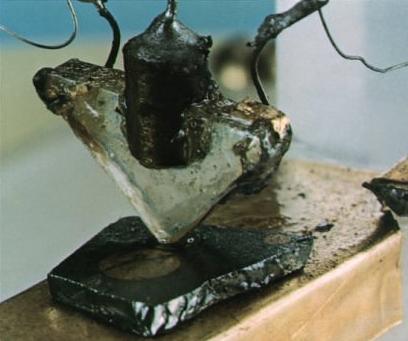
Personally, I Blame the Transistor

...or rather, I blame the transistor radio, cranking out newly portable tunes over those funky solid state electronics. The audacity of those engineers, I mean, really. By shrinking the size and power requirements for signal amplification, they made it so you could truck those things around anywhere, getting them out of the staid family room into the car, away from Mom and Dad's watchful eye. When the Japanese got their hands on the technology in the early sixties, the price of a transistor radio dropped to $20 (less than an iPod in 2007 dollars), it opened the door to what companies needed to get filthy rich: high turnover of content, monopolistic control of its release, and marketing directly to young people. We all heard too much of the case against radio distribution in the Napster days, but in its time, radio put the idea of creating demand on the map.

Now, I like the Beatles, I really do. I like how their songs range from lightweight and happy, to lightweight and serious (like scowling kittens). Yeah, they wrote well, and I've even been almost convinced a time or two that they wrote brilliantly, and sure, they had an interesting group dynamic, and they moved along with their times, blah blah blah, but by the Jesus they were bigger than, they revolutionized music like George Lucas revolutionized science fiction. They repackaged old ideas with an admittedly novel spin and with broader range (than some), but I see their outsized legacy as much as a function of luck and timing than anything.

They had the indescribable good fortune of providing a product when America was hungry for it, lucky enough to have a manager who had already packaged it. They were just in time to take advantage of widespread youth-oriented radio distribution, and just in time grab the American television audience as the post-war generation came into consuming age. They had savvy marketers, and they were smart enough---and yes, good enough musicians--to keep updating their image and their material. They were fortunate enough to be white. Not bad for a good-time Hamburg bar band. But on the other hand, when serious people debate the genius of the gang that sonically smirked through "Love Me Do" with the bunch that harmonized "Help Me Rhonda," then maybe that's a little telling.

The fortieth anniversary of Sergeant Pepper's Lonely Heart's Club band passed without much notice from me. There was some necessary (and only somewhat eye-rolling) hagiography on NPR, the requisite contrarian (but surprisingly even-handed) Slate article, and you know, I was mostly okay with it. I mean hey, I wasn't there. But even gentle Keifus has a limited tolerance for hero-worship. It was good and all, but constantly calling it the most brilliant musical composition evah is a little tiring. When American Idol contestants hashed out the old legacy, it didn't feel inappropriate. (If AI is anything, it's about recapturing that radio distribution model.) This weekend my daughter's fourth grade class is singing Sgt. Pepper (the song) as part of their year-end musical show, and that seems to capture the happier spin the Beatles sought even behind their deeper efforts. Yeah, that suits me just right.

Keifus

P.S. You wouldn't believe what you can write a thesis on these days.

Friday, June 08, 2007

Well, this is going to be difficult to explain

I, um, well, I'm kinda turned on.

K

Sadly, you can't put the cheese back in the can

Fucking entropy.

Food science pioneer Edwin Traisman died yesterday. When I wrote my food science post, I pulled two canonical examples of culinary engineering purely out of my ass. Little did I know that both Cheez-Whiz and the every-time-identical McDonald's french fry were brought forth into being by a single extraordinary mind. Traisman worked at Kraft (in the Cheese division, natch) and opened the first McDonald's franchise under Ray Kroc.

Despite this resume, he managed to not be evil. According to the Business Week article, he was a pioneer in hiring women. According to NPR, he pushed Kroc to include more nutritional products in the McDonald's menu. In the 1970s, he moved to the University of Wisconsin, researching E. Coli before it was even scary, and was regarded as brilliant by his academic peers, even though he only held a bachelor's degree in chemistry.

He lived to be 91. Was it preservatives or good intentions? You be the judge.

Wednesday, June 06, 2007

Entropy Production and the Best of All Worlds

[I'll get back to my usual schtick soon enough. If you're interested, I tried to keep it accessible.]

Chemical engineering has historically been a phenomenological science, meaning that it's more based on observed phenomena than it is built bottom-up from the sub-microscopic nuts and bolts of the universe. If you were to, oh I don't know, go to graduate school in the field, you'd find a good third of the curriculum devoted to Transport Phenomena, which describe the rate at which thermodynamic variables--momentum, thermal energy, chemical potential (and charge too, though it's not usually lumped in there)--dissipate along gradients. Generalized equations of change can be set up describing how these quantities are conserved, how a system will organize itself under given boundary and initial conditions, how fast it will evolve. Classic and indispensible expressions fall out of these basic equations of change: your Maxwell's, your Navier-Stokes, your Fick's. External forces are allowed, and the variables are all coupled (temperature differences can cause mass flow, electrical currents cause heat, etc.), and things get hairy in a hurry for all but the basic systems. It's like they say about the weather, you can't possibly even define the conditions and variables well enough to even think about solving it.

Thermodynamics, another third of the core curriculum, usually discusses equilibrium, the end state of things. Thermo tells you the boundaries, what you can get if you squeeze this or bias that, how much energy is in that gradient, how much of it you can actually use. Thermo is like the finger-pointing nanny laying down the boundaries. Transport phenomena are clever children figuring out how to get away with shit inside of them. The equations of change have the first two laws of thermodynamics built in, but the "how" of them comes from recognizing which terms are important in a given situation, how various coefficients weight the importance of one dissipation mechanism over another.

You can balance any state variable really, and classical thermodynamics tells us that entropy is one such state variable. You can derive a rate of entropy production from these balance equations too. And if you start to look beyond phenomenology, entropy probably has the most generic definition of all of them. Statistical thermodynamics quantitatively links entropy to the number of available states that a thing can occupy. And the thing can be anything really: an atom, a person, a datum...once you get into informational theories of entropy, you've deviated far from being an engineer. Zooming into the molecular world of statistical thermo, it grows apparent how molecular ensembles can dictate macroscopic properties, and it can be useful in explaining and predicting phenomenological effects. Small systems such as cell structures or micromechanical devices or surfaces or local chemical environments can be thought to occupy some middle ground. [And really, things have occupied middle grounds for hundreds of years--the microscopic aspects of chemical and electrical processes have always been essential to their understanding and application.]

The second law of thermodynamics states that entropy of a closed system increases toward a maximum. When you start talking about the rate of entropy production, how fast it increases, you've entered the field of non-equilibrium thermodynamics. For steady systems, near equilibrium, there are various relationships suggested by non-equilibrium thermo that become useful. At the statistical mechanical level, entropy production must be considered probabilistic, and some weird stuff indeed arises, when entropy decreases for individual events in the ensemble.

Take that magic camera now and zoom back out, way out...farther...OK. Just like phenomenology has a habit of washing out microscopic events, enormous systems-of-systems can be approachable if you wash out some of the details of the usual phenomenology. Interestingly enough, non-equilibrium thermo appears to become useful again at this distant level. I've read some articles recently on the hypothesis of maximum entropy production for complex systems such as weather systems, ecosystems, or economies. The hypothesis appears to be completely baseless, but it has nonetheless been successful in describing some complex phenomena, and suggests that the recurrence of certain structures in complex systems is because they dissipate the great big energy gradients most efficiently. I hate the examples that these authors have used: phenomenological models describe waves and vortices and so on well enough, but to suggest that they can be interpreted as optimum dissipative structures is, well, interesting.

The question arises: is human evolution (genetic or social, take your pick) merely the most effective path that has so far developed to dissipate that huge solar energy gradient? You can see the danger of drawing out the cranks here, but just because speculation is silly and intellectually dangerous doesn't mean that it can't be fun.

People aren't at equilibrium (certainly not when they're alive), and neither is society. With the constant application of solar energy, we maintain at a roughly steady-state non-equilibrium condition. You can irresponsibly ask thermodynamics the same questions that philosophers have struggled with for millenia. Is human nature a development that facilitiates entropy production (with occasional fluctuations toward entropy absorption that wash out in the time average), and does human organization facilitate it? Is the nature of our ensemble developing over time, and do we waste heat better if we are brutal or if we are constructive? If we're happy or sad? Can it get better than this? Has it ever been, really?

Keifus

Some public access reading, if you just can't get enough:

  • Maximum entropy production vs. Darwinism (science reporting, easy to read)
  • Entropy production and life as we know it (accessible, but I found it tedious)
  • Hey man, quantum mechanics isn't dissipative. Where's the entropy? (big words and a little math, read 1/3 of it and didn't seem bad though.)
  • Fluctuation theory for small systems (from Physics Today)

  • Saturday, June 02, 2007

    Book Review: The King Must Die by Mary Renault

    Grade: B
    This one's for Artemesia. I actually didn't know her at all in her Slate days, but the glimpses of her work that I've seen since have impressed me greatly. She frequently combines bits of classic mythology and modern science in a heartfelt, adult voice that is good enough to unite the deep cosmic and the intensely personal natures of these ideas. I've got no link for you, but maybe she'll be kind enough to append a fitting verse.

    Mary Renault seemed an appropriate representation for some aspects of Artemesia's subject and style. Other than a similar Classical take, Renault, writing hero stories in the 1950s, was very much a woman working in a man's world, much like the two historical Artemisias. Renault wrote to "solve" mythology, letting the history* behind the stories inspire her. The King Must Die takes place a solid millennium before Artemisia of Halicarnassus made a name. It's a retelling of the legend of Theseus and the Minotaur.

    What Renault is most deeply concerned with here is creating a plausible historical interpretation for the myth. She does a good job of toning down the more extravagant aspects (the story of the Minotaur is presented as a political upheaval), and of adding a convincing verisimilitude. She places Theseus in bronze age Greece, roughly 1400 B.C., as the Mycenaean (she uses the word "Hellene" with an apology) cultures edged the Minoan (and Minoan-influenced) civilization out of the Aegean, and as the city of Athens grew prominent among its neighbors. It was a time of religious and political change, drifting from fertility cults and a matriarchal society to the more familiar Greek pantheon and male-dominated autocracies. Renault's version of mother-worship is a conflation of the Demeter/Persephone myth and the goddess worship of the older Aegean societies; the male gods are growing in influence, but in her version, they remain close to their more modern personalities.

    [I will add that one goddess is conspicuously absent. Even if Theseus was favored by male gods, Poseidon particularly, the city of Athens had its own special goddess cult too, much as the Athenians had their own special patron hero. (What a bunch of smug exceptionalists they were.) Athena should have been a factor by this time, and if Zeus and Poseidon can grab some more modern aspects, then what the hell? One site I read mentioned some theories in which Athena evolved from the earlier mother-goddess religion. In this book, Theseus promises a shrine to the minor sea goddess Peleia upon his return to Athens. Maybe Renault is getting at it.]

    Theseus, of course, is an agent of this religious and political upheaval, and while Renault (as she notes) tries to write a feasible character portrait of the man(Napoleonic prick), it doesn't really take. It's too easy to take his impulsiveness and lust in stride with the times, and the author does not manage to get around his essential hero stature. To become the patriarch, he has to reject his role as a sacrifice to the Mother, which custom Renault paints at various times as barbaric and horrible. As though an absolute monarch is less so. Moreover, she portrays Theseus's piety as superior to the decadent and increasingly secular nobility of goddess-worshipping Crete. I'd have enjoyed the book more if there were a more honest--an angrier--conflict between the systems. I'm biased: if one must consent to an authoritative state ornament, then caging and periodic sacrifice seems just the thing for him.

    Although Renault's historical portrait is very good, I found her writing less so. A stronger voice might have gotten more out of that theme, might have found deeper levels of character. I stalled frequently on the prose too, whose clumsy archaisms recalled more boys knights' stories than they did Homer, lacking only (and thankfully) the thees and dosts. I'm still rating it above average though. The author gets some real points for innovating here, for avoiding the subsequent 50 years of derivative and inferior takes on old myths.

    Keifus (But I've certainly had enough of them for now. Up next, some classic satires.)

    *My iconoclasm just gets worse, doesn't it, Clio? Which muse would be right for you?

    Organization
    Author:
    Title:
    Genre: ,